 India GO
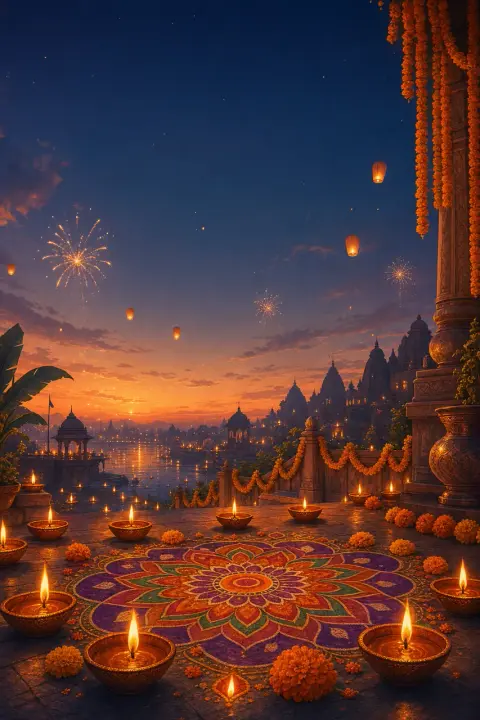
Diwali in Jaipur: the walled city under lights
The night darkness surrenders
Jaipur's Diwali happens in the bazaars of the walled city. For the festival the market associations light their arcades from end to end and compete for the best display, and the evenings from Dhanteras to the main night turn into a long walk under lights past Hawa Mahal. The festival days run 6–11 November 2026, with Lakshmi Puja, the main night, on 8 November 2026.
Jaipur's walled-city bazaars light their arcades and compete for the best display (Johari Bazaar won in 2025, Tripolia came second), and the evenings turn into a long walk under lights.
Where to watch
Johari Bazaar: the jewellers' street, first in the 2025 lighting contest. Walled city, from Sanganeri Gate to Badi Chaupar.
Tripolia Bazaar: second in 2025, from Chhoti Chaupar to Badi Chaupar past the Tripolia Gate of the City Palace.
Chandpole Bazaar: third in 2025, the western arm of the main walled-city street. Chandpole metro station at its far end.
Bapu Bazaar and Nehru Bazaar: lit arcades along the southern wall, with textiles and juttis. Between Sanganeri Gate and Ajmeri Gate.
Govind Dev Ji temple: the Krishna temple of the City Palace complex, with Annakut on Govardhan Puja. Inside the palace precinct, entered from Jaleb Chowk.
Free viewing
- Johari Bazaar from Sanganeri Gate to Badi Chaupar, the whole length on foot
- Badi Chaupar, where Johari Bazaar and Tripolia Bazaar meet
- Hawa Mahal and the street in front of it after dark
- Chandpole Bazaar from Chhoti Chaupar to Chandpole Gate
What makes Jaipur's Diwali different
In most Indian cities Diwali is a family festival you see from the street: lamps on ledges, a puja at home, fireworks after it. Jaipur adds a public stage. The main streets of the walled city are lined with arcaded shopfronts, and for Diwali each bazaar strings its whole length with lights, so that each street reads as one display. The bazaars compete: at a recent contest Johari Bazaar came first, Tripolia Bazaar second and Chandpol Bazaar third.
The shops stay open late in the days before the festival and the lanes are full of shoppers, with festival sweets everywhere. Hawa Mahal and the street in front of it are part of the walk after dark. On the main night itself the mood changes: many shops close early for the family Lakshmi Puja, and after dusk come the fireworks.
An evening walk through the lit bazaars
The walled-city bazaars connect, so one evening can take in most of them on foot. A route in the order of the streets:
- Johari Bazaar
The jewellers' street, from Sanganeri Gate north to Badi Chaupar. Walk its whole length.
- Badi Chaupar and Hawa Mahal
Badi Chaupar is the square where Johari Bazaar and Tripolia Bazaar meet; Hawa Mahal and its street are close by.
- Tripolia Bazaar
West from Badi Chaupar to Chhoti Chaupar, past the Tripolia Gate of the City Palace.
- Chandpol Bazaar
The western arm of the main street, from Chhoti Chaupar to Chandpole Gate. Chandpole metro station is at the far end for the ride back.
- Another evening: Bapu Bazaar and Nehru Bazaar
Lit arcades of textiles and juttis (embroidered shoes) along the southern wall, between Sanganeri Gate and Ajmeri Gate. More: Bapu Bazaar.
Which evenings to choose
Arrive by Dhanteras, usually two days before the main night: the lighting is up by then, and the evenings from Dhanteras to Diwali are the ones for walking the bazaars, open late and full of shoppers. The main night, 8 November 2026, is for the lamps at home and the fireworks rather than for shopping. On Govardhan Puja, after the main night, the Govind Dev Ji temple, the Krishna temple of the City Palace complex entered from Jaleb Chowk, holds the Annakut, an offering of a mountain of cooked food. Two or three nights cover the festival. For Diwali beyond Jaipur and the meaning of the five days: Diwali.
Booking and practical tips
Diwali week is busy in Jaipur: hotels have been reported near full, and the Delhi–Jaipur road and trains are packed in the festival week.
- Book about three months ahead — Rooms go early and prices rise sharply; heritage havelis inside the walls book out first. Take trains the day sales open, 60 days before travel.
- Stay within walking distance — Inside the walled city or just outside it, around Hawa Mahal, Chandpole or MI Road, so the bazaars are a walk away in the evening. More: where to stay in Jaipur.
- Use the metro when traffic stops — The Pink Line runs underground to Chhoti Chaupar and Badi Chaupar inside the walls. More: Jaipur metro.
- Buy sweets a day early — Queues at the sweet shops are longest on the day itself. Where to buy: sweets in Jaipur.
- Expect noise and smoke — Firecrackers are set off on the main night and the air turns smoky. By a 2018 Supreme Court order, crackers on Diwali are allowed for two hours only, by default 20:00–22:00, and the state may set its own two-hour slot: check the local order. Earplugs help, and people with asthma or lung problems may want masks.
- Crowds — The UK Foreign Office advises particular care during Diwali and at large gatherings, and following local authorities' advice. The emergency number is 112. More: safety in Jaipur.
FAQ
Is Jaipur famous for its Diwali?
Yes. It is one of the places where Diwali is worth travelling for, because the walled-city bazaars light their whole length and compete for the best display.
When is Diwali in Jaipur?
The festival days run 6–11 November 2026; Lakshmi Puja, the main night, is on 8 November 2026.
How many days is Diwali?
Traditionally five, from Dhanteras to Bhai Dooj; by the lunar calendar the span can stretch or shrink by a day. In Jaipur the evenings from Dhanteras to the main night are the best for the lit bazaars.
Which market in Jaipur is best decorated for Diwali?
Johari Bazaar placed first at a recent lighting contest, ahead of Tripolia and Chandpol bazaars. All three are on one walk.
Are shops open in Jaipur on Diwali?
In the days before, yes, and late. On the main night many close early for the family puja.
Sources (3)
Facts checked: 21 October 2026. Prices and hours are approximate; check locally.