 India GO
Temples in Vrindavan
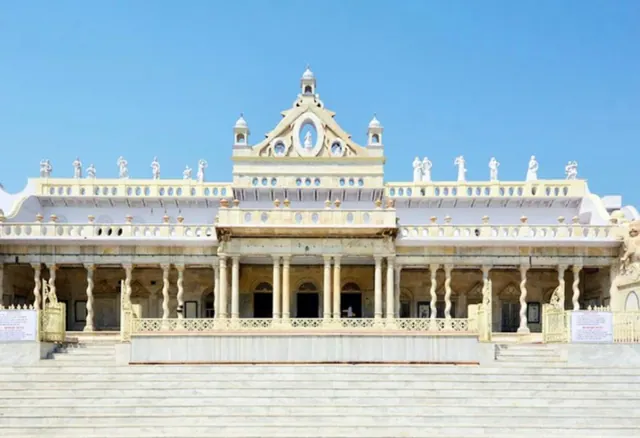
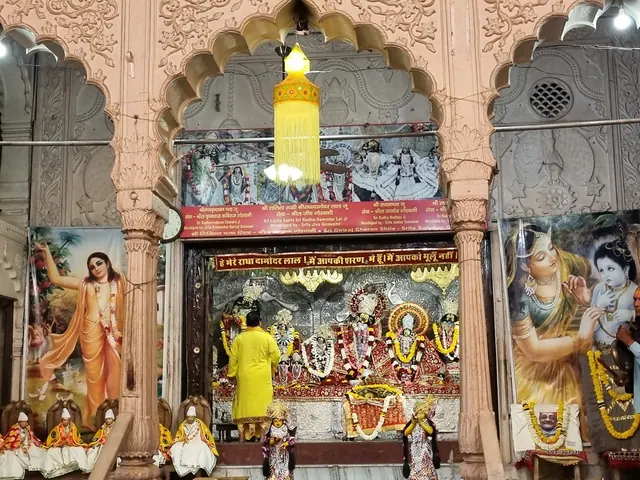
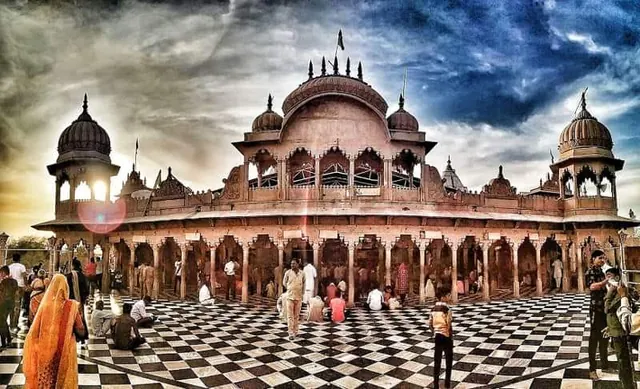
Vrindavan counts more than five thousand temples, and they are not interchangeable. Some are living shrines where Krishna is served as a child; some are 16th-century sandstone towers whose original deities left long ago; some are new marble complexes built for crowds. Decide which kind you want, then choose below.
How to choose: five kinds of temple
The list below mixes them all; here they are grouped by character.
The living heart of the old town
Banke Bihari is the temple most people come for. A curtain is drawn across the shrine and opened every minute or two, so Krishna is seen in glimpses; the queues are the longest in town. A short walk away, Radha Raman is its quiet counterpart, a Krishna said to have emerged from a shalagram (a sacred stone). Radha Damodar (1542) keeps the samadhis (memorial shrines) of the saints Rupa and Jiva Goswami.
The old sandstone temples
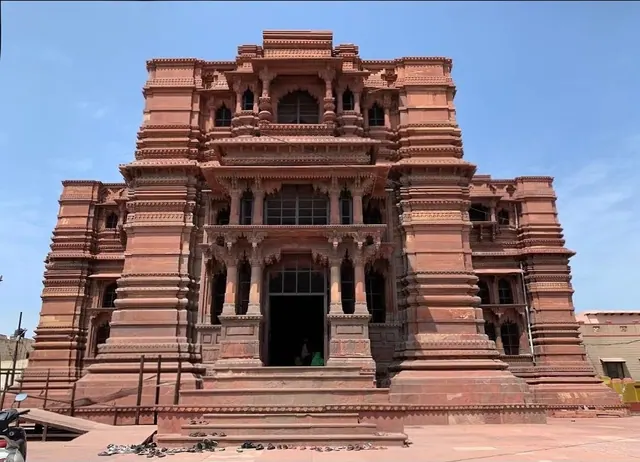
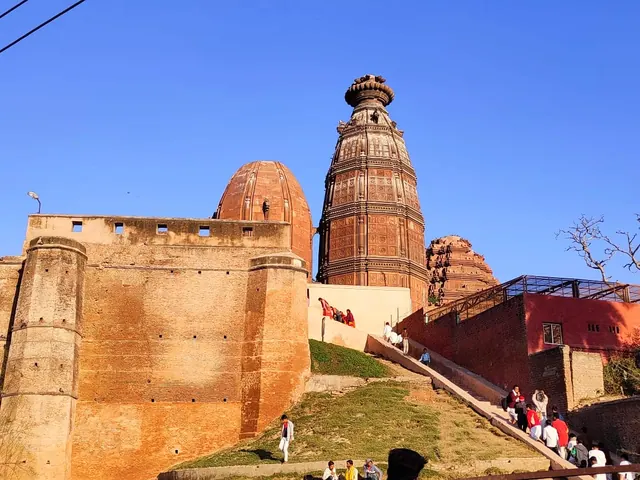
Madan Mohan, finished in 1580 on the Aditya Tila mound, is one of the oldest temples still standing in Vrindavan. Govind Dev, raised in 1590 by Raja Man Singh of Amber, is still one of the most imposing buildings in Braj despite the damage of 1670. Both lost their original deities to Rajasthan in Aurangzeb's time. Jugal Kishore (1627) stands a minute from Keshi Ghat. These are buildings to stand in front of, usually with few people around.
Big modern temples
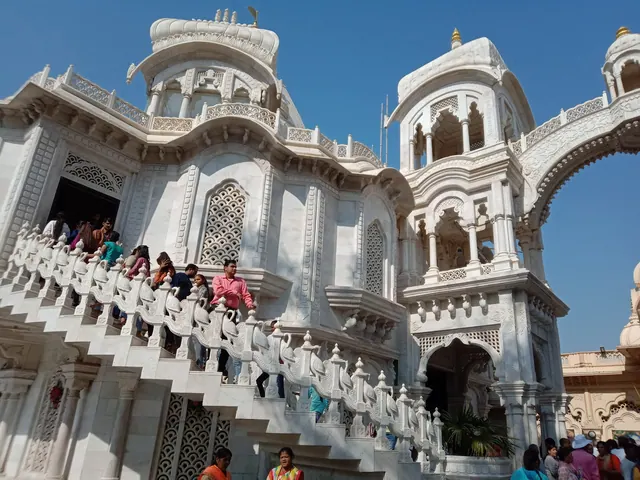
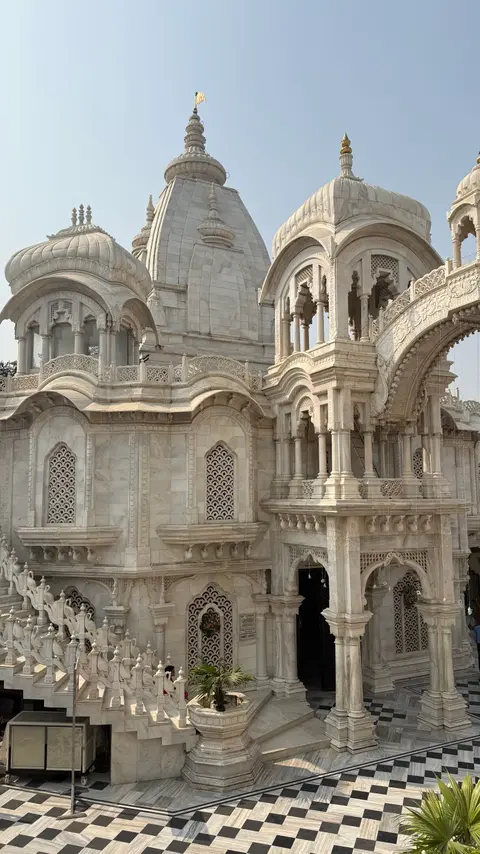
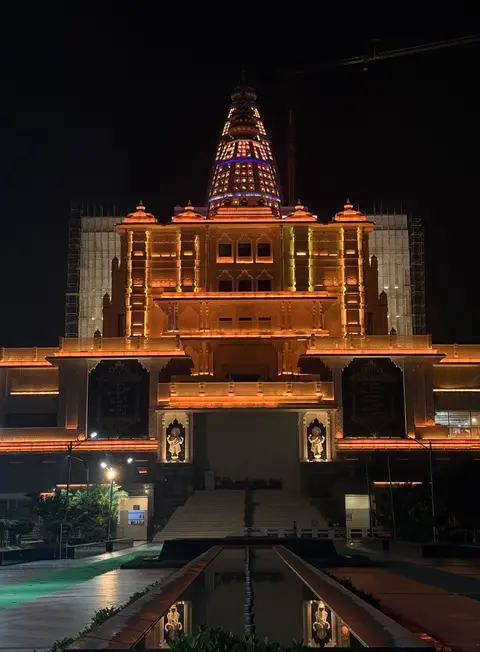
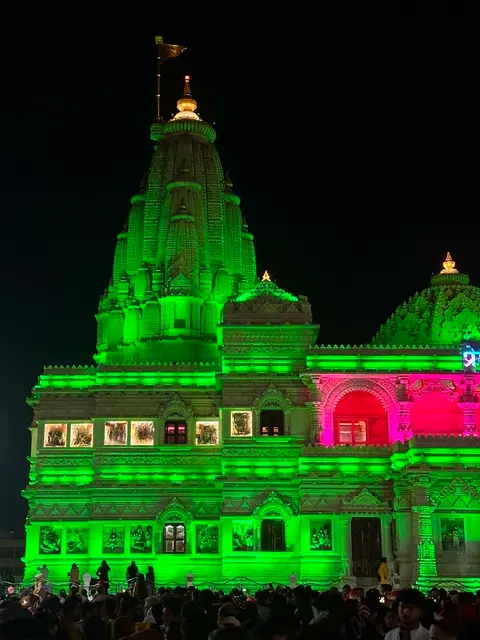
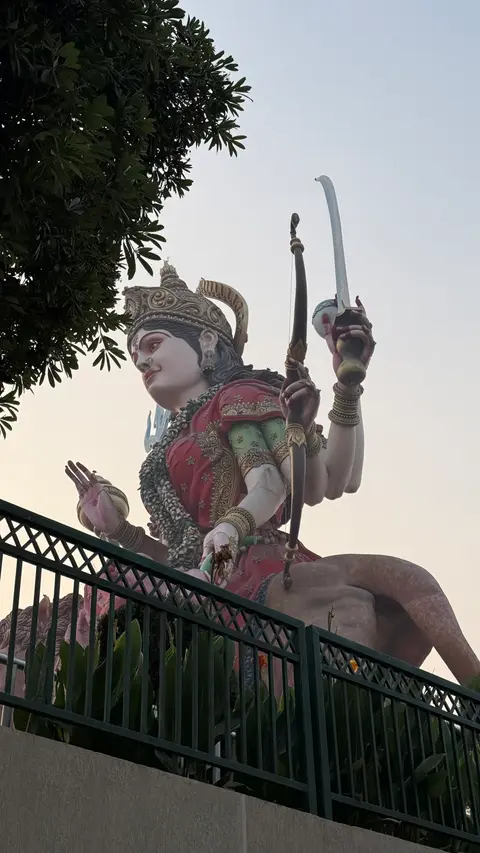
ISKCON Vrindavan (1975) has Prabhupada's samadhi at its entrance and a pre-dawn service, mangala aarti, at 4:30. Prem Mandir (2012), white marble, is the evening temple, lit in changing colours after dark. Vaishno Devi Dham is a temple-museum with a 141-foot statue of the goddess. Chandrodaya Mandir, the Hare Krishna Movement's planned 700-foot temple, is still being built; its official site has announced plans to open the first phase, so check its announcements.
Unexpected buildings
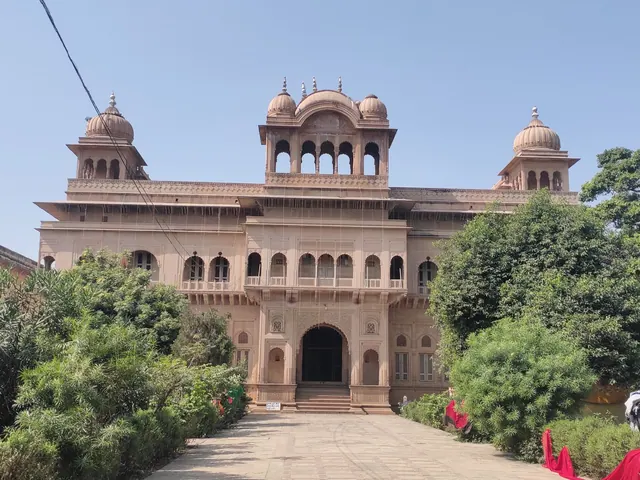
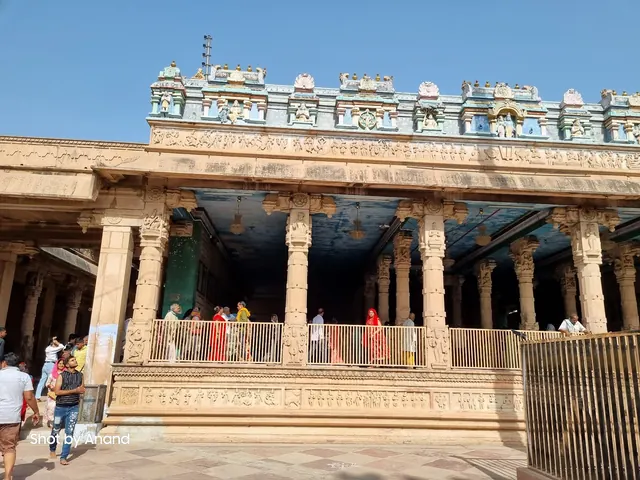
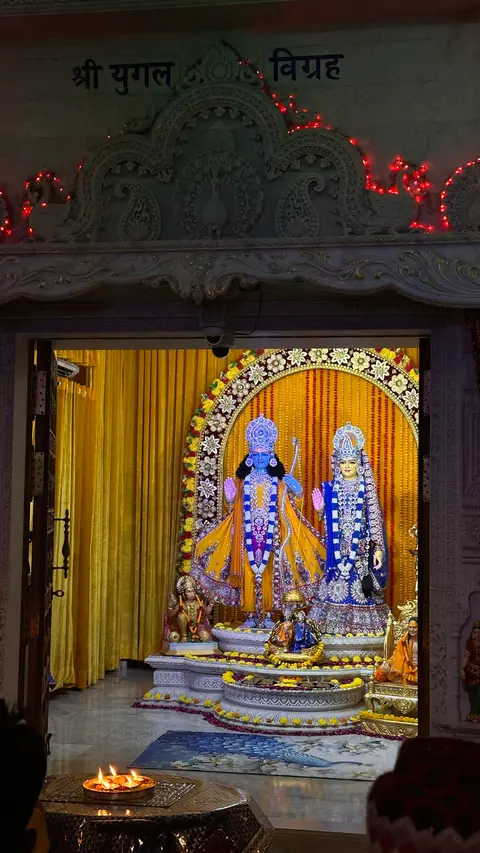
Shahji Temple stands on twelve spiral marble pillars, which is why the town calls it Tedhe Khambe Wala Mandir, the temple of crooked pillars. Rangji (Sri Ranganatha Mandir, 1851) looks as if it arrived from Tamil Nadu, with Dravidian gopurams (gateway towers) and South Indian priests. For the Jaipur Temple (Shri Radha Madhav Mandir, 1917) a maharaja had a rail spur laid to haul its sandstone; it stays calm even at weekends.
One hour out: Barsana
Shri Radha Rani Temple crowns the hill above Barsana, revered as Radha's home, about 45 km from Vrindavan. Go on a weekday morning; on festival days the hill is overwhelmed.
The seven temples of the Goswamis
Tradition singles out seven old temples tied to the Goswamis, the 16th-century followers of the saint Chaitanya Mahaprabhu who settled in Vrindavan and restored its forgotten holy places. The district administration calls Radha Damodar "one of the main seven Goswami temples". Lists vary a little between sources; four of the temples on them have their own pages here: Madan Mohan, Govind Dev, Radha Raman and Radha Damodar.
Planning the day by area
Old town lanes: Banke Bihari, Radha Raman, Shahji Temple near Nidhivan, Radha Damodar in the Seva Kunj lanes, Govind Dev, and Rangji near Brahma Kund. These are best done on foot. Beyond Nidhivan, the walled grove of Tatiya Sthan has no electric light, only evening bhajan (devotional singing).
By the river: Jugal Kishore beside Keshi Ghat, and Madan Mohan on Aditya Tila near Kaliya Ghat. Both lie on the parikrama, the walk around the town that most people start and finish at Keshi Ghat; the Jaipur Temple is on the same road.
Further out: ISKCON in Raman Reti, Prem Mandir and Chandrodaya Mandir lie outside the old town; an e-rickshaw from the centre to ISKCON or Prem Mandir costs about ₹30–60. Vaishno Devi Dham stands on Chhatikara Road, the road into town.
Temple timings: how they work
There is no single Vrindavan timetable. Most temples open in two sessions, morning and evening, and close in the middle of the day while the deity rests; schedules shift between summer and winter and change on festivals. At Banke Bihari two schedules are currently in circulation, the temple's own and a longer one set by a court-appointed committee, so check on the day. ISKCON starts earliest, with mangala aarti (the pre-dawn service) at 4:30. Banke Bihari, where the deity is treated as a child left to sleep, holds its only mangala aarti of the year on Janmashtami night.
Current hours are on each temple's page; see also darshan (seeing the deity) and aarti (the offering of lamps with song).
Etiquette and practicalities
More on what to wear: temple dress code in Vrindavan.
- Shoes — Off at the gate. Banke Bihari also bans leather items, such as belts, wallets and bags.
- Phones and cameras — Phones and electronic gadgets are not allowed at Banke Bihari; put away at Tatiya Sthan; restricted at Rangji. Elsewhere, follow the signs.
- Dress — Covered shoulders and knees. Rangji and Tatiya Sthan ask for modest dress explicitly.
- Non-Hindus — At Rangji, non-Hindus are welcome in the outer courtyards but not in the inner sanctum.
- Crowds — Banke Bihari's own list of peak days: Ekadashi (the 11th day of each lunar fortnight), full and new moon, weekends, public holidays, 20 December–5 January and festivals.
FAQ
Which temples are famous in Vrindavan?
Banke Bihari, ISKCON's Krishna Balaram Mandir, Prem Mandir and Radha Raman draw the most visitors; Madan Mohan and Govind Dev are the great 16th-century sandstone temples.
What is the oldest temple in Vrindavan?
Madan Mohan, finished in 1580, is one of the oldest still standing. Some temples were founded earlier, such as Radha Damodar in 1542.
What are the temple timings in Vrindavan?
Most open in a morning and an evening session and close at midday; hours shift with the season and on festivals. Check each temple's page.
Is Chandrodaya Mandir open?
The 700-foot temple is still under construction; the official site has announced plans to open the first phase, so check its announcements before you go.
What are the main temples in Mathura?
Krishna Janmasthan, Dwarkadhish and the Dauji temple in Baldeo; see the temples of Mathura page.
Sources (13)
- District Mathura (official): Radha Damodar Temple, 'one of the main seven Goswami temples of Vrindavan'
- Wikipedia: Radha Raman Temple (list of the seven revered temples)
- Wikipedia: tallest Hindu deity statues (Vaishno Devi, Vrindavan, 141 ft)
- Vrindavan Chandrodaya Mandir: FAQs (construction status)
- Prem Mandir (official site)
- Shri Banke Bihari Mandir (official): do's and don'ts (footwear, leather, phones)
- Shri Banke Bihari Mandir (official): darshan, peak days
- LiveLaw: Supreme Court notice on change of Banke Bihari darshan timings by the committee
- Wikipedia: Krishna Balaram Mandir (1975, samadhi at the entrance)
- Wikipedia: Prem Mandir, Vrindavan (opened February 2012)
- Wikipedia: Radha Madan Mohan Temple (1580, original deity in Karauli)
- Wikipedia: Vrindavan (about 5,500 temples)
- UP Tourism: ISKCON Krishna-Balram Temple (opens 4:30)
Facts checked: 8 October 2026. Prices and hours are approximate; check locally.
The full catalogue, hidden spots and districts on the map, plus “nearby” mode.
Open in India GO