 India GO
Temples in Mathura
Mathura's temples centre on two places: the Krishna Janmasthan complex, built over the spot where Krishna is believed to have been born, and Dwarkadhish in the old bazaar. Both are free, both close in the middle of the day, and the Janmasthan does not let phones inside. Start early at the Janmasthan, walk through the bazaar to Dwarkadhish, and finish with the evening aarti at Vishram Ghat.
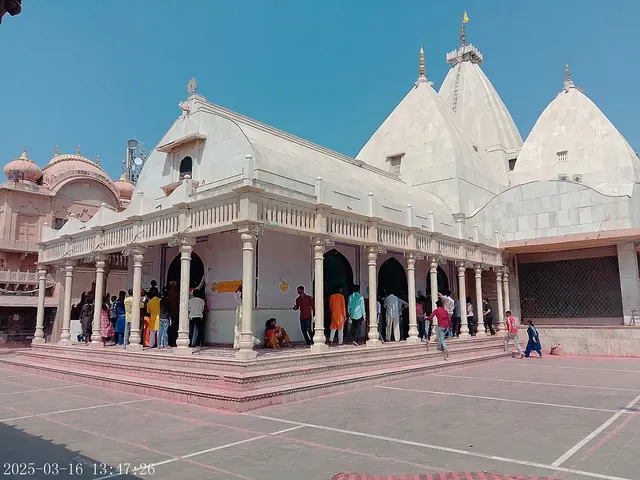
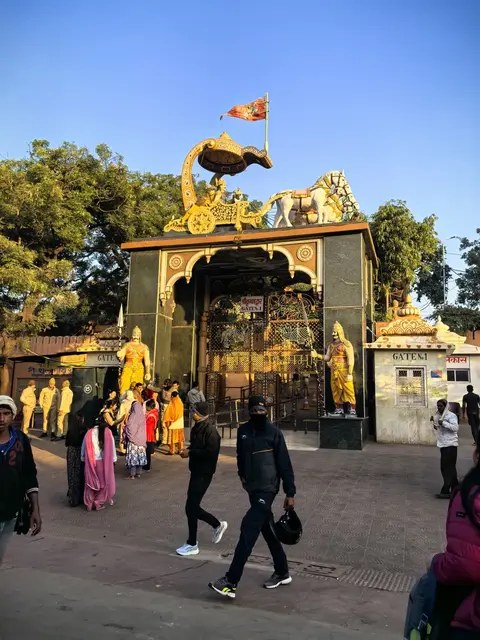
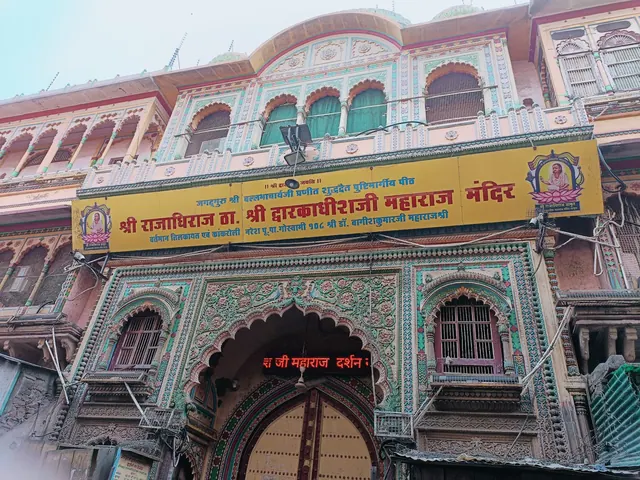
The two main temples and their timings
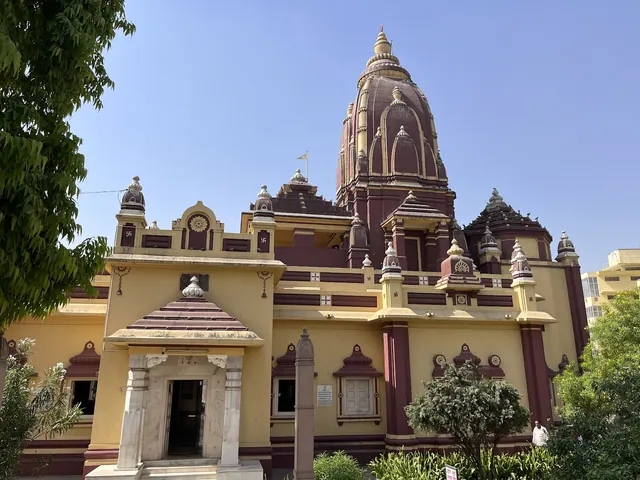
Krishna Janmasthan (the Shri Krishna Janmabhoomi complex) is the spiritual heart of the city. Tradition holds that Devaki and Vasudeva became Krishna's parents here, in an underground prison chamber, and a recreated chamber marks the place. Inside the complex, the Garbha Griha (the sanctum over the birthplace) is listed as open 05:00–21:30 all year, though some visitor guides give shorter winter hours. The other shrines, Keshavdev, Bhagwat Bhavan, Yogmaya and Giriraj Ji, keep two windows: 05:00–12:00 and 16:00–21:30 in summer, 05:30–12:00 and 15:00–20:30 in winter. Entry is free.
Dwarkadhish, built in 1814 by the Mathura treasurer Seth Gokul Das Parikh, sits deep in the old bazaar lanes right above Vishram Ghat, and its mood is different: bright, musical, with kirtan (devotional singing) almost non-stop. It is ordinarily open roughly 06:30–10:30/11:00 and 16:00–19:30, closed through the middle of the day, with the evening window earlier in winter. Darshan (the viewing of the deity) comes in short slots; outside festivals the queues are short.
Both temples extend their hours on Janmashtami (Krishna's birthday), and Dwarkadhish does not publish its festival schedule in advance.
A half-day route through the old city
The main sites line up in one walk, in the order the day suits them.
- Krishna Janmasthan, early
Come early, with as little as possible on you.
- Potara Kund, two minutes away
A red sandstone tank in flights of steps, where tradition says the infant Krishna was first bathed; almost everyone walks past it. See Potara Kund.
- Through the bazaar to Dwarkadhish
Time the walk for the morning window, which closes around 10:30–11:00.
- Vishram Ghat at dusk
The Yamuna aarti (the lamp offering) is held daily at sunset, with tiered brass lamps raised over the water; floating lamps cost about ₹10–20 from vendors on the steps. Arrive 20 minutes early for a front spot. See Vishram Ghat.
Beyond the Krishna core
The list above includes places in a different key, and several of them sit well outside the city. Here is when each one fits.
Gita Mandir, on the Vrindavan road
One of the calmest temples in the city, with all seven hundred verses of the Bhagavad Gita cut into an 18-metre sandstone pillar. Open roughly 05:00–20:30 with a midday break, free; easy to stop at on the way to Vrindavan.
Jai Gurudev Mandir, on the highway
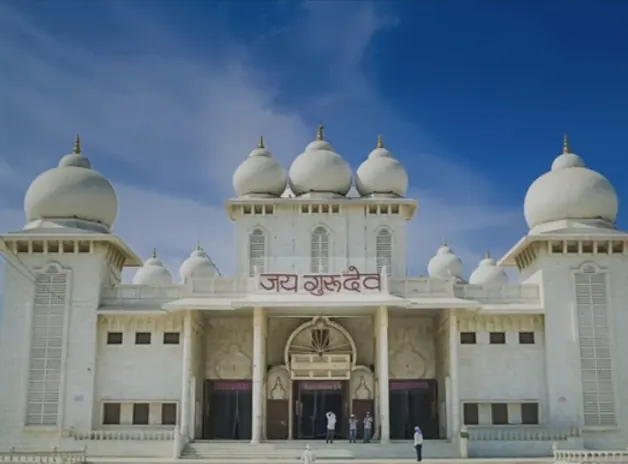
White marble beside the Delhi–Agra highway, about 4 km from Mathura Junction, open to any faith, with no entry fee and no donations accepted. Easiest on the way in or out by road.
Jama Masjid, near the Janmasthan
A working mosque of 1660–61 on the highest point of the old city: dress modestly, cover your head where asked, avoid prayer times and ask before photographing.
Gokul and Mahavan, about 15 km
Brahmand Ghat, a quiet riverbank where villagers rather than tour groups come, makes a morning with Raman Reti. See Raman Reti, Gokul.
Baldeo, about 22 km
The Dauji Temple of Balarama, Krishna's elder brother. The day after Holi it hosts Huranga, the loud finale of Braj's Holi season, and the courtyard is packed.
Nandgaon and Kokilavan, about 50–55 km
Nand Bhavan on the hill at Nandgaon pairs with Barsana; Kokilavan Shani Dham, a Shani (Saturn) temple in a forest, is busiest on Saturdays and nearly empty on a weekday morning.
Temple rules and what to leave behind
The rules are simple, but the Janmasthan security check catches many people unprepared. More on clothing is on the temple dress code page.
- No electronics at the Janmasthan — Metal detectors and a bag check at the gate. Phones, cameras, earbuds, remote car keys and other electronics go into the paid cloakroom, and photography is prohibited throughout.
- Phones and leather stay outside Dwarkadhish — Photography is not allowed inside, and shoes come off at the door, as at almost every temple here.
- Mind the monkeys — Macaques gather in the Janmasthan lanes, by the sweet shops and on the steps of Vishram Ghat, and take phones, glasses and sweet boxes.
FAQ
Which temple is famous in Mathura?
Krishna Janmasthan, the complex over the place where Krishna is believed to have been born. Dwarkadhish, in the old bazaar above Vishram Ghat, is the city's second principal Krishna temple.
What are the Mathura temple timings?
At Krishna Janmasthan the sanctum is listed 05:00–21:30; the other shrines open 05:00–12:00 and 16:00–21:30 in summer, 05:30–12:00 and 15:00–20:30 in winter. Dwarkadhish opens roughly 06:30–10:30/11:00 and 16:00–19:30. Hours change on festivals.
Is there an entry fee for the Mathura temples?
No. Krishna Janmasthan, Dwarkadhish, Gita Mandir and Jai Gurudev Mandir are all free; at the Janmasthan you pay only for the cloakroom.
Can I take my phone into Krishna Janmabhoomi?
No. Phones, cameras, earbuds and other electronics must go into the paid cloakroom at the gate, and photography is prohibited throughout the complex.
Sources (3)
Facts checked: 8 October 2026. Prices and hours are approximate; check locally.
The full catalogue, hidden spots and districts on the map, plus “nearby” mode.
Open in India GO