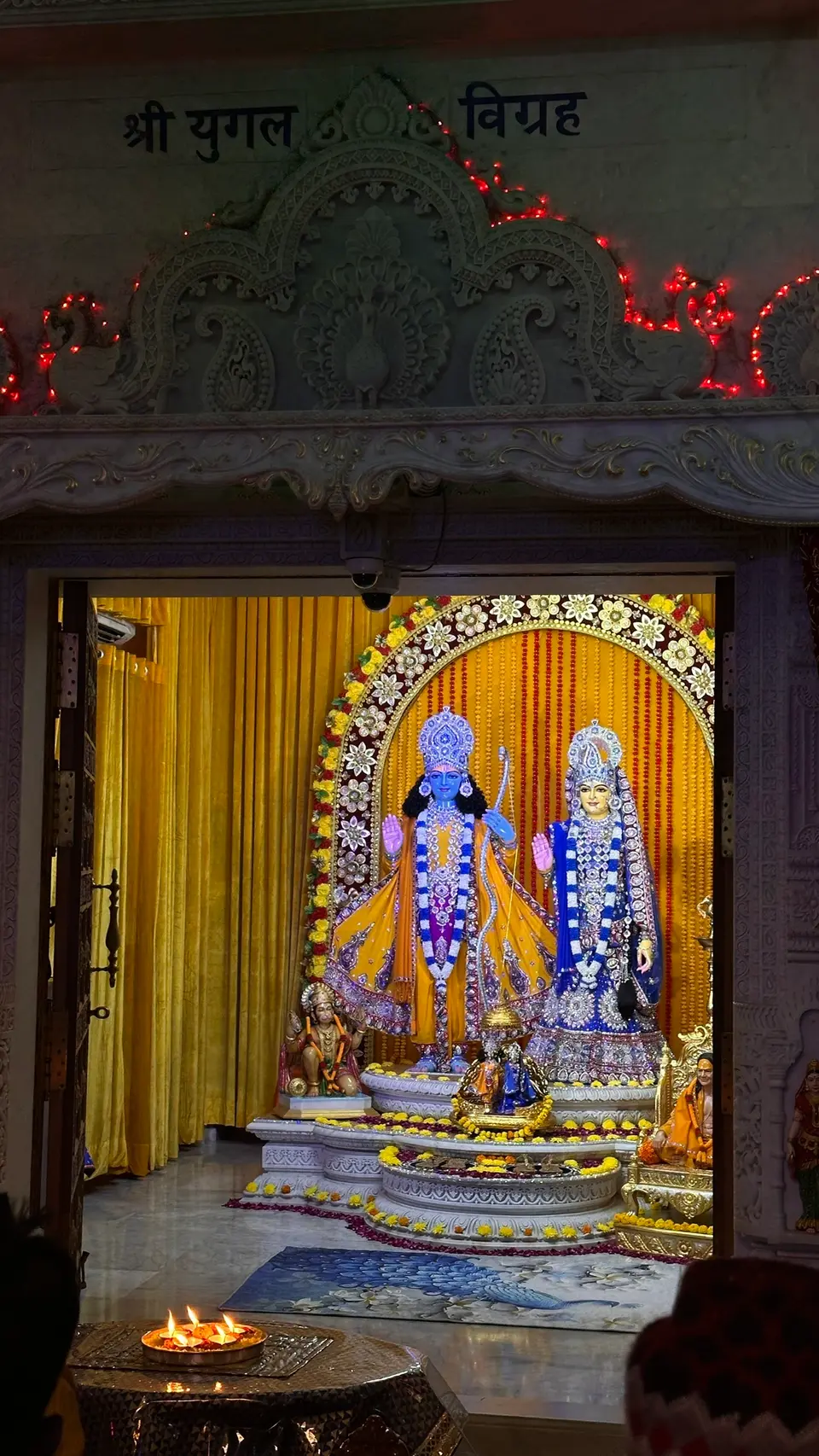
Radha Raman Mandir
Vrindavan · Temple

Radha Raman Mandir, Vrindavan

← Vrindavan

Radha Raman Mandir is one of the seven most revered old temples of Vrindavan, founded in the 16th century by Gopal Bhatta Goswami, a close companion of Chaitanya Mahaprabhu. Its Krishna is believed to have emerged by itself from a shalagram, a sacred stone, with no sculptor involved. Darshan is free; there is no ticket.

EntryFree

Radha Raman Mandir is next on the list of venerated temples in Vrindavan.

It houses a Krishna deity considered self-manifested: it emerged by itself from a shalagrama (sacred stone) without any sculptor. This unique occurrence makes the temple especially significant for Hindus.

The temple was founded in the 16th century by Gopal Bhatta Goswami, one of the closest companions of Chaitanya Mahaprabhu. Interestingly, there is no Radha deity: she's considered invisible but always present beside Krishna, in his gaze, his smile, and in the vibrations of Love that fill the space.

The temple is quiet and peaceful. There are no shows or mass ceremonies; it's a place for individual practice, prayer, and mantra recitation.

The temple of love and tenderness

Tickets

EntryFree

The story of Radha Raman

Radha Raman means the beloved (raman) of Radha. After Chaitanya Mahaprabhu left the world, his companion Gopal Bhatta Goswami, living in Vrindavan, felt the separation deeply. Tradition says he was told in a dream to go to Nepal, and there, bathing in the Kali Gandaki river, he found shalagram stones entering his water pot: twelve of them, which he brought back and worshipped.

On a full-moon night he covered the stones with a basket. When he lifted it in the morning after bathing in the Yamuna, one of them, the Damodar shila, had become a small image of Krishna playing the flute, standing in the graceful three-fold bend called tribhanga. Devotees consider the deity alive and self-manifested, which is why the temple matters so much to Krishna devotees.

There is no separate image of Radha. In the temple's understanding she is invisible but always present at Krishna's side, in his gaze and his smile.

What the temple is like

After the crush at Banke Bihari, Radha Raman feels like a held breath. It is a quiet courtyard temple where the ritual has not changed in centuries: no shows, no mass spectacle, a place for individual prayer and quiet chanting of mantras.

The worship is still in the hands of the temple's hereditary Goswami families. Each family is given its own period of seva (service) in a set calendar. The food offered to the deity is cooked by the men of these families in the temple kitchen, where, by tradition, the fire lit in the temple's earliest days has never gone out.

Inside the complex is the samadhi (memorial shrine) of Gopal Bhatta Goswami, and the temple keeps a cloth associated with Chaitanya Mahaprabhu.

Darshan timings: check locally

No official darshan schedule is published online, and travel sites list different times that also shift between summer and winter. Entry itself is free, so the only risk is arriving while the doors are closed. Ask at your guesthouse or at the temple the day before, and plan a little slack around the time you are given.

✅ Etiquette

Radha Raman is a living temple served by the same families for centuries; behave as a guest in someone's home.

  • Shoes off — Leave footwear outside before entering.
  • Keep quiet — The temple is used for personal prayer and chanting; talk softly and keep your phone silent.
  • Watch the monkeys — Vrindavan's monkeys are famous for snatching glasses; hold on to them in the lanes around the temple.

Getting there and when to go

The temple is in the lanes of the old town, a short walk from Banke Bihari and Nidhivan; a narrow market lane of brass puja ware links Banke Bihari and Radha Raman. Nothing on wheels fits well here, so walk. At weekends and festivals cars are turned back from the centre: park outside and continue by e-rickshaw or on foot.

October to March is the comfortable season; Holi and Janmashtami bring the biggest crowds to Vrindavan.

❓ FAQ

What is the story of Radha Raman Mandir?

In the 16th century Gopal Bhatta Goswami worshipped shalagram stones he had brought from Nepal; on a full-moon morning one of them was found transformed into an image of Krishna with a flute. The temple was built for that self-manifested deity.

Where is Radha Raman temple in Vrindavan?

In the old town, a short walk from Banke Bihari temple and Nidhivan.

What time does Radha Raman temple open?

The temple does not publish darshan hours online, and they change with the season. Confirm the day before at the temple or your guesthouse.

Is there an entry fee at Radha Raman Mandir?

No. Darshan is free; donations are optional.

Why is there no Radha deity in Radha Raman temple?

Radha has no separate image here: she is understood to be invisibly present beside Krishna.

Sources (1)
  1. Radha Raman Temple, Vrindavan (Wikipedia)