 India GO
Lakes in Hyderabad
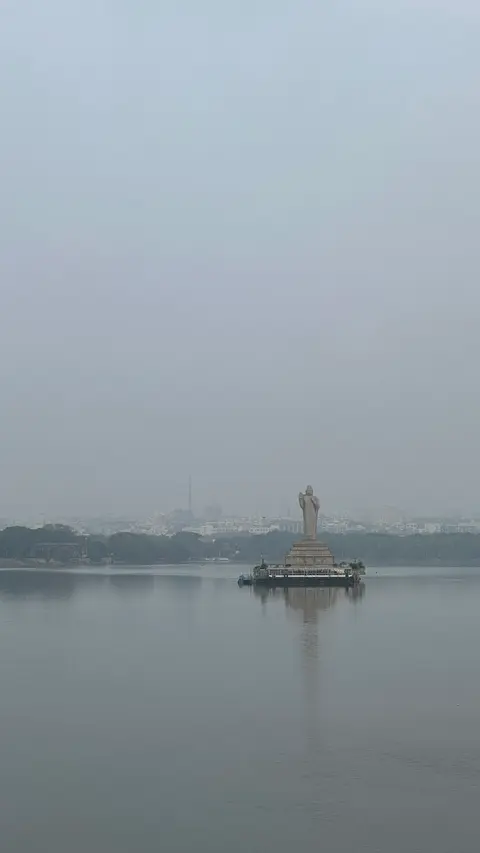
Hyderabad was once called a city of lakes, and most of its tanks were dug on purpose, as drinking water for the Qutb Shahi and Nizam capitals. Four are worth a visit: Hussain Sagar in the centre, with boats to the granite Buddha; Durgam Cheruvu, hidden in the rocks near HITEC City; Osman Sagar, the big reservoir about 20 km west; and Ameenpur on the north-western edge, for birds.
Why Hyderabad has so many lakes
Most tanks, locally cheruvu or kunta, were built as a source of drinking water, under the Qutb Shahis in the 16th and 17th centuries and later by the Nizams. Hussain Sagar was dug in the 16th century under Ibrahim Quli Qutb Shah and was the main water supply until the two reservoirs on the Musi were built. Those came after the great Musi flood of 1908: Osman Sagar was dammed in 1920 and Himayat Sagar, on the Esi tributary, was completed in 1927, both under the last Nizam, Osman Ali Khan.
The metropolitan development authority (HMDA) records nearly three thousand lakes across the region, but many survive only on paper: by National Remote Sensing Centre data, the city's lake area shrank by about 61% between 1979 and 2023, and whole tanks, such as the one that named Masab Tank, have been built over.
Which lake for what
The four lakes in the list above, plus the reservoir that most visitors only see from the road.
Hussain Sagar: the centre and the Buddha
The lake between Hyderabad and Secunderabad, with an 18-metre monolithic Buddha of white granite on a rock in the water. Boats leave from the Lumbini Park jetty; the last hour before sunset, when the statue lights come on, is the classic time. The Tank Bund promenade is lined with 34 bronze statues of figures from Telugu culture. MMTS suburban trains stop at Necklace Road, James Street and Sanjeevaiah Park.
Durgam Cheruvu: the Secret Lake
An 83-acre lake sunk in a bowl of granite between Jubilee Hills, Madhapur and Raidurg, invisible until you are almost at the edge, hence the nickname. Under the Qutb Shahis it supplied drinking water to Golconda Fort. Today there is a free promenade, pedal and motor boats, and a cable bridge across the water, opened in 2020 and lit after dark. Come for golden hour: the sun drops behind the rocks, then the bridge lights come on. Weekends are busy with families. Durgam Cheruvu
Osman Sagar (Gandipet): open sky
The reservoir about 20 km west of the city that gave Hyderabad its drinking water for generations. People come at the end of the day for long walks along the bund and the lakeside eco-park. It is busiest at weekends and when the reservoir is full after a strong monsoon. Sagar Mahal, a princely guest house overlooking the lake, is now a Telangana Tourism resort, and Chilkur Balaji temple is nearby. Osman Sagar
Ameenpur: birds at dawn
A Qutb Shahi-era tank on the north-western edge of the city, declared a Biodiversity Heritage Site in 2016, the first water body in India to get the status. Flamingos, pelicans and painted storks turn up in the shallows between November and March. The lake is under pressure from encroachment and pollution, and what you see changes from year to year. The best way in is a winter dawn walk with Hyderabad Birding Pals, whose weekend outings take beginners. Ameenpur Lake, and more species on birds of Hyderabad.
Himayat Sagar: the twin reservoir
The second Musi reservoir, completed in 1927 on the Esi and named after the last Nizam's eldest son, Himayat Ali Khan. It lies parallel to Osman Sagar, about 20 km from the city, and for decades the two supplied Hyderabad and Secunderabad with water.
When to go: the time of day matters more than the month
Time of day. Hussain Sagar and Durgam Cheruvu are evening lakes: come for sunset and stay for the lights. Osman Sagar is at its best in the last hour of daylight. Ameenpur is a dawn lake, because that is when the birds are feeding.
Season. November to February is the dry, mild season, with highs around 29–32°C and nights of 15–18°C, and it is also when migratory birds are on the water. April and May are the hottest, with average highs of 38–40°C, so keep lake walks to early morning or after sunset. The monsoon, July to October, brings the most rain in August (about 200 mm); the reservoirs fill up and Osman Sagar draws its biggest crowds. Month by month in Hyderabad weather.
Good to know
A few things that make a lake visit easier.
- Look, walk, take a boat — Hussain Sagar and Durgam Cheruvu have struggled with sewage and run-off for years. Enjoy them from the promenade or a boat.
- Ameenpur has nothing on site — No fence, no cafe, no toilets. Bring water, a hat and binoculars, and go with a group if it is your first time.
- A lake behind the zoo — Nehru Zoological Park borders the 600-acre Mir Alam Tank, with its multi-arched bund, which attracts hundreds of migratory birds: a good add-on if you are at the zoo with children.
FAQ
What is the famous lake in Hyderabad?
Hussain Sagar, in the centre between Hyderabad and Secunderabad, with an 18-metre granite Buddha on a rock in the water and boats from Lumbini Park.
Which is the largest lake in Hyderabad?
By water spread, Osman Sagar (Gandipet), the reservoir about 20 km west of the city. Hussain Sagar is the largest lake inside the city.
How many lakes are there in Hyderabad?
The metropolitan development authority (HMDA) keeps a record of nearly three thousand lakes in the metropolitan region and 27 in the city itself, though many have shrunk or disappeared.
Why is Durgam Cheruvu called the Secret Lake?
Because it is hidden in a bowl of granite between Jubilee Hills, Madhapur and Raidurg and cannot be seen until you are almost at the shore.
Which lake near Hyderabad is best for birdwatching?
Ameenpur Lake on the north-western edge of the city, at dawn between November and March, ideally with a local birding group.
Can you take a boat to the Buddha statue?
Yes. Boats to the statue on Hussain Sagar leave from the Lumbini Park jetty through the day and into the evening; tickets are sold at the jetty.
Sources (8)
Facts checked: 15 October 2026. Prices and hours are approximate; check locally.
The full catalogue, hidden spots and districts on the map, plus “nearby” mode.
Open in India GO