 India GO
Lohri in Chandigarh: sector bonfires and how to join one
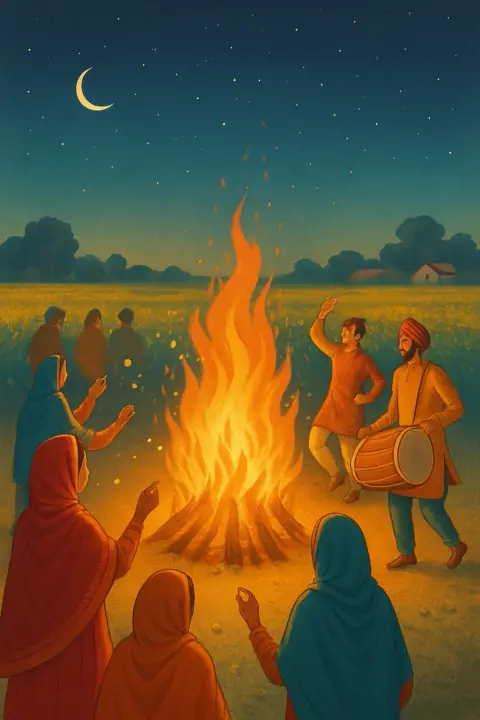
A courtyard bonfire fed with sesame, jaggery and popcorn on a January night
Lohri in Chandigarh is not one public event: on the evening before Maghi, the Punjabi Makar Sankranti, bonfires are lit in sector parks, housing-society courtyards, campuses and institutions across the city and the wider Tricity of Chandigarh, Mohali and Panchkula. Date: 13 January 2027 (expected); Punjab keeps Lohri on a fixed 13 January. Everything happens after dark, and the best way in is an invitation to someone's fire. The festival itself is described on the Lohri page.
Lohri is the bonfire on the evening before Makar Sankranti, and in Chandigarh it burns in courtyards, campuses and institutions rather than at a single public venue.
Where to watch
Punjab Lok Bhawan: the main official Lohri function, with a folk programme by the North Zone Cultural Centre. By invitation, not open entry.
Municipal Corporation building, Sector 17: the corporation's own Lohri celebration in central Chandigarh; a staff event rather than a public one.
Panjab University campus, Sector 14: campus Lohri with prayers, folk songs and dance near the Single Window Enquiry Cell; the most open of the institutional functions.
District Administrative Complex, Mohali: 'Daughters' Lohri', a bonfire lit in honour of newborn girls, in Mohali next to Chandigarh.
Sector parks and housing-society courtyards: the real, scattered Lohri of neighbourhood bonfires across the sectors. You join by invitation from whoever lit the fire.
Free viewing
- Sector parks and open grounds across the city, where neighbourhood bonfires are lit after dark
- Panjab University campus, near the Single Window Enquiry Cell, during the campus function
- The Sector 17 plaza, near the Municipal Corporation building
- Any market square where rewari, gajak and groundnuts are sold in the days before; the trade is visible well ahead of the night
Programme
The bonfire evening
The Lohri bonfire. Sesame, jaggery, rewari, gajak, peanuts and popcorn are thrown into the fire and shared around it; people circle the fire; folk songs about Dulla Bhatti are sung and children go door to door for treats. Households with a newborn or a newly married couple hold the fullest celebration of all: a first Lohri.
 Courtyards, sector parks, housing societies, campuses and institutional grounds across Chandigarh and the wider Tricity
The bonfire evening: official functions
The institutional layer, which is the closest Chandigarh comes to an official Lohri. In January 2026 this included a function at Punjab Lok Bhawan attended by the Punjab Governor and the Chief Ministers of Punjab and Haryana, with a North Zone Cultural Centre programme of Lohri folk dance and song and the lawns dressed as a heritage village; a staff celebration at the Chandigarh Municipal Corporation building in Sector 17; a 'Daughters' Lohri' at the District Administrative Complex in Mohali honouring 51 newborn girls; and campus functions at Panjab University, Mehr Chand Mahajan DAV College for Women in Sector 36 and CGC University in Mohali.
Punjab Lok Bhawan; Chandigarh Municipal Corporation, Sector 17; District Administrative Complex, Mohali; Panjab University; Sector 36; Mohali
Maghi / Makar Sankranti
Maghi, the first day of the month of Magh, which Lohri is the eve of. Lohri and Makar Sankranti are one observance across two evenings and a morning.
Chandigarh and across Punjab
How Chandigarh keeps Lohri
Chandigarh was planned as a grid of sectors, each with its own market and green strips, and Lohri follows that plan. Each sector park or society ground has its own fire, lit by residents. People walk round it throwing in sesame, popcorn, groundnuts and rewari, sing the Lohri songs about Dulla Bhatti, the folk hero who by tradition rescued girls from being sold, and share the sweets. Households with a newborn or a new marriage celebrate a first Lohri, louder than the rest.
Above this neighbourhood layer sit the institutional functions listed above. Most are by invitation or for staff; the campus Lohri at Panjab University in Sector 14 is the most open. In Mohali, next door, the district administration lights a 'Daughters' Lohri' in honour of newborn girls.
A visitor without local friends can still see a lot: neighbourhood fires in the sector parks from the edge, and the sweet trade in the markets in the days before.
At someone else's fire
Lohri is a home festival, so the etiquette is that of a guest.
- Come invited — Society grounds and courtyards are private. Watch a sector-park fire from the edge, and join the circle when asked.
- Bring something sweet — A box of gajak or rewari is the natural thing to carry, and some of it goes into the fire. More on where to buy: sweets in Chandigarh and markets.
- Dress for a cold night — Layers, and nothing synthetic or loose near open flames.
- Ask before photographing — A family fire is a private celebration, especially a first Lohri for a baby or a bride: ask before you take photos.
January weather
January is Chandigarh's coldest month: average highs of about 18°C and lows of about 7°C, with around two rainy days. December and January are also the season of fog in the city. The fires burn after dark, when it is coldest, so plan for a chilly evening outdoors. Month by month: Chandigarh weather.
Getting there from Delhi
Lohri sends people home to Punjab, so the Delhi–Chandigarh trains and roads fill up before the hotels do.
- Train: a morning Vande Bharat and evening Shatabdis run from New Delhi to Chandigarh Junction in about three hours; check current times and fares on Indian Railways (NTES or IRCTC). The station is about 8 km from the centre.
- Bus: Volvo buses from ISBT Kashmere Gate every 30–60 minutes, about 5 hours, approximately ₹500–900, to ISBT Sector 17.
- Air: Shaheed Bhagat Singh International Airport is about 12 km away.
Inside the city the sectors are far apart, so a taxi app is the usual way between fires: getting around Chandigarh. Where to stay: Chandigarh by area.
The next morning: Maghi
Lohri is the eve of Maghi, the first day of the month of Magh, and the two are one observance across an evening and a morning. Calendars outside Punjab call that morning Makar Sankranti, and some almanacs put Lohri a day later, on 14 January; if you are invited, the hosts' date is the one that counts. The largest Maghi gathering in Punjab is the Maghi Mela at Sri Muktsar Sahib, 13–15 January 2027 (expected).
FAQ
When is Lohri in Chandigarh?
13 January 2027 (expected), in the evening. Punjab keeps Lohri on a fixed 13 January in its holiday list.
Is there a public Lohri event in Chandigarh?
There is no single public venue. The most open function is the campus Lohri at Panjab University, Sector 14; otherwise there are neighbourhood fires in the sector parks, which you join by invitation.
What to do during Lohri?
Gather round the bonfire after dark, throw in sesame, popcorn, groundnuts and rewari, sing the Lohri songs and share the sweets. Bring gajak or rewari if you are invited.
What is the story behind Lohri?
Many Lohri songs tell of Dulla Bhatti, a Punjabi outlaw of Akbar's time who, by tradition, rescued girls from being sold. The festival also marks the passing of the winter solstice and the end of winter.
How cold is Chandigarh at Lohri?
In January highs average about 18°C and lows about 7°C, and fog is common in December and January.
Sources (1)
Facts checked: 22 October 2026. Prices and hours are approximate; check locally.