 India GO
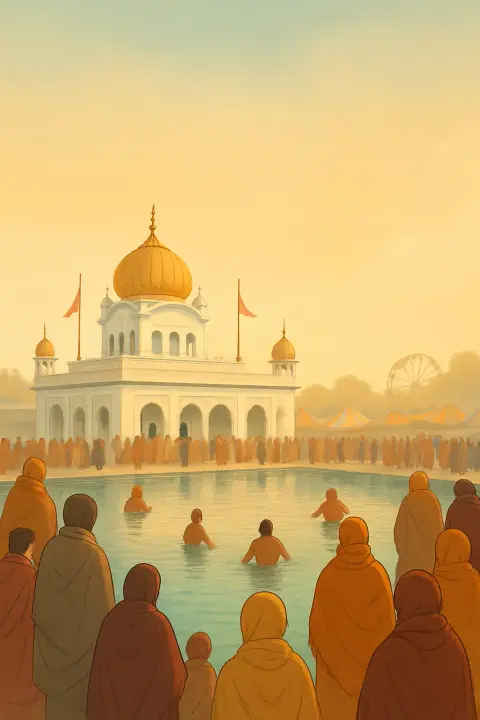
Maghi Mela at Sri Muktsar Sahib: the dawn bath of the Forty Liberated
Bathing at dawn in January fog where the Forty Liberated Ones fell
Maghi Mela is the biggest gathering of the year at Sri Muktsar Sahib in south-western Punjab, held the day after Lohri in memory of the forty Sikhs who fell here fighting for Guru Gobind Singh in 1705. Dates: 13–15 January 2027 (expected). The main day is Maghi itself, 14 January 2027 (expected), when pilgrims bathe from before dawn in the sacred pool of Gurdwara Tuti Gandi Sahib; the next day a Nagar Kirtan procession goes through the town, and a huge rural fair runs for more than a fortnight around both.
The date is fixed; the Sri Muktsar Sahib district administration announces the mela days and the local holiday in December or early January.
The legend
Maghi is one of three festivals, with Vaisakhi and Diwali, that Guru Amar Das named for the Sikhs to gather together.

Forty Sikhs had renounced Guru Gobind Singh, but Mai Bhago shamed them into returning; they rejoined him at Khidrana in 1705 and fell in battle.
The Guru forgave them and tore up their letter. The place was renamed Muktsar, the pool of liberation, and the fallen are honoured as the Forty Liberated.
Customs
Bath in the sarovar
At dawn on Maghi pilgrims bathe in the gurdwara's sacred pool and walk round the shrines of the forty.
Langar
All day the gurdwaras serve langar, the free shared meal for everyone who comes.
A farmers' fair
Around it a fair spreads over many days, from trinkets to farm machinery for the farmers, with circuses and big wheels.
Words of the festival
ਮੇਲਾ ਮਾਘੀ
Mela Maghi
The fair of the month of Magh at Sri Muktsar Sahib.
Where to celebrate
Sri Muktsar Sahib
On Maghi, pilgrims bathe at dawn in the sarovar of Gurdwara Tuti Gandi Sahib, where the Forty Liberated Ones fell in the battle of 1705, and a rural fair fills the town around it.
How the mela runs
Maghi falls on the first day of the month of Magh, the day after Lohri, when Punjab keeps 14 January. Muktsar has made it the town's own day since the battle of Khidrana in 1705, after which the place was renamed Muktsar, "the pool of liberation".
On the morning of Maghi, in the January cold and often in fog, pilgrims from across Punjab and from Haryana and Rajasthan take a dip in the sarovar (the sacred pool) of Gurdwara Tuti Gandi Sahib and walk round the shrines of the battle site. Langar, the free community meal, is served all day. The following day the Nagar Kirtan procession goes through the streets.
Around the gurdwaras the mela spreads over the whole town for more than a fortnight: stalls selling everything from kirpans to kitchenware and farm machinery, circuses, giant wheels and the wall of death motorcycle show. At the village of Lambi Dhab a big cattle fair shows off the horses for which the district is known. Political parties also hold rallies in the town on Maghi.
The gurdwaras of the battle site
Most of the shrines stand around the sarovar in the centre of town; Tibbi Sahib and Rakabsar Sahib lie further out. All are free to enter.
Gurdwara Tuti Gandi Sahib (Darbar Sahib)
The main shrine, on the western bank of the sarovar where the Maghi bath takes place. The name, tuti gandi, is usually explained as broken ties mended: here, by Sikh tradition, Guru Gobind Singh tore up the letter in which the forty had renounced him.
Gurdwara Tambu Sahib
At the south-eastern corner of the same pool, inside the main complex.
Gurdwara Shahidganj Sahib
About 50 m from the sarovar, where the Guru is believed to have cremated the fallen.
Gurdwara Tibbi Sahib and Gurdwara Rakabsar Sahib
Tibbi Sahib stands on the small mound from which, by Sikh tradition, the Guru fought in the battle. Rakabsar Sahib, about 200 m east, marks the place where, by Sikh chronicles, the stirrup of his horse snapped.
Mukt-e-Minar
An 81-foot memorial in the shape of the khanda, the double-edged sword of the Sikh emblem, with forty rings for the forty, unveiled in 2005 for the battle's 300th anniversary.
Maghi, Lohri and the Magh Mela: not to be confused
Maghi is the Punjabi name for the start of the solar month of Magh, the same turning point of the year that the rest of India marks as Makar Sankranti. The evening before is Lohri, with bonfires across Punjab. Guru Amar Das named Maghi, with Vaisakhi and Diwali, as one of the three days for Sikhs to gather together, and after 1705 it became tied to the forty martyrs of Muktsar.
Maghi Mela should not be confused with the Magh Mela: the Hindu bathing fairs held in the month of Magh on riverbanks and at temple tanks, the best known of them at Prayagraj. They fall in the same season, but they are different festivals.
Etiquette and safety
Visitors of any faith are welcome at the gurdwaras and at langar. The mela draws lakhs of people, and the police close the centre to traffic.
- In the gurdwara — Cover your head (a scarf is fine), leave shoes at the entrance and bring no tobacco or alcohol into the precinct.
- On foot near the gurdwara — The roads around the main gurdwara are closed to vehicles, with parking and temporary bus stands on the roads into town. Expect diversions for the political rallies.
- Fog — Mid-January in this part of Punjab is cold and often foggy. The UK Foreign Office advises against road travel at night and in fog, so plan to arrive in daylight the day before.
- In the crowd — Keep phone and cash in a front pocket, agree a meeting point, and follow police instructions at the sarovar steps.
Getting there and where to stay
Sri Muktsar Sahib is a district town about 53 km from Bathinda, 50 km from Faridkot and 249 km from Chandigarh.
- By train
Muktsar has a station but few trains, none of which start or end here; direct trains run to Delhi, Bathinda, Ferozepur and Fazilka. It is Lohri week, when Punjab travels home, so book as soon as the 60-day window opens.
- By air
The nearest airport is Bathinda, about 41 km away, with domestic flights. The nearest international airport is Amritsar, about 183 km.
- Where to stay
Muktsar has few hotels. The gurdwara's guest house, Shri Kalgidhar Niwas, has forty rooms, and the sarais fill with pilgrims; Bathinda and Faridkot take the overflow. Book about a month ahead and arrive the evening before Maghi.
FAQ
When is Maghi Mela at Muktsar?
13–15 January 2027 (expected). The holy bath is on Maghi, 14 January 2027 (expected), the day after Lohri, and the Nagar Kirtan the day after that. The district administration announces the mela days and the local holiday in December or early January.
Why do Sikhs celebrate Maghi?
Maghi is one of the three days Guru Amar Das named for Sikhs to gather, and at Muktsar it honours the Chali Mukte, the Forty Liberated: Sikhs who had left Guru Gobind Singh, returned, and fell fighting for him at Khidrana in 1705.
What is Muktsar Sahib famous for?
For the battle of 1705, the gurdwaras built where the forty fell, and the Maghi Mela, one of the most important Sikh gatherings of the year. The district is also known for its horses, shown at the Lambi Dhab cattle fair during the mela.
Is Maghi Mela the same as the Magh Mela?
No. Maghi Mela is the Sikh gathering at Sri Muktsar Sahib in Punjab; the Magh Mela is the name for Hindu bathing fairs on riverbanks in the same month, the best known at Prayagraj.
Can non-Sikhs attend Maghi Mela?
Yes. The gurdwaras and the langar are open to everyone; cover your head, take off your shoes and bring no tobacco or alcohol into the precinct.
Sources (6)
Facts checked: 21 October 2026. Prices and hours are approximate; check locally.