 India GO
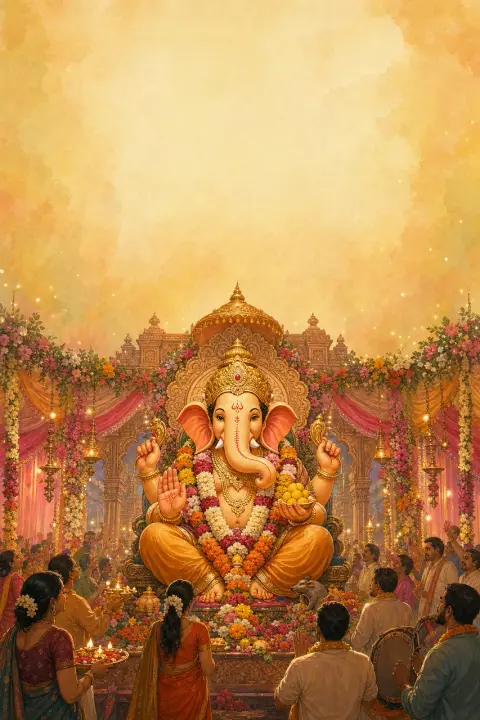
Ganesh Chaturthi in Pune: the Manache Ganpati and the long visarjan
Ten days when Mumbai belongs to Ganesha
Pune is where Ganesh Chaturthi became a public street festival. For ten days the pandals of the old-city peths, the historic wards, are open to everyone, and on the last day, Anant Chaturdashi, five historic mandals lead an immersion procession down Laxmi Road that runs for more than a day without stopping. Next Ganeshotsav: 4–14 September 2027; the visarjan falls on the last day of that range.
The older, more ceremonial half of the festival: five mandals hold a fixed order of precedence, and the visarjan procession down Laxmi Road runs for more than a day without stopping.
Where to watch
Kasba Ganpati, Kasba Peth: Pune's presiding deity, linked to Jijabai and the young Shivaji (1639); always first in the procession.
Tambdi Jogeshwari, Budhwar Peth: the Ganpati of the temple of Jogeshwari, Pune's patron goddess; second.
Guruji Talim, Laxmi Road: founded in 1887 by a Hindu and a Muslim family; third.
Tulshibaug Ganpati, Tulshibaug: a 13-foot idol in the middle of the Tulshibaug market, with the mandal dating from 1901; fourth.
Kesariwada Ganpati, Narayan Peth: at Kesari Wada, home of Lokmanya Tilak's newspaper Kesari, whose trust founded it in 1894; fifth.
Dagdusheth Halwai Ganpati, Budhwar Peth: not one of the five, and the most visited mandal in the city.
Free viewing
- Laxmi Road on Anant Chaturdashi, where the five Manache Ganpati lead the procession from late morning
- Alka Chowk, where the procession routes meet and the crowd is densest
- Tilak, Kumthekar and Kelkar roads, the other procession routes
- The pandals of the old-city peths through the ten days, Dagdusheth Halwai's above all
Programme
Anant Chaturdashi: visarjan procession
The five Manache Ganpati lead, followed by the rest of the city's mandals, with dhol-tasha pathaks playing the whole way.
 Laxmi Road and the old-city route towards the river
How Pune made the festival public
Ganesha was worshipped in public in Pune long before the modern festival. The Peshwas, who ran the Maratha state from the city in the 18th century, held a Ganesh festival in their capital in the month of Bhadrapada; under British rule it shrank back into family homes.
The revival also began here, in the 1890s, and it is told in two ways. The common account credits Lokmanya Tilak: in 1893 he praised the public celebration in his newspaper Kesari and set about turning a household festival into a large, organised one with music, lectures and processions, which also gave people a way to gather under colonial rule (a UCLA account dates this modern form to 1894). The other account puts the start a year earlier, in 1892: Krishnajipant Khasgiwale saw a public Ganesh festival in Gwalior and brought the idea home, and his friend Shrimant Bhausaheb Rangari installed the first sarvajanik (public) Ganesha in his wada.
That history is still visible in the procession. Kasba Ganpati, the town’s presiding deity, whose idol Shivaji’s mother Jijabai is said to have consecrated in 1639, always goes first. The fifth of the Manache Ganpati, the mandals honoured with first place, is Kesariwada, founded in 1894 by the trust of Tilak’s newspaper.
The ten days in the old city
From Chaturthi the public pandals of the peths are open and free to enter. The most visited is Dagdusheth Halwai Ganpati in Budhwar Peth: it is not one of the five Manache Ganpati, but it draws the longest queues in the city. The Ganpati of the Mahatma Phule Mandai market hall is also among the most honoured. The easiest way to see the festival is on foot between them, through Tulshibaug and along Laxmi Road.
The sound of Pune’s Ganeshotsav is the dhol-tasha pathak, a volunteer drum troupe that can have several hundred members. The troupes have formed since the 1960s as a Marathi alternative to hired bands, rehearse on open grounds from roughly mid-July to mid-August, and play the great mandals’ processions and the immersion.
Some families say goodbye to their household Ganesha on the second, fifth or seventh day, so smaller immersion processions run through the week. The big public idols stay until Anant Chaturdashi.
Anant Chaturdashi: the visarjan day
The immersion day is the last day of the dates above. Exact timings are set each year, so check local news the day before.
- Late morning: Laxmi Road
The five Manache Ganpati set off in their fixed order, Kasba Ganpati first, each with its own drum troupes. Laxmi Road is where they pass first; come early for a place at the side.
- Afternoon and evening: Alka Chowk
The procession routes meet at Alka Chowk, where the crowd is densest. Tilak, Kumthekar and Kelkar roads carry the other routes and give more room to stand.
- Through the night into the next day
The city’s other mandals follow the five, and the procession runs for more than a day before the last idols reach the water. Most visitors see a few hours of it, not the whole.
Getting there and moving around
Getting to Pune is not the Ganpati bottleneck: the rail crunch is on the Konkan line out of Mumbai. Mumbai is about three hours away by road or train, so the procession alone also works as a trip from there. Book rooms about a month ahead and arrive the day before Chaturthi.
On the festival’s main days the central streets are closed to vehicles, and on visarjan day cars get nowhere near the peths. Stay in Deccan Gymkhana, JM Road, FC Road or Shivajinagar: close to the old city but outside the closed streets. The metro stations Deccan Gymkhana, Chhatrapati Sambhaji Udyan, PMC and Civil Court are the useful ones on procession days, and a rented bicycle gets through where cars cannot.
Etiquette and safety
Pandals are places of worship, and the crowds on the last day are among the largest in the city. See also is India safe.
- Dress and shoes — Dress modestly and follow those around you on shoes; at temples such as Kasba Ganpati shoes are left at the door. Ask before photographing people at prayer.
- Crowds — The FCDO notes that stampedes have occurred at large religious gatherings. At Alka Chowk and on Laxmi Road, stand where you can step out, follow police directions and agree a meeting point with your group.
- Pockets — Keep valuables in front pockets: pickpockets work every big festival crowd.
- Ears — Dhol-tasha troupes are extremely loud. Earplugs are sensible for adults and essential for children.
FAQ
When is Ganesh Chaturthi in Pune?
Ganeshotsav runs ten days, from Chaturthi to Anant Chaturdashi: 4–14 September 2027. The visarjan procession is on the last day.
What is the schedule for the Ganpati visarjan in Pune?
On Anant Chaturdashi the five Manache Ganpati leave from late morning in a fixed order, Kasba Ganpati first, down Laxmi Road. The procession then runs through the night and for more than a day in all.
Which are the five Manache Ganpati in Pune?
Kasba Ganpati, Tambdi Jogeshwari, Guruji Talim, Tulshibaug Ganpati and Kesariwada Ganpati, in that order. Dagdusheth Halwai is not one of them, but it is the most visited mandal.
Who started the public Ganesh festival in Pune?
The Peshwas held a public festival in the 18th century. The modern one dates from the 1890s and is told two ways: most accounts credit Lokmanya Tilak from 1893, another says Bhausaheb Rangari set up the first public Ganesha in his wada a year earlier, in 1892.
Why is Ganesh Chaturthi famous in Mumbai?
Mumbai holds the biggest version, with giant pandals such as Lalbaugcha Raja, where the queue for darshan can pass 20 hours, and immersions in the sea. Pune is the older, more ceremonial half. More: Ganesh Chaturthi.
Do you pay to enter the pandals?
No. Public pandals are free to enter, and watching the procession from the street is free.
Sources (3)
Facts checked: 21 October 2026. Prices and hours are approximate; check locally.