 India GO
Markets in Ajmer
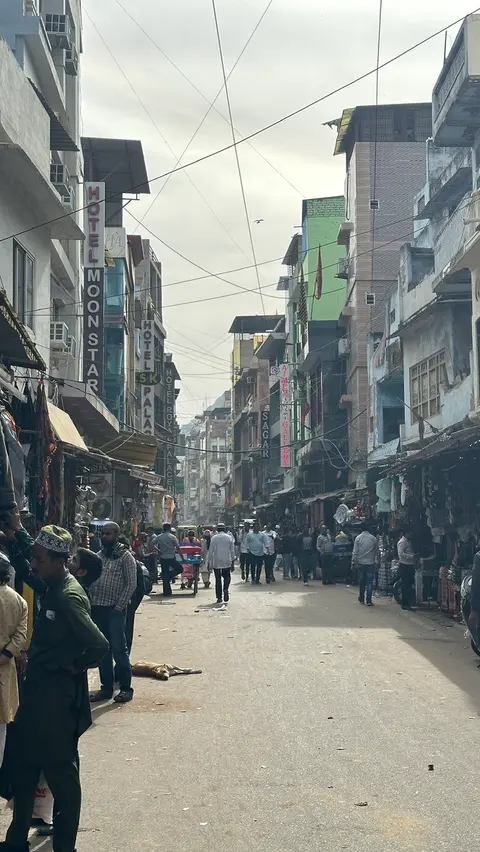
Shopping in Ajmer happens in the bazaars of the old city and the centre, and each street has its own trade: bangles in Chudi Bazar, silver at Madar Gate, attar and silver on Naya Bazar, a bit of everything on Nala Bazar, and cloth in Purani Mandi. Go by what you want to buy, check the hallmark on silver, and bargain at the stalls.
What to buy, and where
Shopping in Ajmer means the bazaars of the old city and the centre. Each street has its trade, so it is easiest to go by what you want to buy.
Bangles: Chudi Bazar
One narrow lane given over almost entirely to bangles in lac, glass and metal, stacked floor to ceiling and sorted by colour, with earrings, nose rings and hair ornaments in between. Lac bangles are sized on the spot: the seller warms the ring until it gives and works it over your wrist. See Chudi Bazar.
Silver, bandhani and embroidered shoes: Madar Gate
The market around one of the old city gates is the address people in Ajmer give for silver. It also has bandhani dupattas (Rajasthan's tie-dyed scarves), dress material, embroidered mojris and jootis (slip-on leather shoes) stacked by size, and spice counters.
Attar and silver: Naya Bazar
The city's main shopping street, running through the centre past the Government Museum, with goldsmiths, silver workshops, woodwork and miniature painting. Its ittar sellers are the counters to slow down at: attar is perfume distilled into a base oil rather than alcohol, and Ajmer's rose and khus trade goes back to the time of Jahangir. See Naya Bazar.
A bit of everything and Nagra shoes: Nala Bazar
A long street through the old city with the broadest mix in one walk: garments, silver, woodwork, miniature paintings and Nagra shoes, the traditional Rajasthani slippers. See Nala Bazar.
Cloth by the metre and saris: Purani Mandi
The cloth end of the old market, a few lanes from the Dargah quarter: Rajasthani fabric, saris and dress material, with Kasturi Silk Palace the shop people name first. Come here for fabric cut to your length rather than a finished souvenir. See Purani Mandi.
Pilgrim goods and sweets: Dargah Bazaar
The lanes around the shrine sell rose water, prayer items, fabrics and religious objects, alongside fresh produce. This is also where to buy sohan halwa, Ajmer's own sweet, sold by weight; see Ajmer sweets.
How to buy without overpaying
- Check what the price is for — In Chudi Bazar bangles are quoted per dozen about as often as per piece; ask which before you agree.
- Silver: ask for the hallmark — Bargaining on jewellery is expected at Madar Gate; ask to see the hallmark before agreeing on anything.
- Attar: ask about strength and oil — Before buying a perfume it is normal to ask what the concentration is and which oil it is in. Both silver and attar are negotiable on Naya Bazar.
- Shops or stalls — On Nala Bazar the larger shops mostly keep fixed prices and the stalls do not, so what you pay depends on which side of the doorway you stand.
- Avoid the midday heat — Many Nala Bazar shops close for a long lunch break through the hottest part of the afternoon; go in the morning or after five.
Around the Dargah
In the shrine quarter, insistent "guides" and collectors for the chadar (the cloth offered at the tomb) work the lanes. Any donation here is voluntary and its size is yours to set. General advice on touts and pressure selling is on scams in India.
Miniature painting from Kishangarh
Miniatures are sold on Naya Bazar and Nala Bazar, but the school with the strongest local claim is Kishangarh, about 27 km from Ajmer, whose best-known image is the Bani Thani. Studio Kishangarh, inside the Phool Mahal palace at the foot of Kishangarh Fort, works with hereditary painters and sells their work at studio prices; visits are arranged in advance through the studio.
FAQ
What is the best place for shopping in Ajmer?
It depends on what you want: Chudi Bazar for bangles, Madar Gate for silver, Naya Bazar for attar and silver, Nala Bazar for the widest mix, Purani Mandi for cloth and saris.
What is Ajmer famous for buying?
Silver jewellery, lac bangles, attar (oil-based perfume, especially rose), bandhani scarves, Nagra and mojri shoes, and sohan halwa from the shops by the Dargah.
Where is the cloth market in Ajmer?
Purani Mandi, a few lanes from the Dargah quarter, is where the city buys saris, Rajasthani fabric and dress material by the metre.
Is bargaining expected in Ajmer's markets?
Yes at the stalls, and on silver, jewellery, shoes and attar. Larger shops on Nala Bazar mostly keep fixed prices.
Where is the cheapest market in Ajmer?
Chudi Bazar is the low-price lane for bangles and small jewellery; check whether a price is per piece or per dozen.
Facts checked: 15 October 2026. Prices and hours are approximate; check locally.
The full catalogue, hidden spots and districts on the map, plus “nearby” mode.
Open in India GO