 India GO
Sawai Gandharva Bhimsen Mahotsav: five December days of ragas in Pune
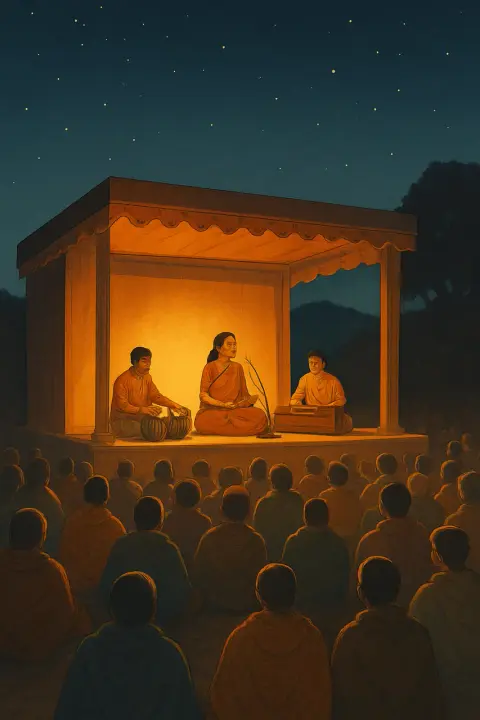
Ragas under a vast canopy, heard cross-legged in the December chill
Sawai Gandharva Bhimsen Mahotsav, or simply Sawai, is one of India's most important festivals of Hindustani classical music, founded in Pune in 1953 by Bhimsen Joshi in memory of his guru. It usually runs for five days in mid-December, from mid-afternoon to 22:00, under a vast canopy where much of the audience still sits on the floor. Dates are announced each October, and passes sell out.
The Arya Sangeet Prasarak Mandal announces the dates each October; the artist line-up follows in late November.
The legend
In 1901 young Ramchandra of Kundgol hummed "Jamuna ke teer", Ustad Abdul Karim Khan's Bhairavi, in front of him. The Ustad liked the voice and took him on.
He made his name in Marathi theatre playing female roles and earned the title Sawai Gandharva, after the great Bal Gandharva.
In 1953, on the first anniversary of his teacher's death, his disciple Bhimsen Joshi held a modest memorial concert in Pune.
Joshi ran the festival for half a century, inviting each musician personally. After his death in 2011 his name was added to the festival's.
And the festival still ends with that very song: the whole audience listens to Sawai Gandharva's recording of "Jamuna ke teer".
Customs
Shehnai for the guru
Each festival opens with a tribute to Sawai Gandharva, and by tradition a shehnai player performs first.
The debut
For a young musician, a first appearance here marks their arrival in the classical music world.
Khayal and more
Khayal vocals lead, with instrumentalists, dhrupad, bhakti, ghazal, qawwali and Carnatic music from the south alongside, and dance too.
Listening on the floor
The audience sits under a vast shamiana, on chairs or Indian-style on the floor.
Until ten at night
Concerts once ran all night until morning. Under a Pune municipal rule they now end by 10 pm.
Words of the festival
खयाल
khayal
the main form of north Indian classical vocal music; the word means "imagination"
घराणे
gharana
a musical lineage that passes a style from teacher to pupil
किराणा घराणे
Kirana gharana
the school of Abdul Karim Khan, Sawai Gandharva and Bhimsen Joshi, named for Kairana
शामियाना
shamiana
a vast cloth canopy over the concerts
राग भैरवी
raag Bhairavi
a morning raga, the mode of "Jamuna ke teer", which closes the festival
True or myth
❌ Myth. They once did, but under a Pune municipal rule the evening programmes now end by 10 pm.
❌ Myth. It began at Laxmi Krida Mandir, moved between Pune school grounds, and since 2018 has been held at the Maharashtriya Mandal sports complex.
✅ True. Against his teacher's wishes he joined a drama company and became famous in female roles.
Where to celebrate
Pune
Five days of Hindustani classical music under a vast canopy in Pune, at the festival Bhimsen Joshi founded in 1953; much of its famously silent audience still sits on the floor.
When it is and how to get passes
The festival usually runs for five days, Wednesday to Sunday, in the second or third week of December. The organisers, the Arya Sangeet Prasarak Mandal, announce the dates each October, and the artist line-up follows in late November. Until then, any date you see is a guess.
Passes go on sale shortly before the festival, online through the booking link on the official site (esawai.com) and at a few shops in Pune, and they sell out. If you are coming to Pune for it, book your room about six weeks ahead and buy passes as soon as sales open, rather than counting on the door.
The venue and the evening
Since 2018 the festival has been held at the Maharashtriya Mandal sports complex (Krida Sankul) in Mukund Nagar, Pune, under a vast open-sided shamiana, a cloth canopy. There are chairs, and there is Indian-style floor seating, which much of the audience still prefers. Concerts run from mid-afternoon to 22:00 under the Pune municipal noise rule; in recent editions the closing Saturday has run until midnight and the Sunday has started at noon.
Each festival opens with a tribute to Sawai Gandharva, traditionally with a shehnai player first. Khayal vocals lead the programme, with instrumentalists, dhrupad, bhakti music, ghazal, qawwali, Carnatic musicians and dance alongside, and a debut here still marks a young artist's arrival. The audience is famous for its silence: arrive before a set begins and keep phones dark.
The venue has moved before, from Laxmi Krida Mandir through several Pune school grounds, so check the address before you book a hotel nearby.
Practical tips
A long December evening under an open-sided canopy.
- Bring a warm layer — December nights in Pune are cool, and the shamiana is open at the sides.
- Take the metro — In past editions Pune Metro extended its hours late into the evening for the festival and ran a shuttle bus from Swargate metro station to the ground. See Pune metro.
- Floor or chair — The ground has both chair seating and Indian-style floor seating; check which one your pass covers.
- Morning side programmes — In past years the morning programmes Shadja (films on musicians) and Antaranga (conversations with artists) were free on a first-come basis at the Sawai Gandharva Smarak near Rahul Theatre, Shivajinagar. Check whether they run.
From a memorial concert to a Pune institution
The festival began in 1953 as a small memorial concert held by Bhimsen Joshi on the first death anniversary of his guru, Sawai Gandharva of the Kirana gharana. Joshi led it until 2002 and personally invited the artists; after his death in 2011 the festival took his name as well. The official history lists the moments Pune remembers: early concerts by Ustad Bade Ghulam Ali Khan and Ustad Ali Akbar Khan, Zakir Hussain's first tabla solo here in 1962, and all-night sessions that ended only when the city's rule moved the close to 22:00. The festival paused for the first time in 2020.
For more of the city's calendar, see festivals in Pune and where to stay in Pune.
FAQ
When is Sawai Gandharva Bhimsen Mahotsav?
Usually five days, Wednesday to Sunday, in the second or third week of December in Pune. The organisers announce the exact dates each October.
Where is Sawai Gandharva held?
At the Maharashtriya Mandal sports complex (Krida Sankul), Mukund Nagar, Pune, since 2018. The venue has changed before, so check it each year.
How do I get Sawai Gandharva passes?
Passes go on sale shortly before the festival, online through the official site's booking link and at a few shops in Pune. They sell out, so buy as soon as sales open.
What time do the concerts end?
By 22:00 on most nights, under a Pune municipal rule. In recent editions the closing Saturday has run until midnight.
Sources (4)
Facts checked: 21 October 2026. Prices and hours are approximate; check locally.