 India GO
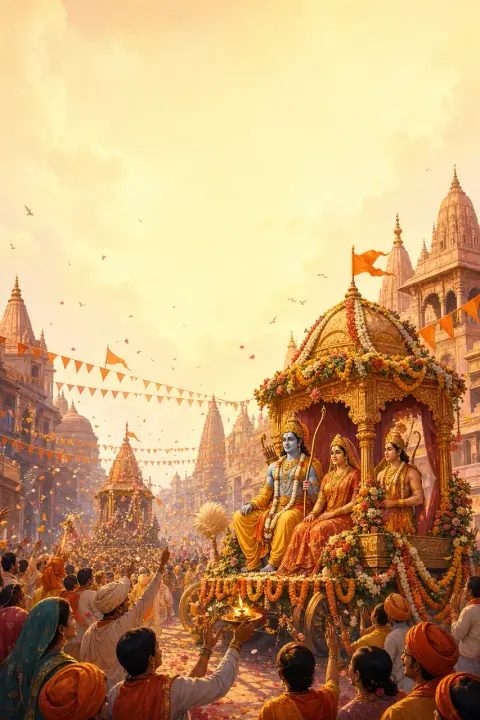
Ram Navami in Haridwar: the last day of Chaitra Navratri
A king born at noon, a cradle rocked in every temple
In Haridwar Ram Navami is the last day of Chaitra Navratri, the spring nine nights of the goddess, so the day belongs as much to the hill shrines of Mansa Devi and Chandi Devi as to Rama. Next Ram Navami: 15 April 2027. Expect an early bath at Har Ki Pauri, long queues on the ropeways and a full Maya Devi Temple, with Rama’s birth kept at noon in temples across town.
In Haridwar, Ram Navami closes Chaitra Navratri: queues at the hill shrines of Mansa Devi and Chandi Devi, and a bathing day at Har Ki Pauri. In 2027 it is also an Ardh Kumbh bathing day.
Where to watch
Har Ki Pauri and Brahma Kund: the main bathing ghat, busy from early morning on Ram Navami; the evening Ganga aarti runs as on every other day. Free.
Mansa Devi Temple: the goddess shrine on Bilwa Parvat above the town and the main goal of the Navratri crowd. Up by ropeway (Udan Khatola) from the lower station in town, or on foot by the steep path; on Navratri days the queues are long, so start early.
Chandi Devi Temple: on Neel Parvat across the river, about 4 km from Har Ki Pauri, with its own ropeway; usually calmer than Mansa Devi.
Maya Devi Temple: with Mansa Devi and Chandi Devi, one of Haridwar's three Siddh Peeths, in the old town near Har Ki Pauri; crowded on Ashtami and Navami. Free.
Free viewing
- Har Ki Pauri and the neighbouring ghats: the Navami bath and the evening Ganga aarti are free to watch
- The footpath to Mansa Devi and the temple courtyards (temple entry is free; only the ropeway is paid)
- Maya Devi Temple on Ashtami and Navami
Programme
Ram Navami in Haridwar
In Haridwar, Ram Navami is the closing day of Chaitra Navratri, which is why the hill temples are full. Lakhs of pilgrims move through Mansa Devi across Saptami, Ashtami and Navami.
 Mansa Devi Temple and Chandi Devi Temple, Haridwar
How the day runs in Haridwar
Ram Navami is the ninth lunar day of the bright half of Chaitra, Rama’s birthday, and the day his birth is kept at noon. Elsewhere in India it is mostly a temple festival; in Haridwar it falls on top of Navratri, and the crowd follows the goddess.
The day starts on the water. Har Ki Pauri and Brahma Kund, the main bathing ghat, are busy from early morning. Then the Navratri pilgrims make for Haridwar’s three Siddh Peeths, the shrines where prayer is traditionally held to be answered: Mansa Devi on Bilwa Parvat above the town, Chandi Devi on Neel Parvat across the river, and Maya Devi Temple in the old town, the goddess the city was once named after. Ashtami and Navami, the eighth and ninth days, are the fullest of the festival at all three.
Rama’s own observance is quieter: a fast until noon, readings of the Ramayana, and Hanuman temples that are especially busy on the day. If you want the Rama side, look for an evening Ramayana recitation (path). The evening Ganga aarti at Har Ki Pauri runs as on any other day. More about the festival itself: Ram Navami.
A plan for Ashtami and Navami
Everything that matters is within walking distance of the old town, and the queues are the only real obstacle.
- Arrive on Ashtami
Come the day before, so the early bath at Har Ki Pauri is a walk from your room. Stay in the old town near the ghat: see where to stay in Haridwar.
- Mansa Devi early
The Udan Khatola ropeway leaves from the lower station in town; the alternative is a steep footpath. Temple entry is free, only the ropeway is paid. On Navratri days the queues are long, so go first thing.
- Chandi Devi for a calmer climb
About 4 km from Har Ki Pauri across the Ganga, with its own ropeway (the operator lists a combined ticket for the Mansa Devi and Chandi Devi ropeways at about ₹460 per person) or a 3 km forest path from Chandighat. It is usually calmer than Mansa Devi.
- Back for the aarti
End at Har Ki Pauri for the evening Ganga aarti, free to watch. Maya Devi Temple is a few minutes away and can be fitted in on the way.
Booking, and Kumbh years
In an ordinary year Ram Navami does not fill Haridwar, but the Navratri pilgrims make rooms near Har Ki Pauri scarcer: book about three weeks ahead and take the train about a month out. A Kumbh year is different. When Haridwar holds the Kumbh or Ardh Kumbh, the mela runs through the spring and its bathing days fall around Chaitra Navratri and Mesha Sankranti, so the town is full for weeks: in such a year book months ahead. Details: Kumbh Mela in Haridwar.
Practical notes
Ram Navami falls between late March and late April. Haridwar is warm by then: about 30°C by day in March and 35°C in April, dry, with cool mornings.
- Shoes and clothes — Shoes off at every shrine; cover shoulders and knees. See temple dress code in Haridwar.
- Crowds — UK travel advice notes that stampedes have happened at religious gatherings in India and advises avoiding large gatherings, including at religious sites, and following local authorities. In the ropeway queues and on the ghat steps, keep to the side when the crowd surges.
- Bathing — Chains run along the bathing steps at Brahma Kund: the current is strong, so hold one and stay within the chained sections. More in Haridwar safety.
FAQ
When is Ram Navami in Haridwar?
On 15 April 2027, the ninth day of the bright half of Chaitra and the last day of Chaitra Navratri.
Why is Ram Navami celebrated after Navratri?
It is not after it but on its last day: Rama’s birthday, the ninth lunar day of Chaitra, is also the ninth day of the spring Navratri.
Which temples are busiest in Haridwar on Ram Navami?
The three Siddh Peeths: Mansa Devi, Chandi Devi and Maya Devi. Har Ki Pauri is busy from early morning for the bath.
Do I need to book ahead?
About three weeks for a room near Har Ki Pauri and a month for trains in an ordinary year; months ahead in a Kumbh year.
Sources (3)
Facts checked: 22 October 2026. Prices and hours are approximate; check locally.