 India GO
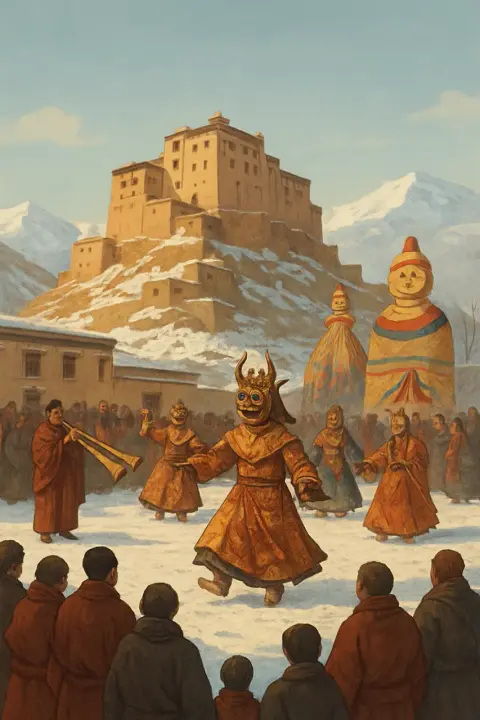
Dosmoche: the festival that sends the old year out of Leh
Long horns under the palace walls, then the year's misfortune carried out of Leh
Dosmoche is the two-day Buddhist festival that closes the new-year season in Ladakh: masked monks dance cham in the courtyard below Leh Palace, and on the second day the offerings, with a great thread cross meant to trap the year's evil, are carried out of town and burned. It falls on the 28th and 29th days of the twelfth Tibetan month, usually in February. Next: 4–5 February 2027. The same days are kept at Likir and Diskit monasteries, and it is free to watch.
The Ladakh administration gazettes the holiday in its annual list, issued around December.
The legend
Dosmoche was begun by the rulers of Ladakh. It is the last festival of the new-year season, held to cleanse the town of evil spirits.

Monks of Takthok prepare an offering with thread crosses meant to bind all evil and guard the coming year against disaster.
Customs
Cham below the palace
Below the gates of Leh Palace masked monks dance cham to gyaling horns, cymbals and drums; the monasteries take turns each year.
Out of town
On the second day the offering is carried out of town in procession and burned, as people whistle to chase the evil spirits away.
Bazaar
Festival stalls stretch for a kilometre from Moti Market to the far end of Leh Bazaar.
What happens over the two days
The festival ground is the cham ra, the dance courtyard below the gates of Leh Palace, next to the Gompa Soma monastery in the old town. It opens with tall wooden masts raised and hung with sacred emblems, streamers and flags.
At the centre of the ritual is the dosmo chenmo, the large thread cross that gives the festival its name. It is made by lamas of Takthok monastery, known in Ladakh for tantric ritual and astrology, who weave the coloured threads while chanting. Monks from several other monasteries come too: they make the torma (ritual offerings of dough), play the long gyaling horns, cymbals and drums, and dance cham in masks that represent deities, including forms of the Buddha. The monasteries that send dancers take turns from year to year.
On the second day, which is the peak, the thread cross and the offerings are carried out of town in procession and burned. The belief is that the evil spirits caught in the web of thread perish in the fire, and people whistle to chase them away.
Meanwhile the bazaar fills with villagers who come in to shop, meet friends and play games such as tambola. Day two is a local holiday in Leh district and the Zanskar sub-division.
Why Dosmoche is celebrated
Dosmoche was started by the kings of Ladakh. Wikipedia dates it to the reign of King Lhachen Ngodup (1295–1320), who fought two campaigns against invaders from Nyungti, today's Kullu, and instituted the rite to hold back the destructive forces of war. It is sometimes called the festival of the scapegoat: the misfortune of the year is gathered into the offerings and the thread cross and sent out of town before the new year begins.
In Ladakh's calendar Dosmoche is the last festival of the new-year season. The season opens in December with Galdan Namchot and Ladakhi Losar, about two months before the Tibetan Losar, and Dosmoche falls just before the Tibetan new year.
Altitude, cold and permits
Altitude. Leh stands at about 3,500 m. The Ladakh Tourism department requires every tourist arriving in Leh to take at least 48 hours of complete rest before travelling to higher areas. Its guidelines suggest easy walks in Leh on day two and nearby sights at a similar altitude, such as Leh Palace, from day three; the dance courtyard is right below the palace. If you feel unwell, see a doctor: SNM Hospital in Leh provides emergency care. The UK FCDO advises insurance that covers altitudes over 2,400 m and mountain rescue.
Cold. Ladakh Tourism warns that winter temperatures can drop to -30°C and asks visitors travelling between October and March to carry cold-weather gear, thermal wear and emergency supplies.
Permits. The festival is in Leh town. Permits matter if you go further, for example to Diskit in the Nubra Valley: foreign nationals need a Protected Area Permit for Ladakh's protected areas. Permits and the tourist fees (environmental fee, Red Cross Fund, wildlife fee) are handled through the Leh district portal lahdclehpermit.in or a local travel agent. The administration is reviewing the permit rules for foreign tourists, including a possible single permit for most of the territory, so check the current position before you book.
Getting in. In February most visitors fly in; Leh airport is about 5 km from the festival ground.
Watching cham respectfully
Dosmoche is a religious rite performed by monks, with townspeople and villagers as the main audience.
- Keep off the dance ground — The open space in the courtyard belongs to the dancers and musicians. Stay where the local audience stands and follow the stewards.
- Give the procession room — On day two the offerings are carried out of town to be burned. Walk behind or beside it, not in front, and keep clear of the fire.
Planning a winter trip around Dosmoche
February is a quiet month in Ladakh; come prepared for the cold.
- Fly in early
Land in Leh at least two days before the first day of the festival, to complete the mandatory 48 hours of rest.
- Combine the winter festivals
Matho Nagrang follows a few weeks later, and the Chadar trek season on the frozen Zanskar falls in the same winter. See also Matho Nagrang and, for summer, Hemis Tsechu.
FAQ
When is Dosmoche?
Next: 4–5 February 2027. It falls on the 28th and 29th days of the twelfth Tibetan month, just before Tibetan Losar, usually in February. The Ladakh administration lists the holiday in its annual list, issued around December.
Why is the Dosmoche festival celebrated?
To cleanse the town of evil spirits before the new year. The year's misfortune is gathered into ritual offerings and a great thread cross made by Takthok monks, which are carried out of town on the second day and burned.
In which state is Dosmoche celebrated?
In Ladakh, a union territory of India: in Leh, below Leh Palace, and on the same days at Likir and Diskit monasteries.
Do I need a permit for Dosmoche in Leh?
The festival is in Leh town. Foreign nationals need a Protected Area Permit only for protected areas beyond it, such as Nubra (Diskit); permits and tourist fees are handled through the official portal lahdclehpermit.in or a local travel agent.
Is it free to watch Dosmoche?
Yes. There are no tickets; you watch the dances from the courtyard below Leh Palace.
What are the main festivals of Ladakh?
The best known are Hemis Tsechu in summer and the new-year season in winter, from Galdan Namchot and Ladakhi Losar in December to Dosmoche in February. Many monasteries also hold their own cham festivals.
Sources (9)
- Ministry of Tourism (Utsav): Dosmoche
- Ladakh Tourism: Monastic Festival Calendar
- Ladakh Tourism: Advisories
- FCDO foreign travel advice: India
- Dosmoche
- Administration of UT Ladakh: Leh Dosmochey festival, mask dance at Leh Palace
- Administration of UT Ladakh: Chief Secretary reviews PAP and RAP framework
- Leh District Tourist Management System (permits and fees)
- FCDO: India, safety and security (trekking, altitude insurance)
Facts checked: 22 October 2026. Prices and hours are approximate; check locally.