 India GO
Losar: the Tibetan New Year in India
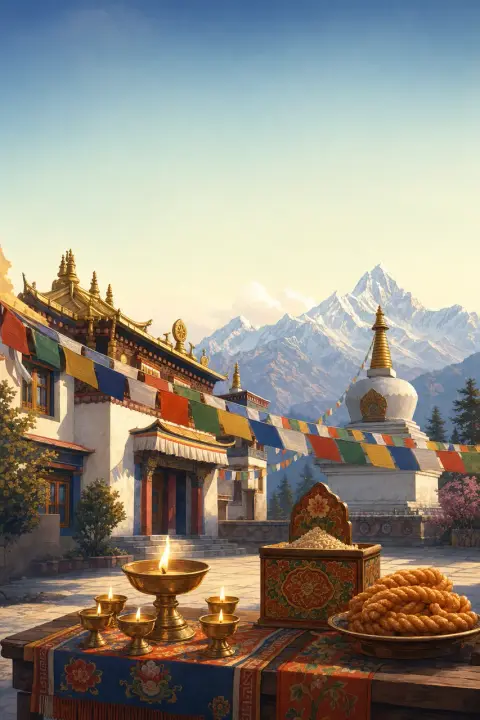
Fresh prayer flags for a new year
Losar, Tibetan for "new year", opens the year of the Tibetan calendar and is kept by Tibetan Buddhists and the Himalayan communities who share their calendar. Celebrations can run for fifteen days, with the main festivities on the first three, usually in February or early March. In India it is celebrated in the Tibetan settlements from Dharamshala to Bylakuppe. Dates: 7–9 February 2027.
The Tibetan New Year: monastery prayers, fresh prayer flags and family feasts in India's Tibetan communities
The first day of the Tibetan year (the Phugpa calendar). The Tibetan almanac published in Dharamsala and the Sikkim holiday list confirm it.
The legend
Losar is older than Buddhism in Tibet: it grew out of a winter incense-burning rite of the ancient Bon religion.
Tradition says that under Tibet's ninth king, Pude Gungyal, the rite merged with a harvest festival.
Tibetans count their years from 127 BCE, when, tradition says, the first king, Nyatri Tsenpo, founded his dynasty.
Meaning
Dharamshala
The Dalai Lama blesses people young and old at Losar, and a queue forms at his temple.
Bylakuppe
The first Tibetan exile settlement was founded here in 1961, beside the great monasteries of Sera and Namdroling.
Sikkim
The Bhutia keep their own new year, Losoong, earlier, after the harvest; the Lepcha call it Namsoong.
Customs
A clean slate
Before the festival homes are scrubbed, debts are settled, quarrels made up and new clothes bought.
Juniper smoke
Branches of cedar, rhododendron and juniper are gathered ahead, to be burned as incense.
Gutor
On the 29th day of the old year comes the Gutor rite, and in the evening people walk with torches, calling out words to drive away all ill.
What people eat
Dresi
sweet rice cooked in butter with raisins, dates and nuts, made for Losar
Words of the festival
ལོ་གསར
Losar
"new year" in Tibetan
རླུང་རྟ
lungta
"wind horse": prayer flags strung in a line, whose blessings the wind carries
ཁ་བཏགས
khata
a ceremonial scarf, offered in monasteries and on many occasions
phyemar
the "five-grain box" of barley flour and grain, a wish for a good harvest
How to greet
ལོ་གསར་བཀྲ་ཤིས་བདེ་ལེགས
Losar tashi delek!
"Blessings and good luck for the new year": tashi means auspicious, delek fine or well.
True or myth
✅ True. In Tibetan "sheep's head" sounds like "beginning of the year", so one is modelled from coloured butter.
❌ Myth. Coal jokingly means a "black heart"; white things like salt, wool or rice are the good signs, and a chilli means you talk too much.
✅ True. Ladakhi lore says an oracle told King Jamyang Namgyal to march only after Losar, so the king moved the festival two months earlier.
Older than Buddhism in Tibet
Losar grew out of a winter incense-burning rite of the Bon religion, older than Buddhism in Tibet. By tradition, under Pude Gungyal, the ninth king of Tibet, the rite merged with a harvest festival. Tibetans count their years from 127 BCE, when, tradition says, the first king, Nyatri Tsenpo, founded his dynasty.
The date follows the Phugpa calendar: Losar falls on the first day of the Tibetan year, and the Tibetan almanac published in Dharamsala confirms it each year. It can differ by a day from other published calendars.
How Losar is kept
Most of Losar happens at home, with the monastery prayers open to visitors.
- A clean slate
In the last days of the old year homes are scrubbed from top to bottom, debts are settled, quarrels made up and new clothes bought. Branches of cedar, rhododendron and juniper are gathered to be burned as incense.
- The 29th: Gutor and guthuk
On the 29th day of the old year comes the Gutor rite. In the evening families share guthuk, a noodle soup with dough balls that hide small tokens, each a light-hearted fortune: salt, wool or rice are good signs, a chilli means you talk too much. Then people walk with torches, calling out to drive away all ill.
- The first days: the table and the shrine
Homes set out a decorated chemar (phyemar) box of roasted barley flour and grain, a wish for a good harvest, and often a sheep's head modelled from coloured butter, because in Tibetan "sheep's head" sounds like "beginning of the year". Butter lamps are lit in the shrine, and dresi, sweet rice cooked in butter with raisins, dates and nuts, is made for the festival.
- Monasteries and the third day
Monasteries hold prayers and ritual dances. On the third day new prayer flags (lungta, "wind horse") go up on the rooftops, while the old ones are taken down and burned, never thrown away.
Where Losar is celebrated in India
Since 1959 India has been home to the largest Tibetan community outside Tibet, and Losar is kept across its settlements. Some Himalayan regions keep their own new year on other dates.
Dharamshala
The seat of the Dalai Lama. At Losar he blesses people young and old, and a queue forms at his temple.
Bylakuppe, Karnataka
The first Tibetan exile settlement, founded here in 1961, beside the great monasteries of Sera and Namdroling.
Ladakh: a December new year
Ladakh keeps its own Losar about two months earlier. The season opens with Galdan Namchot, when Leh is lit with butter lamps, and Ladakhi Losar follows on the first day of the eleventh Tibetan month. Galdan Namchot to Ladakhi Losar in Leh: 3–9 December 2026. Ladakhi lore says an oracle told King Jamyang Namgyal to march only after Losar, so he moved the festival forward.
Sikkim
The Bhutia keep their own new year, Losoong, earlier, after the harvest; the Lepcha call it Namsoong.
Tips for visitors
Losar is mostly a family festival; visitors join in at the monasteries.
- At the monastery — Visitors are welcome at monastery prayers. Walk clockwise around stupas, prayer wheels and shrines, and ask before photographing monks. A khata, a ceremonial scarf, is the usual offering.
- Plan meals ahead — The first days are family days, and many Tibetan-run shops and cafés close.
- Bring warm layers — February nights in the hills are cold, close to freezing in Dharamshala and Mussoorie.
- The greeting — "Losar Tashi Delek": blessings and good luck for the new year.
FAQ
When is Losar?
Next: 7–9 February 2027. Losar is the first day of the Tibetan year and usually falls in February or early March; the date can move by a day between calendars.
What do you mean by Losar?
Losar means "new year" in Tibetan. It is the Tibetan Buddhist New Year festival.
How long is Losar celebrated?
Up to fifteen days, with the main festivities on the first three.
Is Losar celebrated in Himachal Pradesh?
Yes, in Dharamshala and the other Tibetan settlements of the state. Spiti keeps its own Losar earlier than the Tibetan one.
Why is Ladakhi Losar in December?
By Ladakhi tradition, King Jamyang Namgyal moved the new year about two months earlier so that his army could celebrate before a campaign. It falls on the first day of the eleventh Tibetan month.
Sources (3)
Facts checked: 21 October 2026. Prices and hours are approximate; check locally.