 India GO
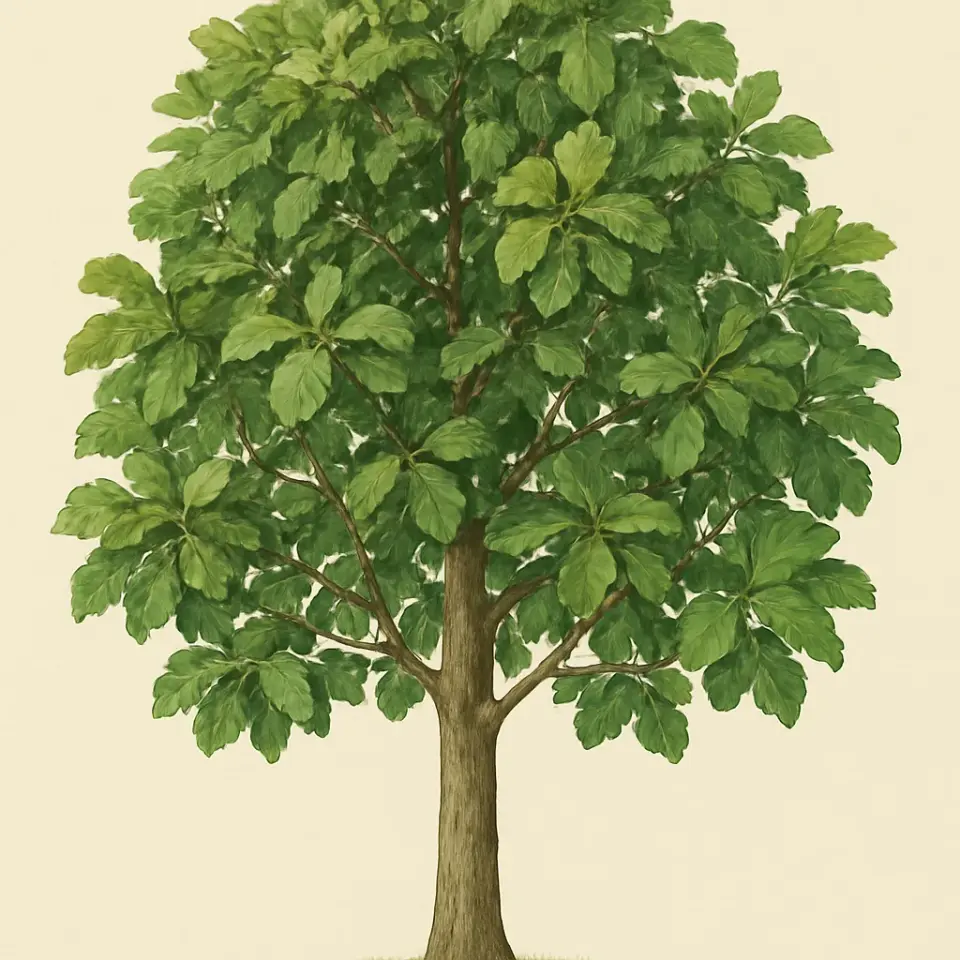
Teak: the timber tree of India's dry forests
सागौन (sagaun)
Teak (Tectona grandis), sagwan or sagaun in Hindi, is a large deciduous tree native to India and Southeast Asia, and the dominant timber tree of India's dry deciduous forests. It is easy to recognise by its enormous rough leaves, the size of dinner plates, which carpet the forest floor in the dry months. Its golden, oily, rot-resistant wood built ships for the Indian Ocean trade and the doors and beams of Indian houses.
A dominant timber tree of dry deciduous forest, with leaves the size of dinner plates that turn the forest floor into a crackling carpet in the dry months.
How to recognise it
Enormous rough leaves in opposite pairs, a straight pale trunk, and in the monsoon loose sprays of small white flowers at the very top of the crown.
Where to see it
Goa
Teak built the ships of the Indian Ocean trade and the woodwork of Kerala and Konkan houses; crushed young leaves give a blood-red dye.
 Chorla Ghat · Dudhsagar Falls · Budbudyanchi Tali (Bubbling Lake), Netravali
Mysore
Teak is the dominant timber tree of the dry deciduous forest around Bandipur, and its timber is what made these forests economically valuable long before they were protected for wildlife. Crushed young teak leaves give a deep red juice.
Bandipur Tiger Reserve
Pune
Teak built the ships of the Indian Ocean trade, and crushed young leaves give a blood-red dye.
Tamhini Ghat Waterfalls · Mulshi Lake · Rajiv Gandhi Zoological Park (Katraj Zoo)
How to recognise teak
Start with the leaves. They grow in opposite pairs and are huge: 15–45 cm long and 8–23 cm wide, papery and rough, often hairy underneath. In the dry months they fall and lie in a layer that crackles underfoot.
The trunk is straight and pale grey-brown, and a mature tree can reach 40 m. During the monsoon, from June to August, loose sprays of small fragrant white flowers appear at the very top of the crown, in clusters up to 40 cm long. Small round fruit follow from September to December.
Crush a young leaf and it gives a blood-red juice, once used as a dye. Freshly cut teak wood smells faintly of leather.
Where to see teak forest
- Mysore: teak forms much of the forest along the safari routes of Bandipur Tiger Reserve. It is the dominant timber tree of the dry deciduous forest there, and its wood made these forests valuable long before they were protected for wildlife.
- Goa: common in the forests of the Western Ghats edge, at Chorla Ghat, around Dudhsagar Falls and around Budbudyanchi Tali, the Bubbling Lake at Netravali.
- Pune: common along Tamhini Ghat and around Mulshi lake, and in the grounds of the Rajiv Gandhi Zoological Park.
Ships, houses and the oldest plantation
Teak's natural oils make the wood resistant to rot, fungi, termites and water, and it shrinks little as moisture changes. It has been used to build boats for more than 2,000 years: teak has been found in excavations at Berenice Panchrysos, on the Roman trade route to India. In India it went into doors, window frames, furniture, columns and beams, and teak made the woodwork of the old houses of Kerala and the Konkan.
The English word comes from Portuguese teca, from Tamil tekku (Telugu teku, Kannada tega or tegu). In Hindi it is sagwan or sagaun.
Nilambur in Kerala is home to the world's oldest teak plantation, and forest departments across India still grow teak widely. Leaves are used too: in Udupi on the Karnataka coast a jackfruit dumpling, pellakai gatti, is steamed in a teak leaf.
Why a common timber tree is rated Endangered
The IUCN Red List rates teak Endangered (2022 assessment). The encyclopedia links this to the depletion of natural, old-growth teak forest, while most commercially harvested teak now comes from plantations, above all in Indonesia, and plantations in Latin America are expected to grow. Molecular studies point to two centres of genetic origin for the species, one in India and one in Myanmar and Laos.
FAQ
What is teak called in Hindi?
Sagwan or sagaun (सागौन). In Tamil it is tekku, in Malayalam thekku, in Kannada tega.
Is teak native to India?
Yes. It is native to India, Bangladesh, Sri Lanka, Myanmar and parts of Southeast Asia, and India is one of the two centres of its genetic origin.
When does teak flower?
During the monsoon, from June to August, with small fragrant white flowers at the top of the crown. Fruit follow from September to December.
Is teak endangered?
The IUCN rates it Endangered (2022). Plantation teak is grown widely, but natural teak forest is shrinking.
Where can I see teak forest near Mysore?
In Bandipur Tiger Reserve, where teak makes up much of the forest along the safari routes.
Facts checked: 8 October 2026. Prices and hours are approximate; check locally.