 India GO
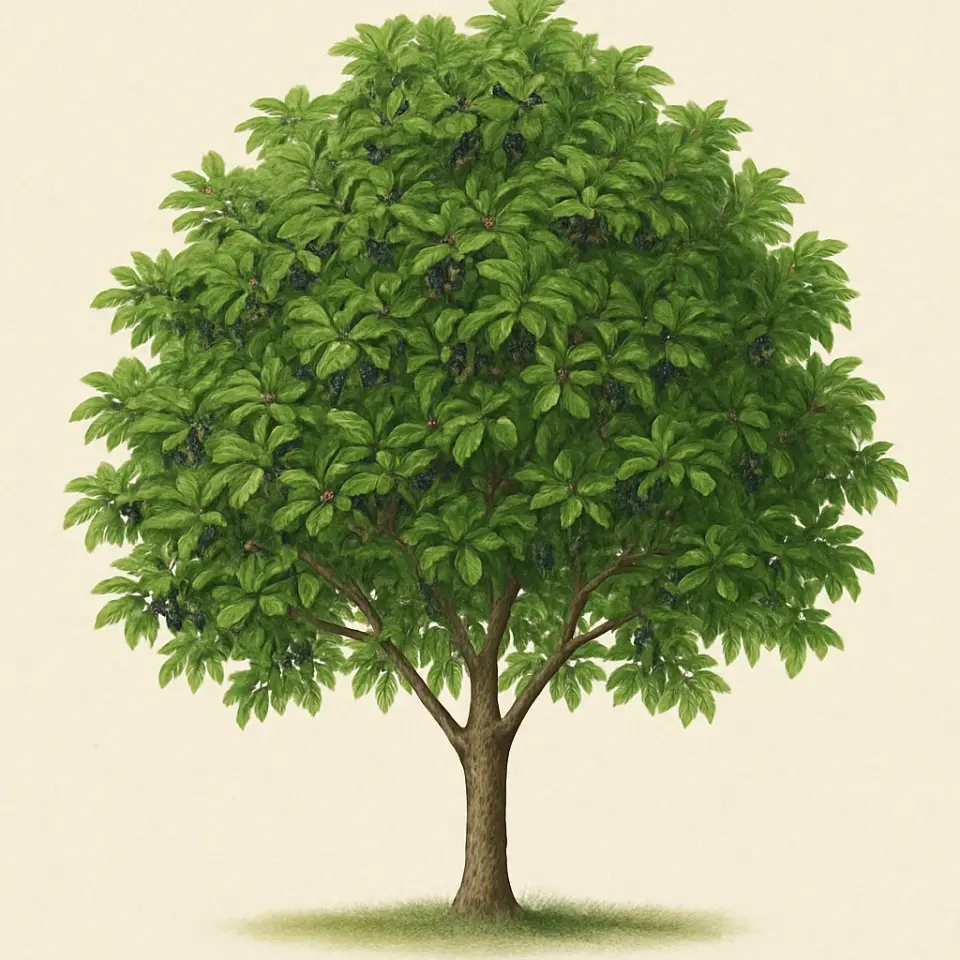
Jamun: the purple-fruited shade tree of India's avenues
जामुन (jamun)
Jamun (Syzygium cumini), also called Java plum or black plum, is a big evergreen tree with a dense dark crown, grown across India for shade and for its fruit. Around June the small purple-black fruits ripen: sweet, slightly sour and astringent, they turn your tongue purple and stain the pavement under the trees. In Delhi it is the avenue tree of the Lutyens' city, and the purple stain on the footpath in the monsoon is the easiest way to spot it.
A big evergreen with a dense dark crown, planted along avenues for shade, and dropping purple-black astringent fruit in the monsoon.
How to recognise it
Glossy leathery leaves that smell faintly of turpentine when crushed, and in June–July a purple-stained pavement underneath.
Where to see it
Delhi
Jamun is the avenue tree of Lutyens' Delhi: the deep shade over the central roads in June is almost all one species, and the purple stain on the pavement is the giveaway.
 Lodhi Garden · Amrit Udyan (Rashtrapati Bhavan Gardens) · Sunder Nursery
How to recognise a jamun tree
It is a large tree, up to 30 m, that can live more than a hundred years, with a crown dense enough to make real shade in a Delhi June.
- Leaves: leathery, glossy dark green with a yellowish midrib, pinkish when young. Crushed, they smell faintly of turpentine.
- Bark: rough and dark grey at the base, smoother and paler higher up.
- Flowers: tiny, about 5 mm, fragrant, from March to April.
- Fruit: oval berries that ripen from green through pink and crimson to shining black, by May or June. A white-fruited variant also exists.
In June and July the giveaway is underfoot: a purple-stained pavement and squashed fruit beneath the crown.
Where to see it in Delhi
Jamun is the avenue tree of Lutyens' Delhi: in June, much of the deep shade over the central roads comes from this one species. Fruit falls from June to July. More of the city's trees are on the Delhi trees and flowers page.
Lodhi Garden
Common among the old trees around the tombs of Lodhi Garden.
Sunder Nursery
Common in the landscaped park of Sunder Nursery, next to Humayun's Tomb.
Amrit Udyan
The Rashtrapati Bhavan gardens open only in season and on an online booking; see the Rashtrapati Bhavan page.
The fruit and the wood
Ripe jamun is eaten raw and made into juice, jam, sorbet and the dark syrup sold as kala khatta. The taste is sweet, mildly sour and astringent at the same time, and the purple lingers on the tongue. Wear something you do not mind staining if you pick it up from the ground.
The wood resists water once kiln-dried, so it is used for railway sleepers and for mounting motors in wells; in Andhra Pradesh, where the tree is called neredu, it is used for cart wheels, doors and windows. Outside its home range the tree spreads easily and is treated as invasive in Florida, Hawaii and South Africa.
Jambudvipa, the Buddha and Avvaiyar
The Sanskrit name is jambu, and it reaches far. Jambudvipa, "the land of jambu trees", is the old name for India in Hindu, Buddhist and Jain cosmology; Ashoka already used it for his realm in the third century BCE. Buddhist texts tell how the Buddha, as a child, sat in the cool shade of a jambu tree and slipped into his first meditation, a memory that later set him on the path to awakening.
In Tamil the fruit is naval pazham. A legend tells of the poet Avvaiyar resting under the tree, thinking she had learned all there was to learn, until a disguised Murugan outwitted her in a battle of words and showed her how much was left to learn. In Hindi the tree and fruit are simply jamun.
FAQ
What is jamun called in English?
Java plum, also black plum, Malabar plum or jambolan. Its scientific name is Syzygium cumini.
When is jamun season?
The tree flowers in March–April and the fruit ripens by June; in Delhi it falls in June and July.
What does jamun taste like?
Sweet, mildly sour and astringent, and it turns the tongue purple.
Is jamun the same as jambu or rose apple?
Jambu is the Sanskrit name for jamun. In translations of Pali texts the word is sometimes rendered as rose apple.
Where can I see jamun trees in Delhi?
Along the avenues of Lutyens' Delhi, in Lodhi Garden and Sunder Nursery, and in the Amrit Udyan gardens when they open.
Facts checked: 8 October 2026. Prices and hours are approximate; check locally.