 India GO
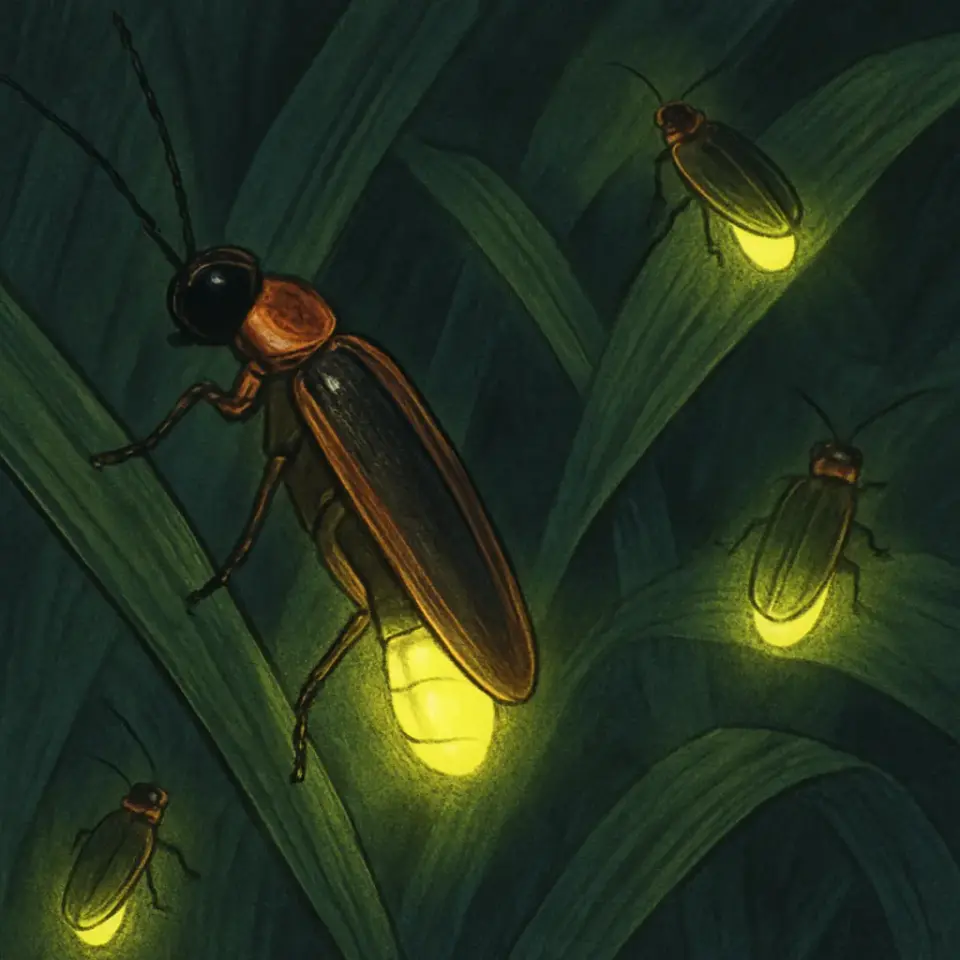
Fireflies in India (jugnu): the weeks before the monsoon
जुगनू (jugnu)
Fireflies, jugnu in Hindi and kajwa in Marathi, are beetles that flash cold light to find a mate. In India the show to look for is in the Western Ghats in the last weeks before the monsoon, roughly late May to mid-June, when thousands gather in single trees and flash together. Near Pune it has become an organised season with forest-department rules on lights and stopping points; in Goa the displays peak in the same weeks.
Beetles whose adults flash cold light to find a mate; in the Western Ghats thousands synchronise in single trees for a few weeks before the monsoon.
How to recognise it
Go out after full dark, away from any lamp, in the last weeks before the rains. Whole trees pulse on and off together.
Where to see it
Goa
In Goa the courtship displays peak from late May to mid-June, and naturalists recall that only twenty years ago fireflies flashed in large numbers around villages every monsoon and even flew into houses; lights and habitat loss have thinned them since.
 Chorla Ghat (in season) · Budbudyanchi Tali (Bubbling Lake), Netravali (in season) · Sahakari Spice Farm
Pune
Firefly-watching has become an organised season in parts of Maharashtra, with forest-department rules about lights, noise and where vehicles may stop.
Tamhini Ghat Waterfalls (in season) · Mulshi Lake (in season)
What you are actually seeing
Fireflies are a family of soft-bodied beetles, the Lampyridae, with more than two thousand described species worldwide. The light comes from a chemical reaction in an organ on the underside of the abdomen: an enzyme, luciferase, acts on a compound called luciferin in the presence of oxygen. The light has no infrared or ultraviolet component, which is why it is called cold light, and depending on the species it is yellow, green or pale red.
Adults flash mainly to find each other: each species has its own pattern of timing and rhythm, and females answer the males of their own kind. In several tropical species, particularly in Southeast Asia, whole groups fall into step and flash in unison. In the Western Ghats the same happens on single trees, which pulse on and off together.
The larvae glow too, as a warning. Fireflies contain bitter defensive compounds, lucibufagins, that make them distasteful to predators.
Where and when in India
The window is narrow: late May to mid-June, the weeks before the monsoon breaks, and it shifts a little with the rains each year.
Near Pune: Tamhini Ghat and the country around Mulshi Lake are among Maharashtra's firefly-season sites. Here watching is organised, and the forest department sets rules on lights and on where vehicles may stop.
Goa: in the hills of the Sahyadri edge, around Chorla Ghat and Netravali, the courtship displays peak at the same time. A spice plantation such as Sahakari Spice Farm can be lucky on a dark evening but is not a dedicated site. More on the Goa season is on the fireflies in Goa page.
Go after full dark and well away from any lamp or street light. No date or place guarantees a display.
How to watch without harming them
Light is the whole language of fireflies, and artificial light drowns it out. The National Green Tribunal has asked Maharashtra's forest department to regulate firefly crowds, and the rules on the ground follow the same logic.
- No torches, no phone flash — Switch screens to the lowest brightness or keep them in a pocket. Headlights off where you stop.
- Stay on the paths — Females lay their eggs on or just below the ground, and in many species the females cannot fly.
- Keep the noise down — Forest rules for the season cover noise as well as light.
- Don't catch them — Over-collection is one of the threats researchers list for fireflies. Watch, don't take.
Fewer than there used to be
Naturalists in Goa recall that twenty years ago fireflies flashed around villages every monsoon and even flew into houses; lights and habitat loss have thinned them since. That matches the wider picture. Firefly numbers are thought to be falling worldwide, and the main threats named by researchers are habitat loss, light pollution and pesticides. Firefly tourism itself is listed as a potential threat when it is not managed.
FAQ
What are fireflies called in Hindi?
Jugnu (जुगनू). In Marathi, around Pune and in Goa, they are kajwa (काजवा).
When is firefly season in India?
In the Western Ghats, roughly late May to mid-June, the weeks before the monsoon breaks. The exact timing shifts with the rains each year.
Where can I see fireflies near Pune?
Tamhini Ghat and the Mulshi Lake area are among Maharashtra's firefly-season sites. Follow the forest department's rules on lights and stopping points.
Why do fireflies flash at the same time?
In some tropical species whole groups fall into a shared rhythm, which makes a tree pulse at once. The flashes are a courtship signal: they are how mates find each other.
Sources (1)
Facts checked: 8 October 2026. Prices and hours are approximate; check locally.