 India GO
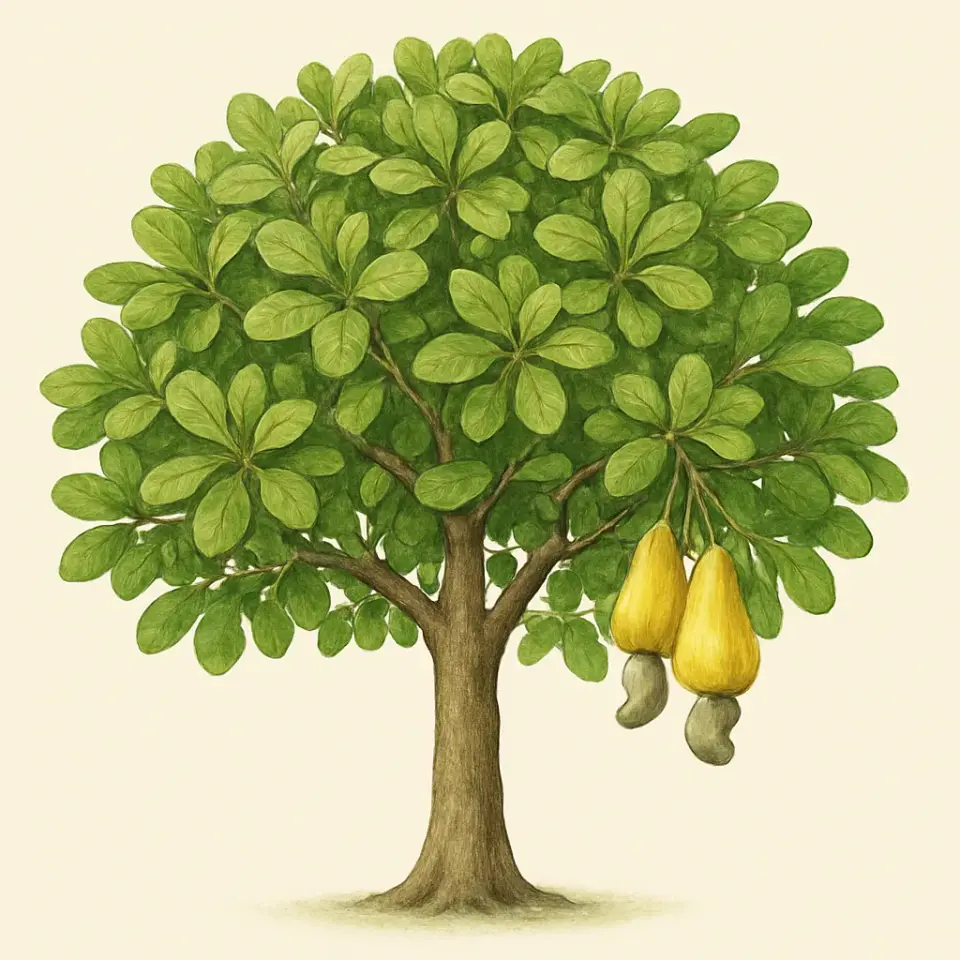
Cashew tree (kaju): the apple, the nut and how it came to Goa
काजू (kaju)
The cashew tree (Anacardium occidentale), kaju in Hindi, is not Indian at all: it comes from tropical South America, and Portuguese ships brought it to Goa in the 1560s. Four and a half centuries later India is one of the world's two largest cashew producers, and in Goa the same tree gives both the nut and feni, the spirit distilled from its juicy “apple” between February and May.
A low spreading tree with leathery round-tipped leaves, carrying a fleshy red or yellow “apple” with the true nut hanging beneath it.
How to recognise it
The nut grows outside the fruit, hooked under it — once seen, never mistaken. Cashew hillsides turn red and yellow in March and April.
Where to see it
Goa
Cashew was brought to Goa by the Portuguese in the sixteenth century and is now the base of feni, distilled from the cashew apple between February and May. Feni has a registered geographical indication tied to Goa.
 Sahakari Spice Farm · Chorla Ghat (in season) · Arvalem Waterfall & Rudreshwar Caves (in season)
The tree, the apple and the nut
A cashew is an evergreen that can reach 14 m, though the dwarf varieties grown on plantations stay under about 6 m and most Goan trees are low and spreading. The leaves are leathery and up to 22 cm long; small pale-green flowers turn reddish in loose sprays.
The fruit is the strange part. What looks like a fruit, the red or yellow “cashew apple” 5–11 cm long, is the swollen stalk. The true fruit is the kidney-shaped grey shell hanging beneath it, and inside that shell is the single seed sold as the cashew nut. The shell forms first; only then does the stalk swell into the apple.
From Brazil to Goa
The English word comes, through Portuguese caju, from the Tupi acajú of Brazil. Portuguese colonists there were exporting the nuts by the 1550s and carried the tree to Goa between 1560 and 1565; from Goa it spread across Southeast Asia and on to Africa.
The tree does best in hot lowlands with a pronounced dry season. By FAO figures, India harvests about 795,000 tonnes of cashew in the shell a year, second only to Côte d'Ivoire.
Feni: what Goa makes from the apple
The nut travels; the apple stays home. It bruises easily and keeps for very little time, so in Goa it goes into feni, distilled from the fermented juice from late February to mid-May. The name is traced to Sanskrit phena, “froth” or “foam”.
In the traditional method only ripe apples that have dropped on their own are gathered, de-seeded and trodden in a rock basin called a collmi. The first distillate, urrak, has about 15% alcohol; further distillation gives feni, and bottled feni is sold at about 43%. Cashew feni received a geographical indication in 2009, and in 2016 Goa's excise law named it a heritage spirit.
Where to see cashew trees in Goa
In Goa you can see cashew trees up close at Sahakari Spice Farm, on the hillsides on the way up to Chorla Ghat, which the fruit colours red and yellow in March and April, and around the Arvalem waterfall. Trees in fruit are around from February to May. The Goa section on cashew has more on the tree in the state.
Do not crack a raw nut
The shell of the cashew nut contains anacardic acid and related oils, which burn the skin the way poison ivy does; the raw shell and seed are toxic. The nut is edible only after shelling and roasting or steaming. If you pick one up under a tree, leave the grey part alone. The apple itself can be eaten.
FAQ
What is cashew called in Hindi?
Kaju (काजू). The English word “cashew” comes from Portuguese caju, itself from the Tupi acajú of Brazil.
Is cashew native to India?
No. It is native to tropical South America; the Portuguese brought it from Brazil to Goa between 1560 and 1565.
When is cashew season in Goa?
In Goa the trees fruit from February to May, and feni is distilled from late February to mid-May. The hillsides are most colourful in March and April.
Can you eat a cashew nut straight from the tree?
No. The shell contains oils that cause a skin rash like poison ivy, and the raw seed is toxic. The nut is edible only after shelling and roasting or steaming.
Can you eat the cashew apple?
Yes. It is juicy and astringent and spoils fast, which is why in Goa it is fermented and distilled into feni rather than shipped.
Sources (2)
Facts checked: 8 October 2026. Prices and hours are approximate; check locally.