 India GO
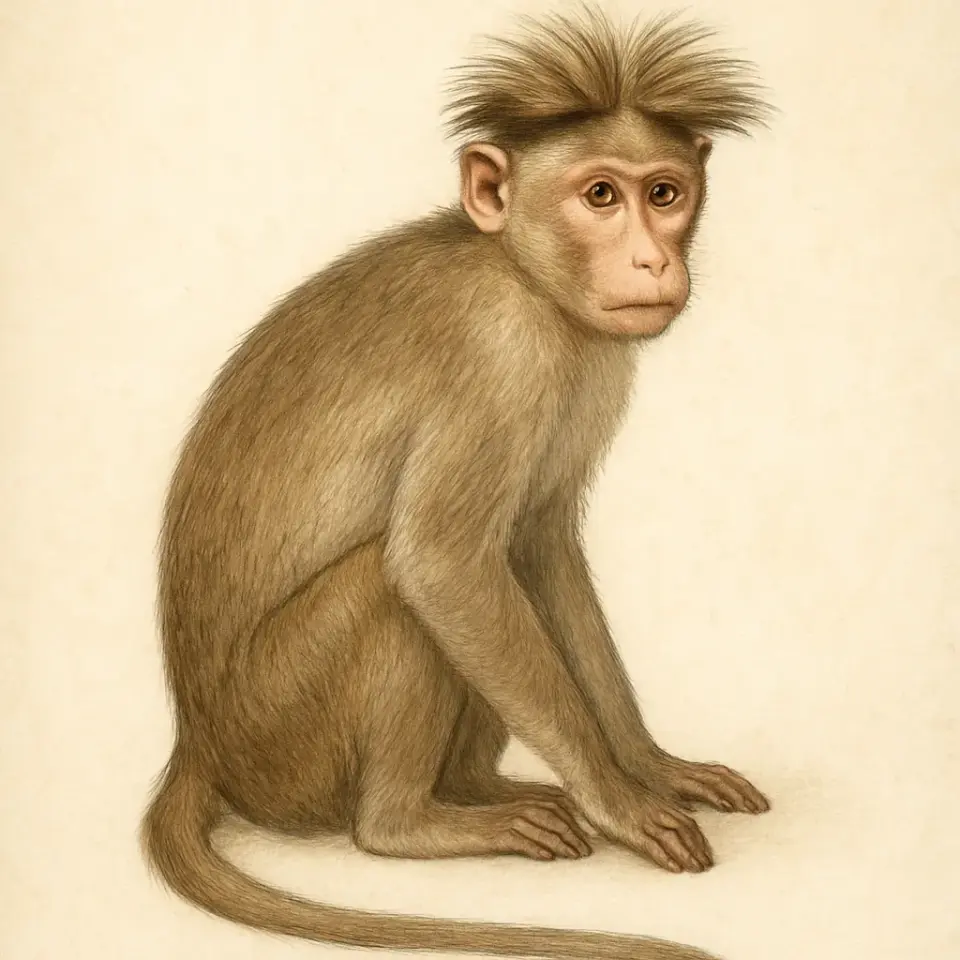
Bonnet macaque: the monkey of South India's temples and viewpoints
The bonnet macaque (Macaca radiata) is the monkey of South India: a brown macaque with a whorl of hair on the crown that parts like a cap, living in troops around temples, viewpoints and roadside stalls. It is found only in peninsular India, south of the range of the rhesus macaque, and it is a protected species: listed as Vulnerable by the IUCN and in Schedule I of India's wildlife law.
The brown monkey of South India, named for the neat whorl of hair on its crown that parts like a cap. It lives in troops around temples, viewpoints and roadside stalls.
How to recognise it
You will not have to look. Note the crown whorl and the pink face - this is the southern species; the rhesus macaque of North India does not occur here.
Where to see it
Bengaluru
Troops at viewpoints have learned that plastic bags mean food, which is why forest staff ask visitors not to feed them: fed troops become bolder and are then removed.
 Nandi Hills · Bannerghatta Biological Park · Savandurga (often)
Gokarna
Temple macaques have been fed here for generations, which is why they now take rather than beg. Feeding one makes the next person's walk harder.
Gokarna Beach · Gokarna Beach Trek (five-beach coastal trail) · Kudle Beach
Hampi
Temple macaques have been fed by people for generations, which is exactly why they now take food by force. Feeding them makes the next visitor's problem worse.
Hemakuta Hill · Matanga Hill · Pampa Sarovar
Tirumala
In August 2023 the temple trust banned the sale of fruit and vegetables along the Alipiri footpath, stating that pilgrims were buying them to feed monkeys and deer and that this was drawing wild animals onto the route. Footpath vendors were briefed on waste management at the same time.
Chakra Teertham · Silathoranam · Papavinasanam
How to recognise a bonnet macaque
The name comes from the head: the hair grows outward from the centre of the crown and looks like a small bonnet or cap. The body fur is brown, sometimes yellowish, the ears are black and the face is pink. The tail is long, about as long as the body. Males are much bigger than females: a male weighs 5.4 to 11.6 kg with a body of 51 to 60 cm, a female 2.9 to 5.5 kg.
In practice the question is usually “is this the same monkey as in Delhi or Vrindavan?” It is not. North India has the rhesus macaque, which has no cap and a short tail. The bonnet macaque's range ends roughly at the Godavari and Tapti rivers, and north of that line the rhesus takes over. In Bengaluru, Hampi, Gokarna or Tirupati, every macaque you see is a bonnet.
How a troop lives
Bonnet macaques live in troops of several males and several females with a strict ranking. Females stay in the troop they were born into for life, so a troop is built around lines of related females; young males leave when they mature. Compared with other macaques, the males are unusually relaxed with one another: they groom each other and sleep close together, and competition between them is relatively subdued.
The species eats fruit, seeds, nuts, flowers and insects, and around people it has learned to take food from them, from farms and from houses. Lip-smacking is a friendly signal; a grimace with the upper teeth bared is a sign of fear or submission. Bonnet macaques are also strong swimmers. Most babies are born between February and April, before the monsoon.
Do not feed them
Temple macaques have been fed for generations, which is why they now take food rather than wait for it. At viewpoints the troops have learned that a plastic bag means food, so a bag in your hand is an invitation. Forest staff ask visitors not to feed them, because fed troops grow bolder and are then caught and removed. In August 2023 the Tirumala temple trust banned the sale of fruit and vegetables along the Alipiri footpath for the same reason: pilgrims were buying them to feed monkeys and deer.
What works: keep food and plastic bags out of sight, do not hold anything out, do not touch or corner a monkey, and walk on calmly if one comes close. In an emergency in India, call 112.
Where you meet bonnet macaques
The India GO database records them as common at these temples and viewpoints:
- Bengaluru. Around the summit car park and temple at Nandi Hills, along the approach road to Bannerghatta Biological Park, and at the temple at the foot of Savandurga. More of the city's wildlife is on the Bengaluru animals page.
- Hampi. On Hemakuta Hill, on the stepped path and at the summit shrine of Matanga Hill, and around Pampa Sarovar and the Anegundi temples.
- Gokarna. Along the temple street and the beach front, and on the coastal trail past Kudle Beach.
- Tirumala-Tirupati. Along the walking routes of Tirumala, at Chakra Teertham, Silathoranam and Papavinasanam.
The population of the whole species was estimated at about 170,000, close to half of them in Karnataka.
Protection status
In its 2020 assessment the IUCN Red List listed the bonnet macaque as Vulnerable. Changes in land use are shifting the boundary with the rhesus macaque, and life in towns brings road deaths, conflict over food and removal of problem troops. Under India's Wild Life (Protection) Act as amended in 2022, the bonnet macaque is in Schedule I, the highest level of protection, so catching, keeping or harming one is an offence.
FAQ
Why is it called a bonnet macaque?
Because of the hair on its head: it grows outward from the centre of the crown and looks like a small bonnet or cap.
Is the bonnet macaque the same as the rhesus macaque?
No. The rhesus is the monkey of North India and has no cap and a short tail. The bonnet lives only in the south of the peninsula, roughly south of the Godavari and Tapti rivers.
Are bonnet macaques dangerous?
Troops that are used to being fed snatch food and bags and can be pushy. Keep food out of sight, do not feed or touch them and keep your distance; in an emergency in India call 112.
Where can I see bonnet macaques in Bengaluru?
At Nandi Hills around the summit car park and temple, on the approach road to Bannerghatta Biological Park, and at the temple at the foot of Savandurga.
Sources (5)
Facts checked: 8 October 2026. Prices and hours are approximate; check locally.