 India GO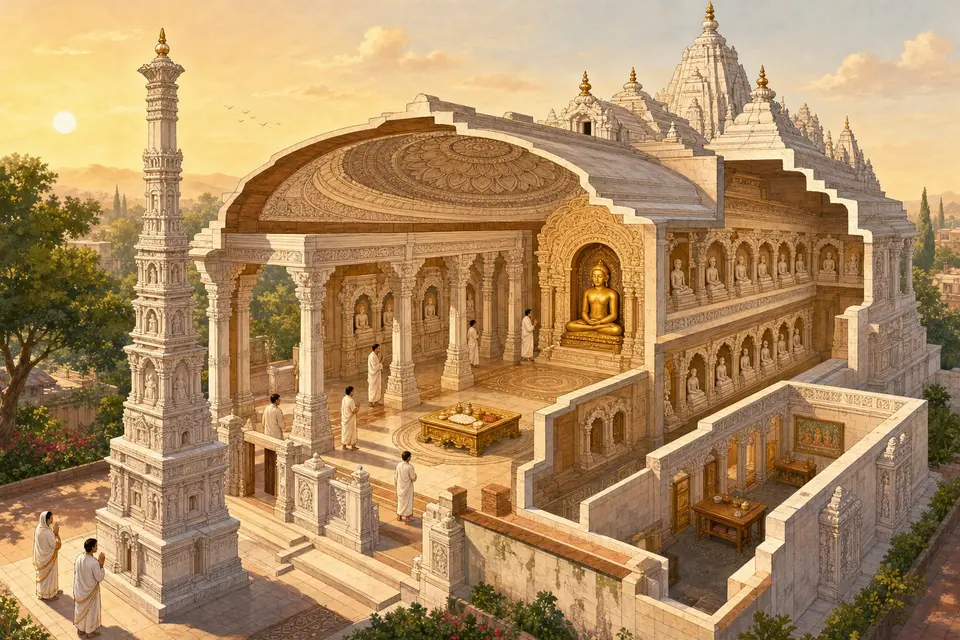
Jainism in India
Non-violence taken to its limit, twenty-four teachers told apart by the sign at their feet, marble carved like lace, and dinner before sunset.
People
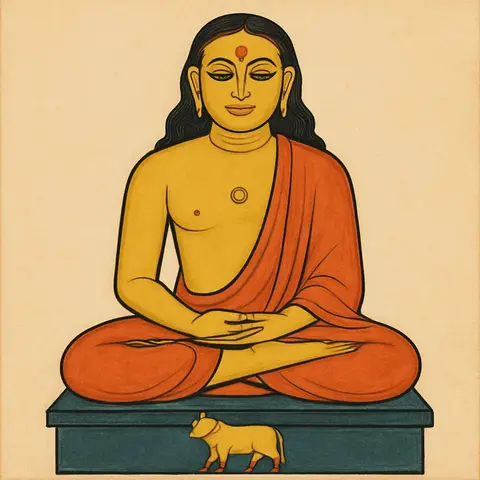 1st TirthankaraRishabhanathaऋषभनाथ
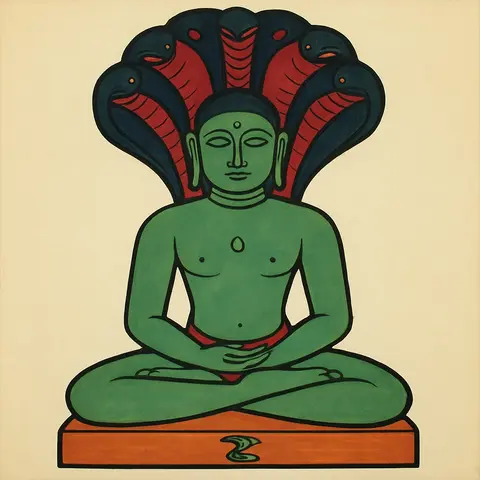 23rd TirthankaraParshvanathaपार्श्वनाथ
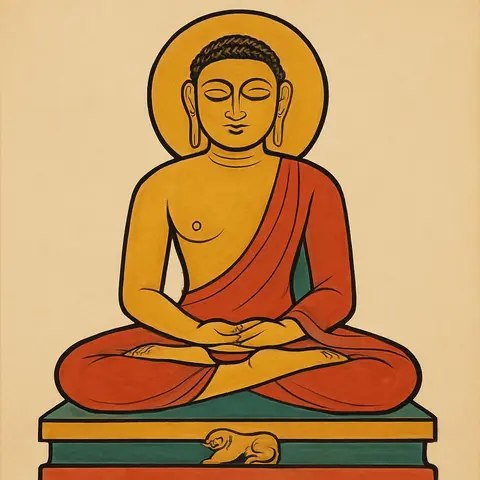 24th TirthankaraMahaviraमहावीर
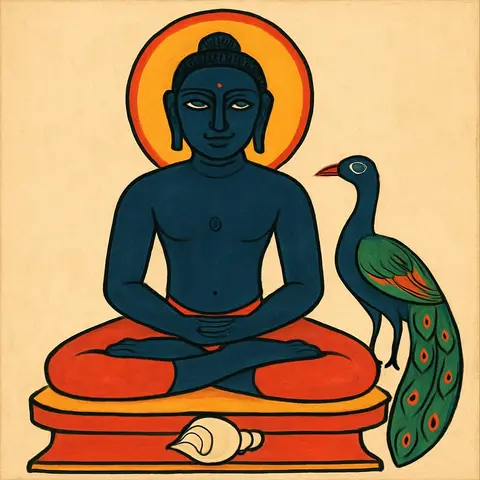 22nd TirthankaraNeminathaनेमिनाथ
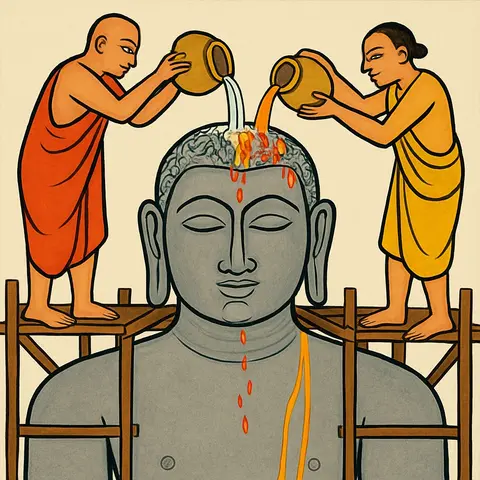 GommateshvaraBahubaliबाहुबली
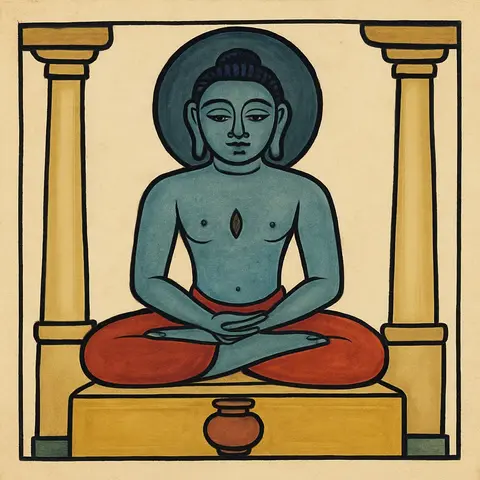 19th TirthankaraMallinathaमल्लिनाथ
Signs
The hand with the wheel
The Jain emblem: a raised palm says ahimsa, the wheel is the cycle of rebirth. Below it the motto: all life is bound together by mutual support.
The five-stripe flag
White, red, yellow, green, dark blue: the five highest beings and the five vows. It flies over many Jain temples.
The swastika with three dots
Four arms for the four states of being, three dots for the three jewels, a crescent above for the abode of the liberated. Laid out in rice grains before the image.
Rice on the tray
Worshippers draw the swastika in rice on a low table as a wish to step out of the four paths of rebirth. Rice is one of eight offerings, with water, sandalwood, flowers, incense, a lamp, sweets and fruit.
The mouth-cloth
A white cloth over the mouth so that no tiny creature in the air is harmed; some monks wear it always, others hold it while speaking.
The whisk
Wool for Shvetambara monks, peacock feathers for Digambaras: the path and the seat are swept before every step and every sitting.
Jain food
No roots (potato, onion, garlic), for a root holds countless lives; no honey, no alcohol; and the kitchen closes before sunset.
Jai Jinendra
“Victory to the Jina”: the greeting between Jains, in use since the seventh century.
Inside a Jain temple
1. The manastambha
A tall carved pillar of honour before Digambara temples, a four-faced figure at the top.
2. The pillared hall
Open, cool, all marble; worshippers in white with folded hands.
3. The carved dome
Lotus upon lotus, rings of dancers: at Dilwara and Ranakpur the peak of marble carving.
4. The sanctum
The main image on its pedestal: seated in meditation, told apart by the sign below (bull, snake, lion, conch).
5. The ring of shrines
Small shrines around the courtyard, often twenty-four, one for each teacher; walk them clockwise.
6. Rice and saffron
A low table with rice, saffron paste and sandalwood: offerings of the eightfold puja.
How to behave
- Anything of leather (belts, wallets, bags, shoes) stays outside.
- Shoulders and knees covered; some temples ask women to cover the head.
- No food or drink inside, and not on a day you have eaten meat, onion or garlic.
- The images are not touched; at Dilwara no cameras or phones at all.
- Mornings belong to worshippers; visitors are welcome later in the day.
To experience
Hours vary, so ask on site; the four-faced temple and the Bahubali statue on the hill
The bhojanshala serves until sunset; no roots, no onion
Mirrors, glass and a lamp burning since 1867
Carvings of the tenth century; the underground levels are for monks only
Festivals
Mahavir Jayanti in March or April; Paryushana in August or September (eight days for the Shvetambaras, ten for the Digambaras, ending with “Micchami Dukkadam”, forgiveness asked of everyone); Diwali as the night of Mahavira's nirvana.
Words
Homage to the arihants, the siddhas, the teachers, the preceptors and all monks in the world.
Living beings exist by supporting one another.
One may conquer thousands of thousands in battle — the higher victory is over oneself.
Ahimsa
Non-violence as the first vow: harm by thought, word or deed binds karma alike.
Anekantavada
Truth has many sides: the blind men and the elephant. Say “in some respect” before any claim.
Aparigraha
Non-possession: for monks, owning almost nothing, and for Digambara monks not even clothes; for laymen, a limit set on what one owns.
Books: The Tattvartha Sutra, shared by both branches; the Agamas of the Shvetambaras with the Kalpa Sutra; the Shatkhandagama and Kundakunda for the Digambaras.
Other faiths of India
 Buddhism in IndiaBorn under the Bodhi tree in Bihar, it lives on in Himalayan gompas and Tibetan quarters, and in the silence of a meditation hall.→
 Sikhism in IndiaOne Creator, ten Gurus and a book honoured as a living teacher, and a free kitchen where everyone sits in one row.→
 Christianity in IndiaA tradition that traces itself to the apostle Thomas: the Syrian Christians of Kerala, the baroque of Goa, Mary in a sari and a star lantern on every veranda in December.→
 Islam in IndiaSufi dargahs and Thursday qawwali, Mughal mosques, and the lanes of the old city that stay awake all night in Ramadan.→
 HinduismGods, symbols, the temple and key ideas→
The street with a guided walk, people cards with places on the map and festivals with dates.
Get India GO