 India GO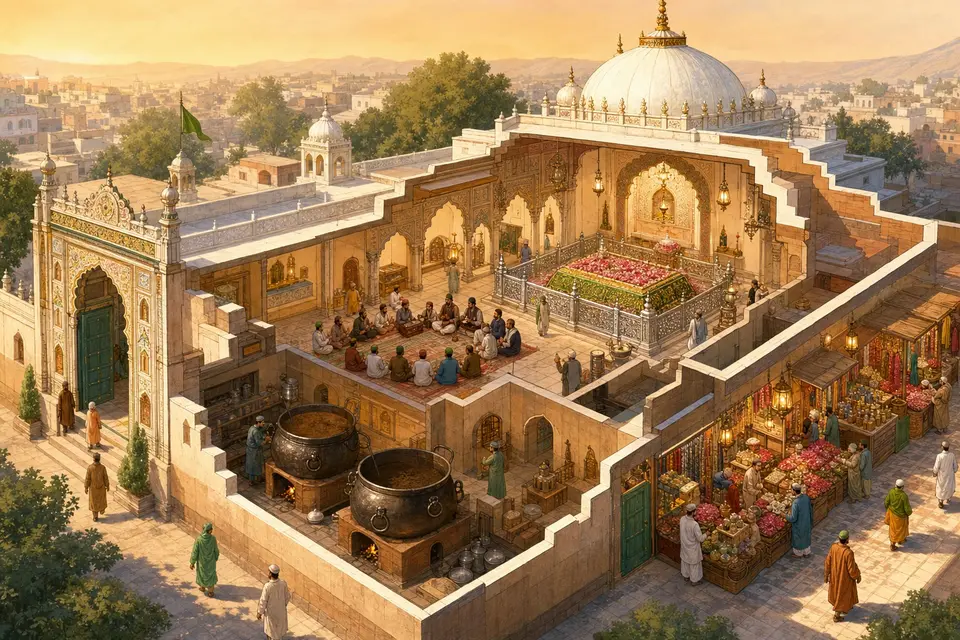
Islam in India
Sufi dargahs and Thursday qawwali, Mughal mosques, and the lanes of the old city that stay awake all night in Ramadan.
People
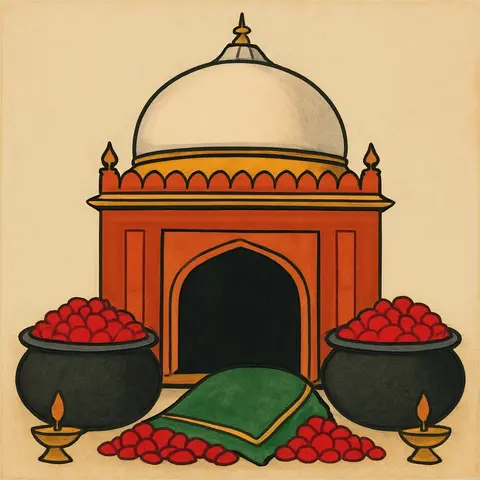 Gharib NawazKhwaja Moinuddin Chishtiخواجہ معین الدین چشتی
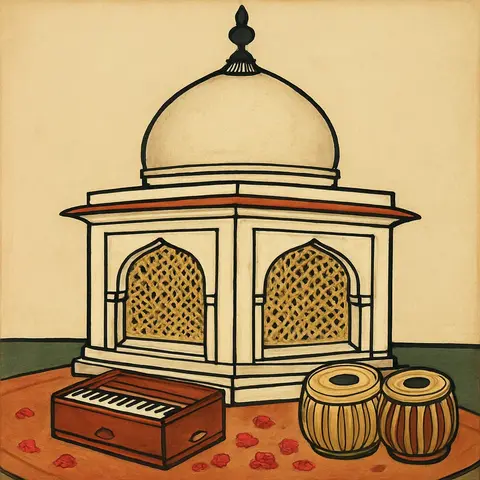 Mahbub-e-IlahiHazrat Nizamuddin Auliyaنظام الدین اولیاء
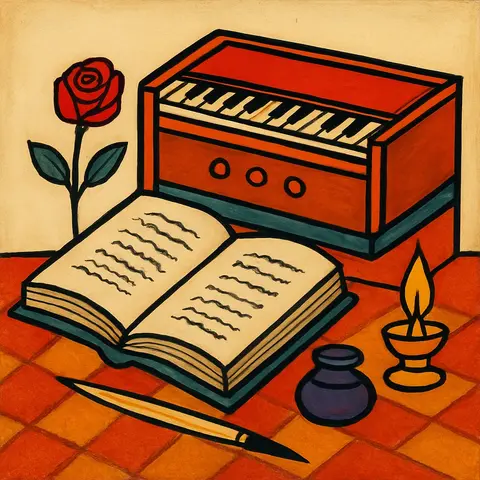 PoetAmir Khusrauامیر خسرو
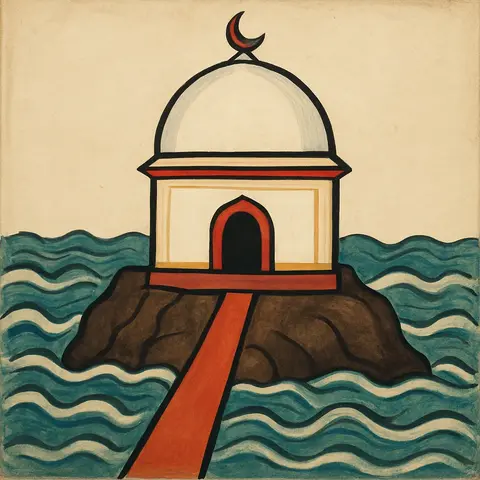 PirHaji Aliحاجی علی شاہ بخاری
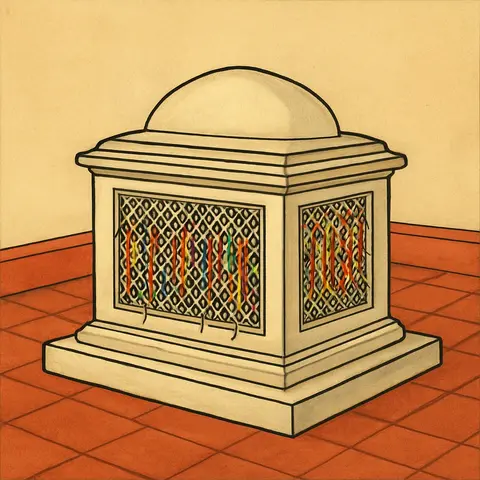 Sheikh of SikriSheikh Salim Chishtiشیخ سلیم چشتی
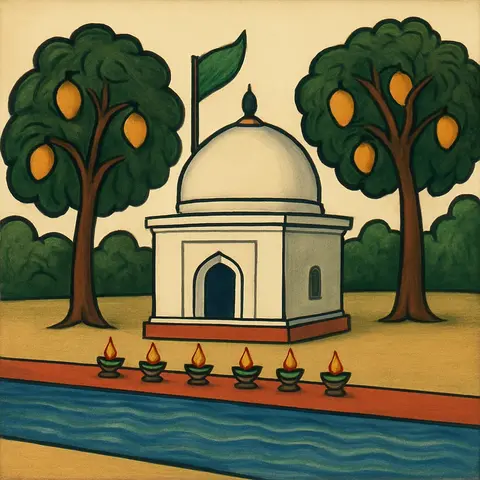 Sabiri orderSabir Kaliyariعلاؤ الدین صابر کلیری
Signs
The azan
The call to prayer five times a day, timed by the sun: dawn, noon, afternoon, sunset, night. Friday noon is the great congregational prayer.
Chadar and roses
An embroidered cloth for the saint's grave and rose petals by the handful, brought with a request or in thanks. The roses for Ajmer are grown by Hindu farmers of Pushkar.
Threads on the lattice
A thread tied to the marble screen of Salim Chishti's tomb is a vow; when it is granted, you come back to untie it.
The tasbih
Prayer beads for dhikr (repeating the names of God); 33 or 99 beads.
The kufi
A knitted or embroidered cap worn for prayer and often all day; in Hyderabad the red rumi topi of the Nizam's era still appears.
Qawwali
Harmonium, tabla, a lead singer and a chorus clapping in time: Sufi poetry sung until the courtyard sways. At a dargah this listening is itself a devotion: sama.
Calligraphy
Where there are no images, there is script: Bismillah over the door, whole verses on the Taj. The letters higher up are cut larger so they look even from below.
Iftar
In Ramadan the fast breaks at sunset with dates; the lanes around Jama Masjid and Charminar fill with food until dawn, and on the last night the bangle and henna bazaars stay open till morning.
Inside a dargah
1. The gates
At Ajmer three in a row: the Nizam's gate, Shah Jahan's, the Buland Darwaza; in Delhi a lane of flower and chadar stalls leads in.
2. The cauldrons
Giant degs given by Akbar and Jahangir; on the urs sweet rice is cooked in them for everyone.
3. The qawwali courtyard
Singers sit facing the tomb; the crowd sits around them. Anyone may listen.
4. The tomb
Under the dome, behind a silver rail: the grave under layers of chadars and roses. Walk past slowly, leave a petal, keep your voice low.
5. The women's side
At Ajmer women go inside; at Nizamuddin they pray at the lattice screen; at Haji Ali the sanctum has been open to them since 2016.
6. The bazaar
Roses, chadars, ittar perfume, sweets, and the langar kitchen for the poor.
Inside a Mughal mosque
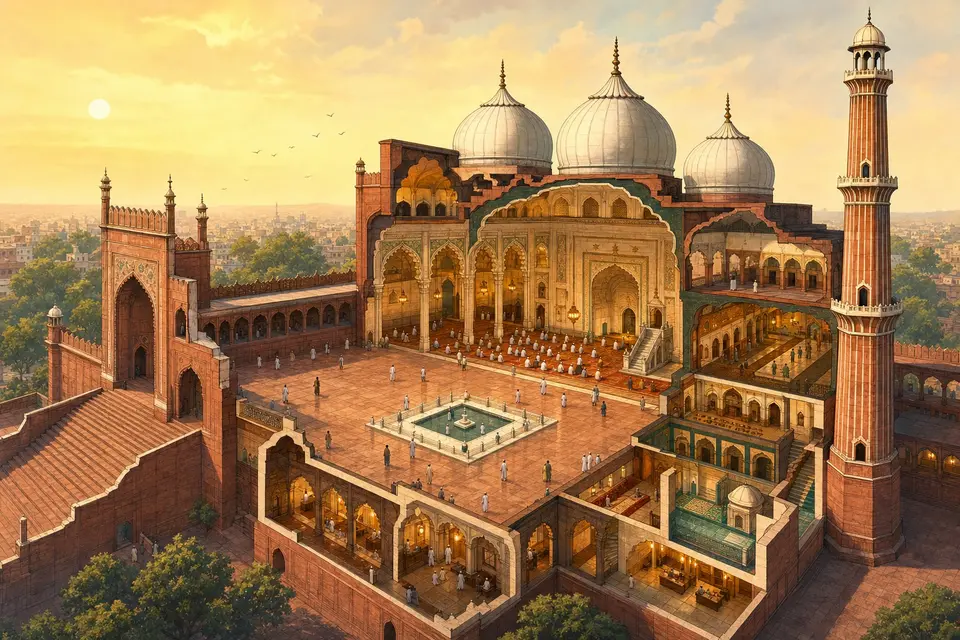
1. The gate and steps
A flight of red sandstone steps; shoes come off at the top, robes are lent at the gate.
2. The courtyard
Open to the sky, big enough for a whole city at Eid.
3. The ablution pool
Hands, face and feet are washed here before prayer.
4. The prayer hall
Three marble domes over the arched hall; the floor is marked out in prayer-mat rectangles.
5. Mihrab and minbar
The niche in the west wall points to Mecca; the stepped pulpit beside it is for the Friday sermon.
6. The minaret
A spiral stair to the galleries, with the best view of the old city.
How to behave
- Shoes off; head covered: at a dargah by everyone, men included; in a mosque by women.
- Shoulders and knees covered; robes are lent at the gate of Jama Masjid.
- During the five prayers and on Friday at noon the mosque is not for visitors.
- No photographs inside the tomb chamber at Ajmer or inside the Taj; elsewhere ask.
- In Ramadan do not eat or drink in the open in the old quarters by day; after sunset, join in.
To experience
Thursday after sunset, two or three hours
Lamps lit at the four corners a quarter-hour before sunset
Only at low tide; qawwali on Thursdays and Fridays
Between prayers; women climb only with a male companion; the whole of Shahjahanabad below
The place →Festivals
Also: Milad-un-Nabi; the Urs of Ajmer in the lunar month of Rajab, six nights of qawwali (December in 2026); and Muharram, a month of mourning: on Ashura Hyderabad carries the Bibi-ka-Alam on an elephant.
Words
“With one glance you took all my marks away — you took me.”
“…and We made you peoples and tribes, that you may know one another.”
“Delhi is still far away.” — by tradition, said of a sultan who never reached the city.
Tawhid
One God without partners or images, hence geometry and script where others put figures.
Pir and murid
A Sufi order is a chain of teachers and disciples; the Chishtis of Ajmer and Delhi are one such chain.
Ziyarat and barakat
Visiting a saint's tomb for the blessing that flows from the place: a devotion Hindus and Sikhs share.
Books: The Qur'an and the hadith; the Masnavi of Rumi; the recorded talks of Nizamuddin; the poetry of Khusrau, Kabir, Bulleh Shah, Mir and Ghalib.
Other faiths of India
 Buddhism in IndiaBorn under the Bodhi tree in Bihar, it lives on in Himalayan gompas and Tibetan quarters, and in the silence of a meditation hall.→
 Sikhism in IndiaOne Creator, ten Gurus and a book honoured as a living teacher, and a free kitchen where everyone sits in one row.→
 Christianity in IndiaA tradition that traces itself to the apostle Thomas: the Syrian Christians of Kerala, the baroque of Goa, Mary in a sari and a star lantern on every veranda in December.→
 Jainism in IndiaNon-violence taken to its limit, twenty-four teachers told apart by the sign at their feet, marble carved like lace, and dinner before sunset.→
 HinduismGods, symbols, the temple and key ideas→
The street with a guided walk, people cards with places on the map and festivals with dates.
Get India GO