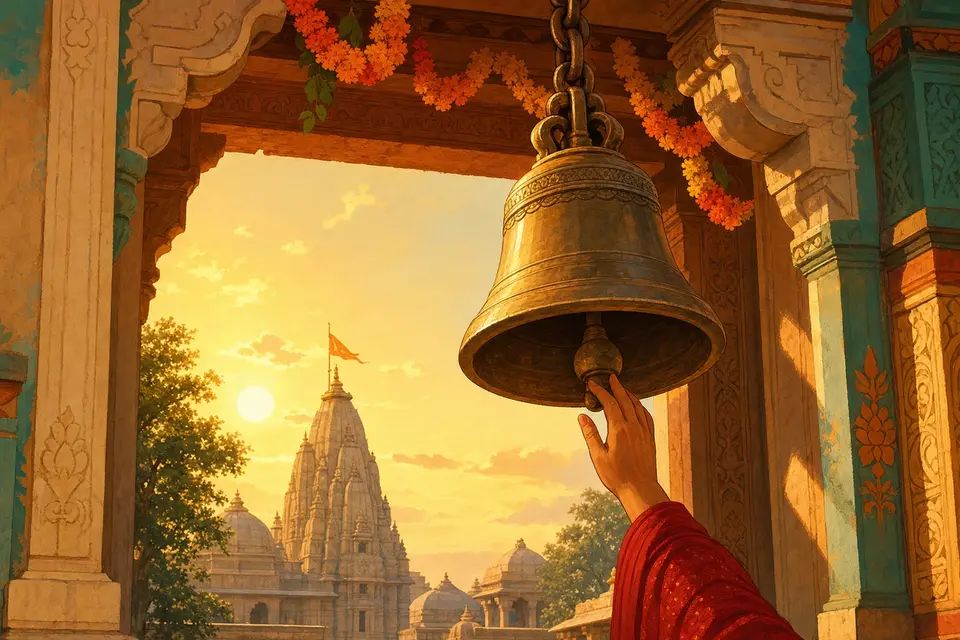
A bell at the temple entrance that everyone rings on the way in. Why?
That's rightNot this one
The sound announces your arrival, gathers attention and wakes the space. It is not a call for the priest; it is part of the darshan itself.
Buddhism · Sikhism · Christianity · Islam · Jainism
Five houses of worship on one street, as in any Indian town. Tap a building to find out who is inside, what you will see and how to behave.

A sign from the street, and three answers
The sound announces your arrival, gathers attention and wakes the space. It is not a call for the priest; it is part of the darshan itself.
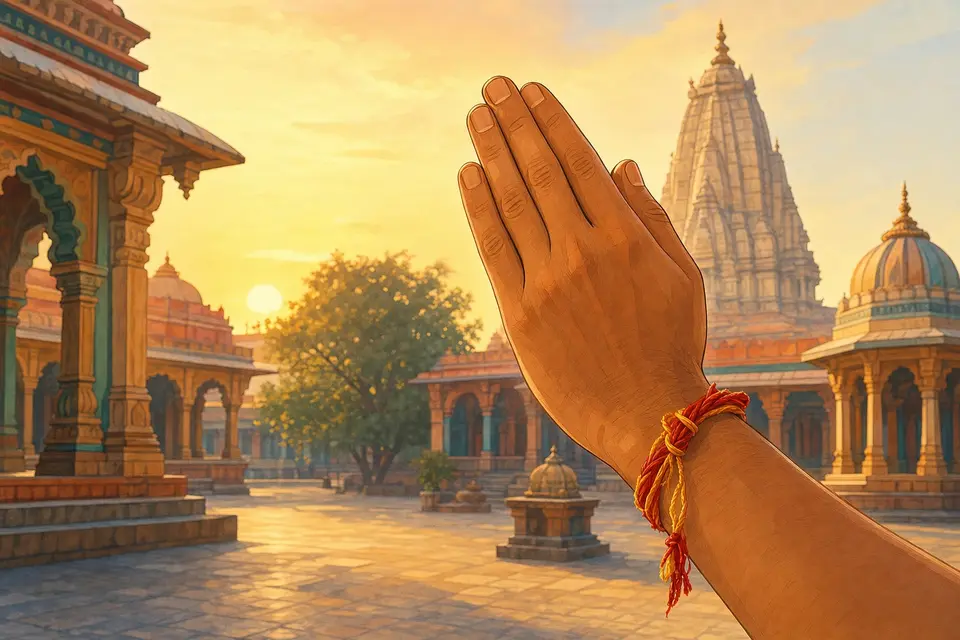
Kalava, or mauli: the priest ties it after a puja as protection and a reminder of a vow. Worn until it falls off by itself; men and unmarried girls on the right wrist, married women on the left.
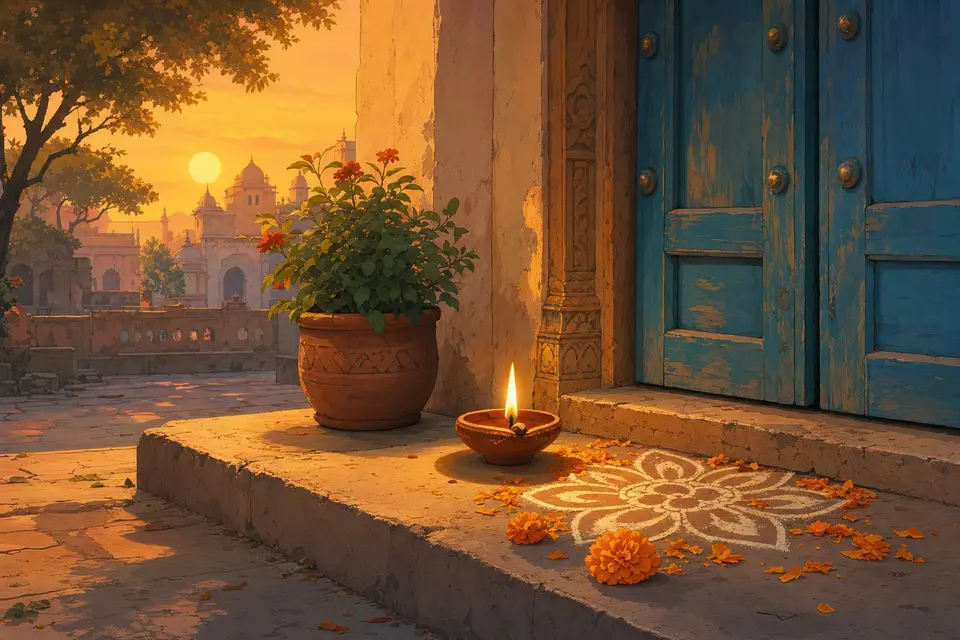
It is lit at home morning and evening; on the river, lamps are set afloat with flowers. The temple aarti grows out of this very lamp.
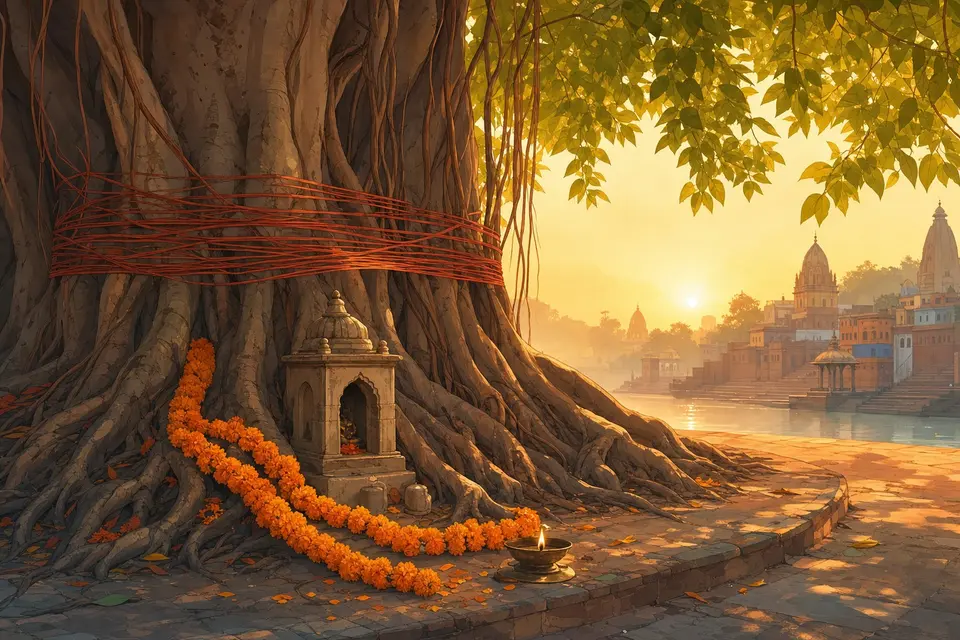
The most common offering: orange is the colour of fire, the flower is cheap and hardy. A garland at the foot of a tree was left for the tree, not for decoration.
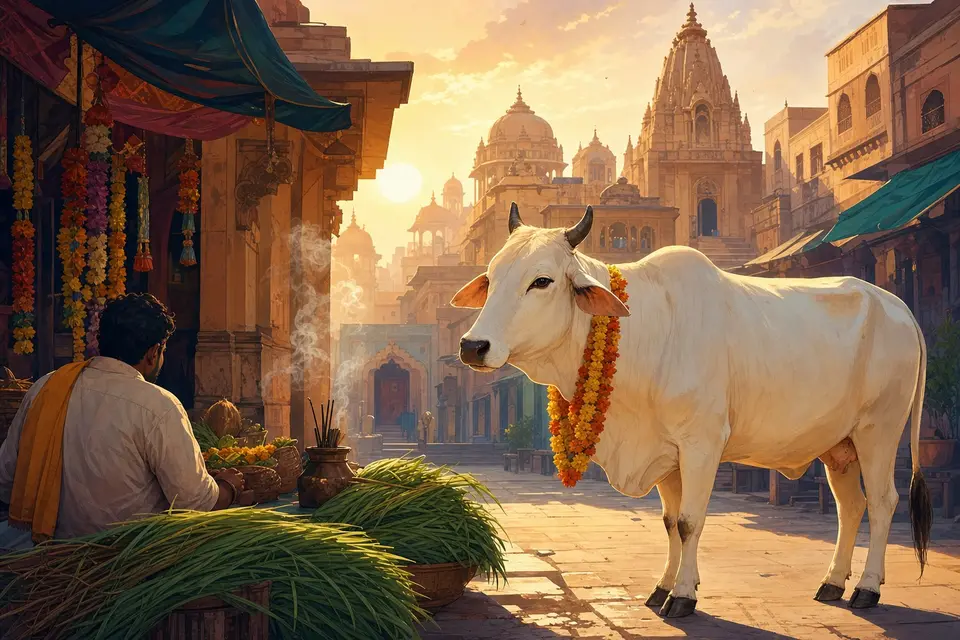
A symbol of generosity and ahimsa. Feeding a cow is a good deed, which is why bundles of grass are sold outside temples. Walk around her, do not shoo her, do not touch the calf.
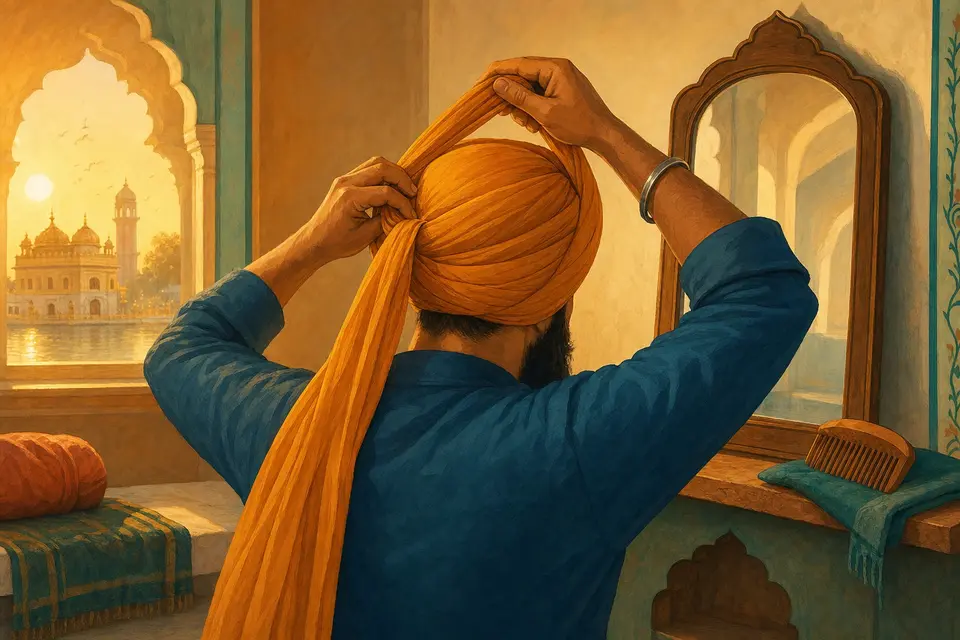
The dastar (in everyday Punjabi the pagg or pagri) covers uncut hair, kesh, one of the five Ks. Not fashion and not an ethnic marker but part of the faith. A Rajasthani safa is festive headgear, not a vow.
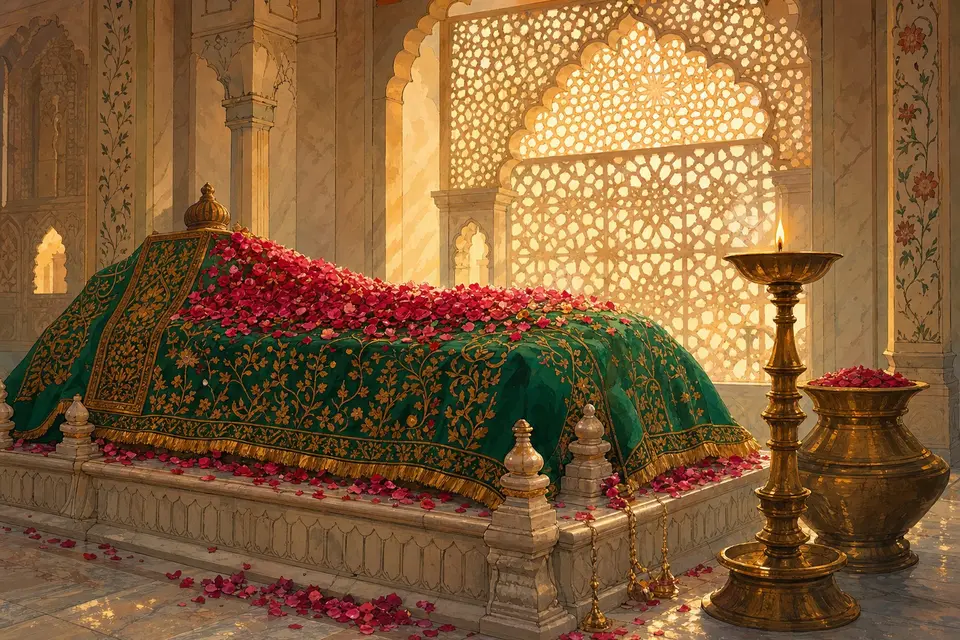
The tomb of a Sufi saint. A chadar and roses are brought with a request or in thanks; everyone covers their head here, and on Thursdays the qawwals sing.
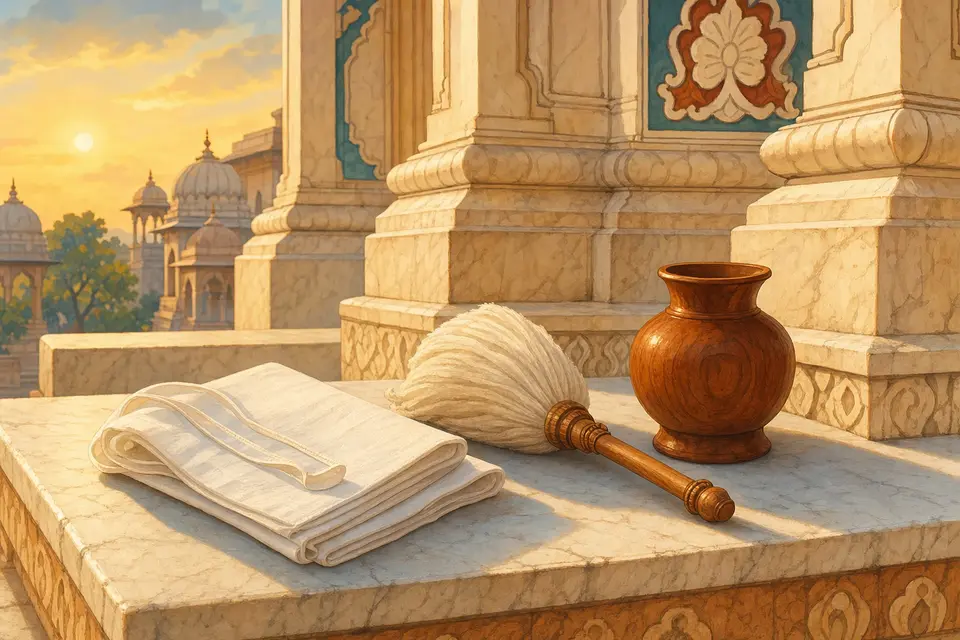
The mukhpatti keeps a monk from harming the tiny creatures in the air; the rajoharan sweeps them gently off the path before a step or a seat. Ahimsa, down to the smallest life.
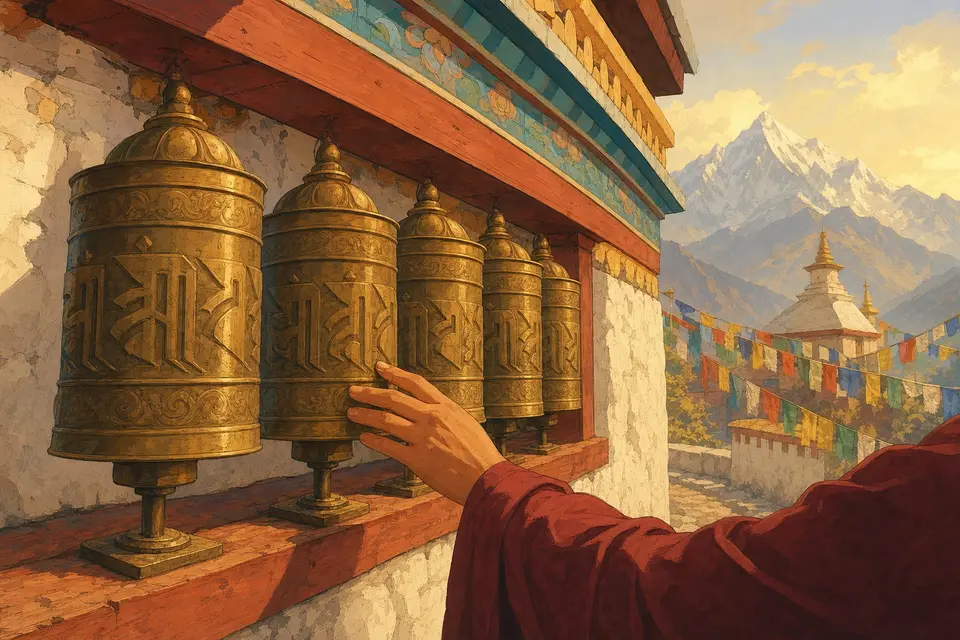
A mantra is rolled up inside each one; a single clockwise turn counts as reading it. Always clockwise, like the walk around the whole monastery.
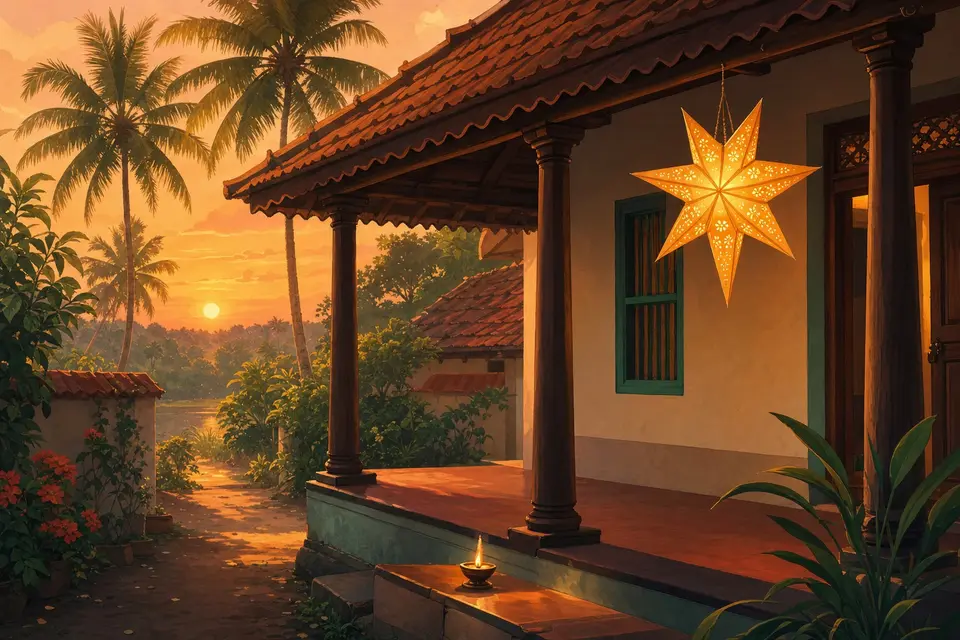
The star of Bethlehem: in Kerala and Goa it hangs from early December to Epiphany, and neighbours of every faith put one up too.
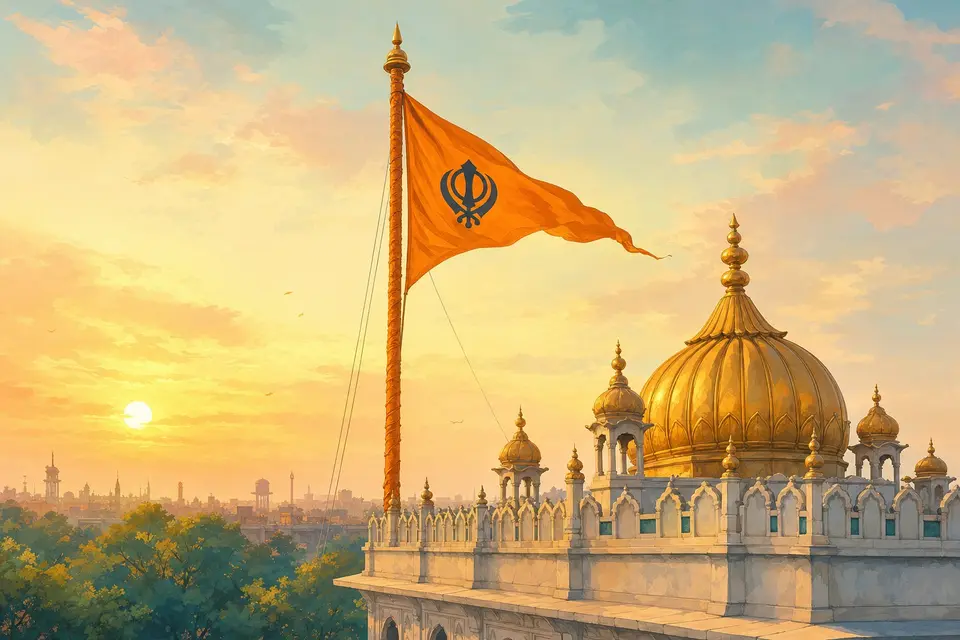
The Nishan Sahib, with the khanda emblem: a gurdwara is visible from far away. Its cloth is changed with ceremony every Vaisakhi.
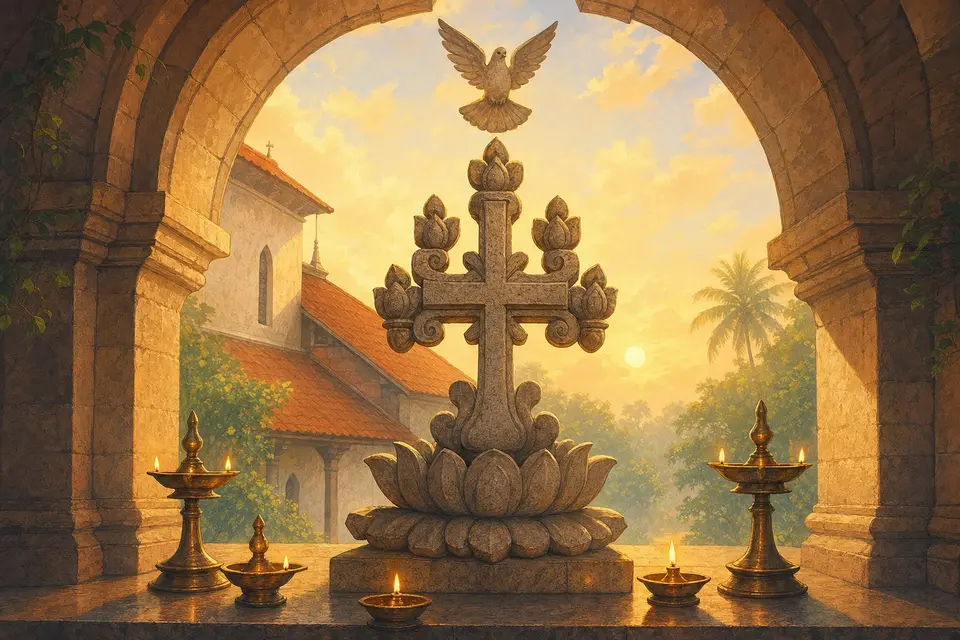
The St Thomas cross of Kerala: no figure on it, flowers at the tips, a lotus below and a dove above. The oldest ones carry Middle Persian (Pahlavi) inscriptions.
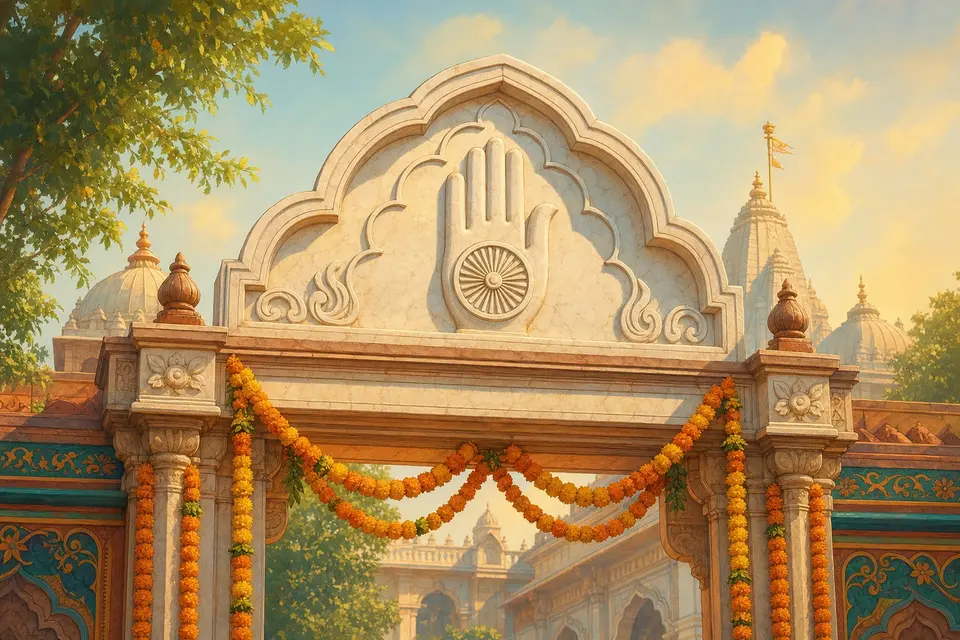
The Jain emblem: the raised palm says ahimsa, the wheel is the cycle of rebirth. Inside: marble, silence, and twenty-four teachers told apart by the sign at their feet.
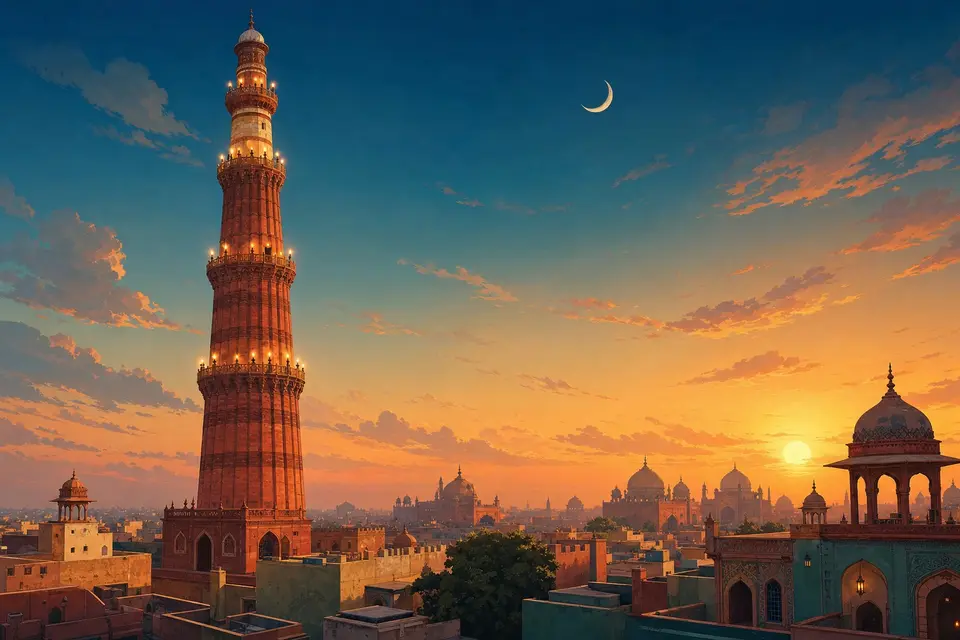
The azan sounds five times a day, timed by the sun; this one is maghrib, at sunset. In Ramadan it also means the fast is over for the day.
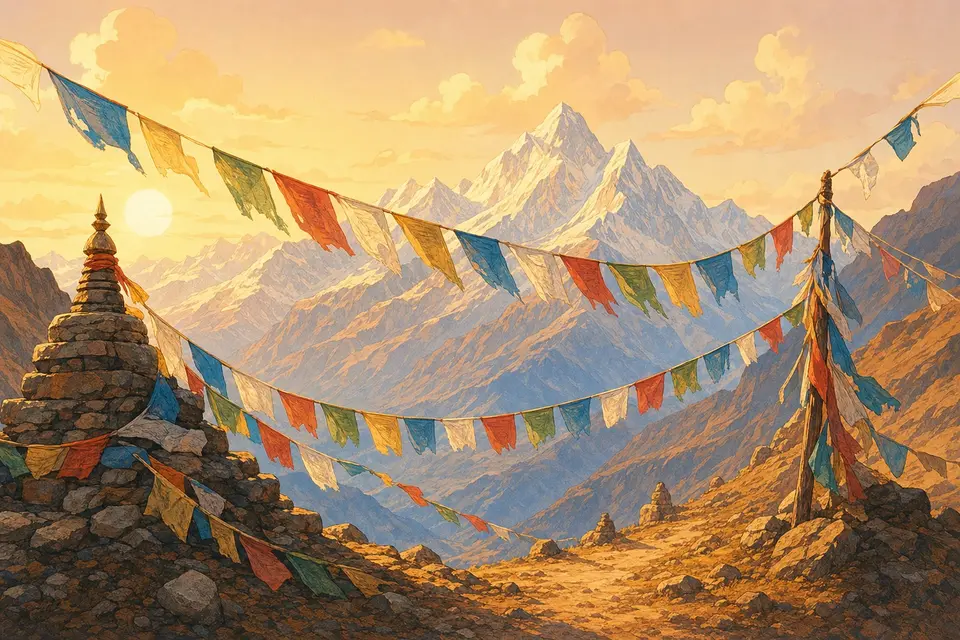
Lungta, wind-horses: blue, white, red, green, yellow (sky, air, fire, water, earth). The wind reads the prayers printed on them; old flags are replaced at Losar and burned, never thrown away.
 Buddhism in IndiaBorn under the Bodhi tree in Bihar, it lives on in Himalayan gompas and Tibetan quarters, and in the silence of a meditation hall.→
 Sikhism in IndiaOne Creator, ten Gurus and a book honoured as a living teacher, and a free kitchen where everyone sits in one row.→
 Christianity in IndiaA tradition that traces itself to the apostle Thomas: the Syrian Christians of Kerala, the baroque of Goa, Mary in a sari and a star lantern on every veranda in December.→
 Islam in IndiaSufi dargahs and Thursday qawwali, Mughal mosques, and the lanes of the old city that stay awake all night in Ramadan.→
 Jainism in IndiaNon-violence taken to its limit, twenty-four teachers told apart by the sign at their feet, marble carved like lace, and dinner before sunset.→
The street with a guided walk, people cards with places on the map and festivals with dates.
Get India GO
35 cities, one map with every place, the festival calendar, the 90/180 visa calculator and offline mode.