 India GO
Temples in Goa: where they are and how to visit
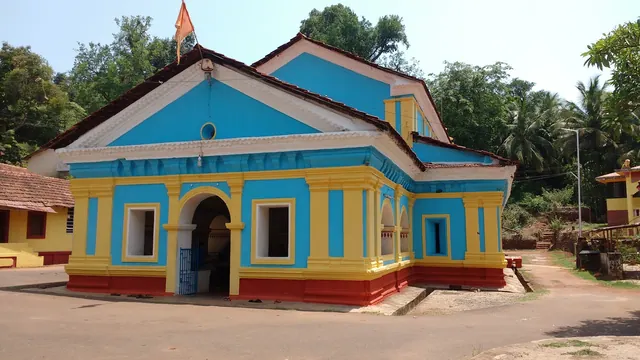
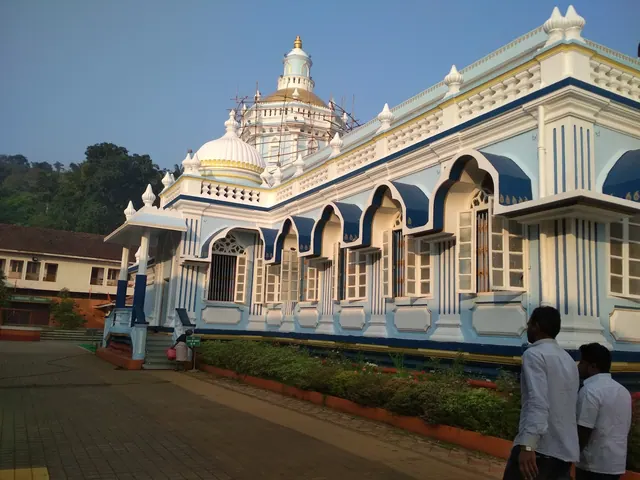
Goa's great Hindu temples are not on the coast but inland, in the hills around Ponda, because in the 16th century their deities were carried out of Portuguese territory and re-established there. Shri Mangeshi and Shri Shantadurga are the best known; the oldest temple still standing, the Mahadev temple at Tambdi Surla, hides in forest at the foot of the Western Ghats.
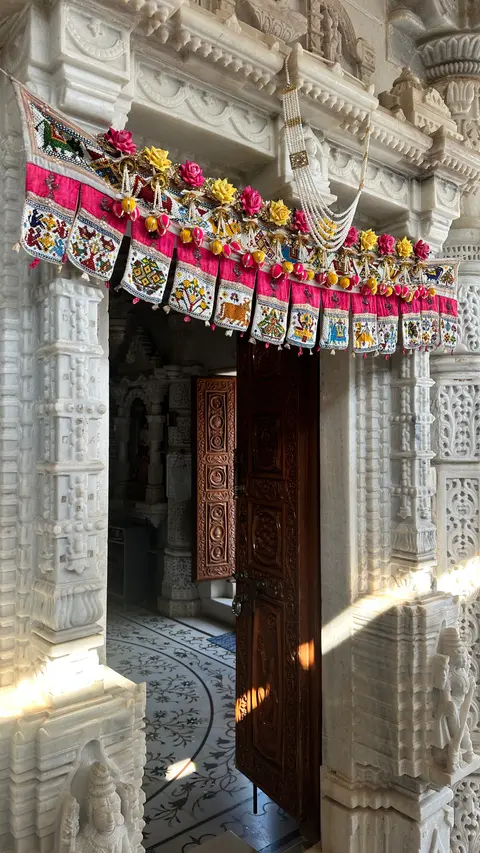
Why the temples are around Ponda
After Portuguese rule began in 1510, a period of religious persecution followed: Hindu temples in Portuguese-held territory were destroyed and families faced forced conversion. Devotees answered by moving their gods. Mangesh is a local form of Shiva; his linga (Shiva's sacred emblem) was carried away overnight from Kushasthali (today's Cortalim) around 1560 and set up again at Priol near Ponda, then ruled by the Adil Shahi sultans of Bijapur. Shantadurga, the goddess who by tradition made peace between Vishnu and Shiva, was brought from Keloshi after her temple there was destroyed in 1566. The shrine of Saptakoteshwar, patron deity of the Kadamba kings, was lost on Divar island in 1560, and its linga was carried across the river to Narve.
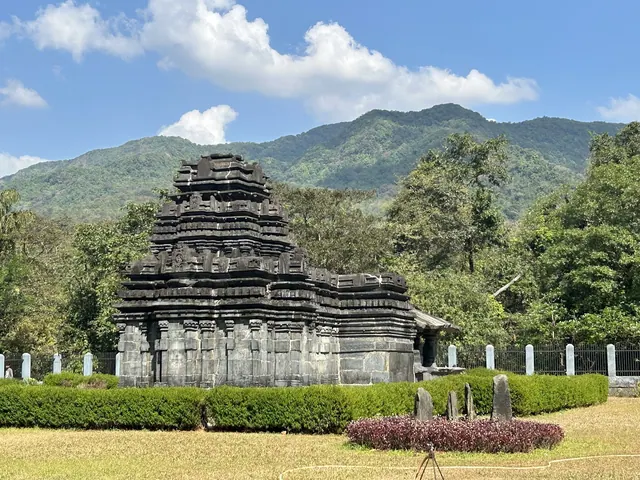
Mangesh and Shantadurga are kuladevatas, family deities of Goud Saraswat Brahmin clans; Saptakoteshwar was the family deity of the Kadamba kings. The one temple that never had to move is the oldest: the 12th–13th century Kadamba-era Shiva shrine at Tambdi Surla, which survived because it was so hard to reach.
Three temple trips
The temples cluster in three directions from Panjim, and each makes its own outing.
Ponda
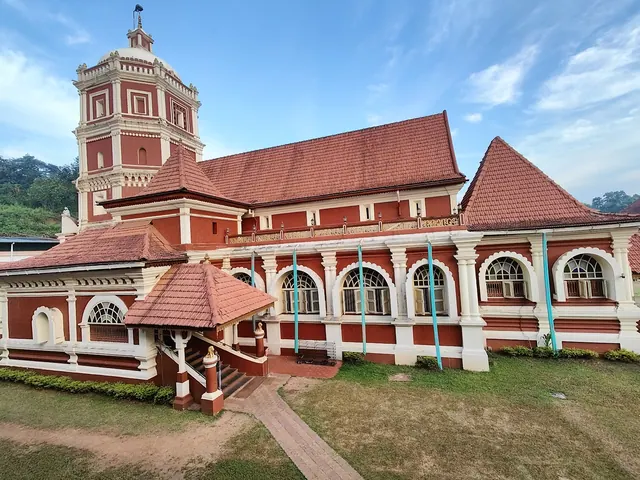
Shri Mangeshi, with its seven-tiered deepstambha (lamp tower) and large sacred tank, and Shri Shantadurga at Kavlem, about 30 km from Panjim, built 1713–1738 with tiered tiled roofs and a six-storey lamp tower. Two kilometres from Ponda, Safa Shahouri Masjid (1560), the oldest mosque left in Goa, with its great tank, takes a quarter of an hour.
Tambdi Surla
The Mahadev temple, about 65 km from Panjim near Mollem, inside Bhagwan Mahavir sanctuary: small, basalt, with fine relief on the mandapa (pillared hall) ceiling and a stepped shikhara (tower) over the sanctum.
Narve
Shri Saptakoteshwar, a modest state-protected temple in a green river valley. Shivaji's 1668 inscription sits above the sabhamandap (assembly hall). Easy to pair with the Naroa ferry to Divar island.
Dress code and etiquette
All of these are working shrines, not museums.
- Shoes off — At the threshold or the steps, at Shantadurga, Tambdi Surla and Saptakoteshwar alike.
- Shoulders and knees covered — Expected at Shantadurga and Tambdi Surla; Shri Mangeshi has prescribed a dress code since 2011. Carry a scarf or sarong if you come straight from the beach.
- Churches too — Modest dress is expected at the Basilica of Bom Jesus and the Panjim church as well.
- Entry — Free at Shantadurga, Tambdi Surla, Saptakoteshwar, Safa Masjid, Bom Jesus, St Francis of Assisi, St Cajetan and Mãe de Deus.
Goa's churches
If by temples you mean Goa's sacred buildings in general, the other half of the story is Catholic. In Old Goa, part of a UNESCO ensemble, the Basilica of Bom Jesus (1594–1605) holds the relics of St Francis Xavier, and Se Cathedral stands across the square. Next to it, the Church of St Francis of Assisi hides a richly gilded interior behind a plain facade, and the Church of St Cajetan, modelled on St Peter's in Rome, stays calm while the Basilica fills. In Panjim, Our Lady of Immaculate Conception tops a zig-zag white staircase; in Saligao, near Calangute, the white neo-Gothic Mãe de Deus church (1873) is floodlit above the paddy fields after dark. More in churches of Goa.
When the sacred sites are busiest
For nine evenings before 3 December, Old Goa fills for the novena (nine days of prayer) to St Francis Xavier, which starts on 24 November, and the feast day itself, 3 December, brings tens of thousands. See Feast of St Francis Xavier. At Shantadurga the lamp tower is lit on festival nights, which is the time to see it.
FAQ
Which is the oldest Hindu temple in Goa?
The Mahadev temple at Tambdi Surla, a Kadamba-era Shiva shrine of the 12th–13th centuries, is the oldest temple standing in Goa. It is a Monument of National Importance and still an active shrine.
What are the most famous temples in Goa?
Shri Mangeshi and Shri Shantadurga in the Ponda area are the best known, followed by the Mahadev temple at Tambdi Surla.
What are Goa temple timings?
Shri Saptakoteshwar in Narve is open 7:00–19:00 daily, according to the temple's own site. We could not confirm official hours for the other temples, so go in daytime and check locally.
Can non-Hindus visit temples in Goa?
Visitors of other faiths do come to Goa's temples, but each temple sets its own rules. Shri Mangeshi has prescribed a dress code since 2011: take your shoes off, cover shoulders and knees and follow the notices at the entrance.
Is there an old mosque in Goa?
Safa Shahouri Masjid near Ponda, built in 1560 by Ibrahim Adil Shah I, is the oldest mosque left in Goa. Entry is free.
Sources (7)
- Mangueshi Temple
- Shri Saptakoteshwar Temple: timings
- Mahadev Temple, Tambdi Surla (Goa Tourism)
- ASI: Churches and Convents of Goa
- 18th Exposition of the relics of St Francis Xavier
- Shanta Durga Temple: move from Quelossim after 1566, kuldevi of Goud Saraswat Brahmins
- Saptakoteshwar Temple: family deity of the Kadamba kings, Divar shrine destroyed 1560
Facts checked: 8 October 2026. Prices and hours are approximate; check locally.
The full catalogue, hidden spots and districts on the map, plus “nearby” mode.
Open in India GO