 India GO
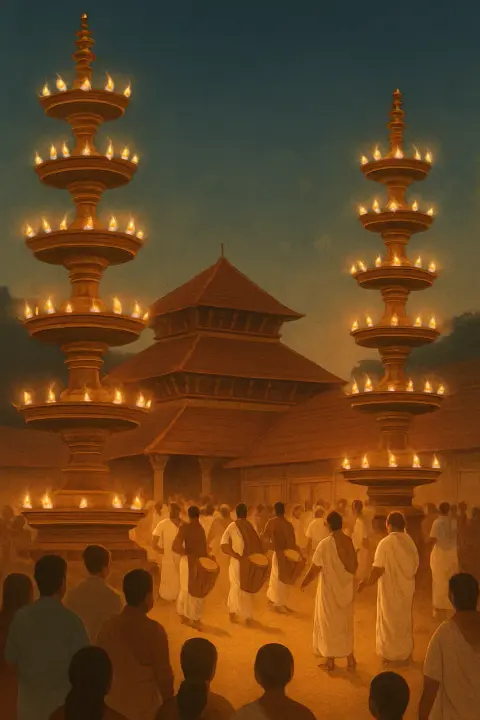
Vaikathashtami at the Vaikom Mahadeva temple
Past midnight, a father god says goodbye to his son under the temple lamps
Vaikathashtami is the twelve-day festival of the Vaikom Mahadeva temple, a major Shiva temple on Vembanad Lake in Kottayam district, Kerala. It ends on the Ashtami (eighth lunar day) of the dark half of the Malayalam month of Vrischikam, usually in November or December. Dates: 20 November – 1 December 2026, with Ashtami on 1 December 2026.
The Travancore Devaswom Board's programme is in print about two and a half months ahead; daily programmes appear on the flag day.
The legend

Legend tells of the sage Vyaghrapada, who long practised austerities under a banyan by the eastern gate of the Vaikom temple.
On the Ashtami of the dark half of Vrischikam, Shiva and Parvati appeared to him and gave their blessing. Vaikathashtami recalls that moment.
Shiva's son is held to be Subrahmanya of nearby Udayanapuram, commander of the gods, who defeated the asuras Taraka and Surapadma.

On Ashtami night the son is welcomed as a victor: from Vaikom's main junction lamps are lit and flowers laid along the way.
Towards dawn father and son part. In those minutes the music falls silent or turns mournful, and thousands see Udayanapurathappan off home.
Meaning
Satyagraha
In 1924–25 the Vaikom Satyagraha took place here, a nonviolent protest for lower castes' right to walk the roads round the temple. Gandhi visited Vaikom in 1925.
Customs
Ashtami darshan
On Ashtami day darshan opens at 4.30 a.m., the hour when Shiva is said to have appeared to Vyaghrapada, and runs without a break until 1.30 p.m.
Rishabha vahanam
On the seventh day, around 11.30 at night, the golden image of Vaikathappan comes out on a huge silver bull, Nandi, Shiva's mount.
Valiya kanikka
Once the son has arrived, the great offering begins: by old right the head of the Karukayil Kaimal family, arriving in a palanquin, gives first, then everyone else.
Aarattu
The day after Ashtami the image is bathed in the temple tank at Udayanapuram: the aarattu, the sacred bath.
Mukkudi
The morning after the aarattu a healer of the Ashtavaidya line brings ground herbs; mukkudi is made from them and handed out, believed to cure stomach ills.
Words of the festival
അഷ്ടമി
ashtami
the eighth lunar day; here, the Ashtami of the dark half of Vrischikam
വൈക്കത്തപ്പൻ
Vaikathappan
"Lord of Vaikom", the Shiva of the Mahadeva temple
ഋഷഭവാഹനം
rishabha vahanam
"bull mount", Shiva's outing on Nandi on the seventh night
കാണിക്ക
kanikka
a money offering to the deity; on Ashtami night, the great one, valiya kanikka
ആറാട്ട്
aarattu
the sacred bath of the deity's image in a tank or river at a festival's close
പ്രാതൽ
prathal
the temple feast, Vaikathappan's chief offering
True or myth
❌ Myth. In 1925 the north, south and west roads were opened to all. The east road and the temple itself opened only in 1936.
✅ True. It is the only temple in Kerala with an oval sanctum, and legend credits it to the mythical master builder Perumthachan.
✅ True. He is called Annadana Prabhu, and his chief offering is the prathal, a feast for people.
How the twelve days run
Kerala Tourism lists the main rites day by day, and the climax comes on Ashtami and the closing day. The Travancore Devaswom Board, which runs the temple, prints the programme about two and a half months ahead, and the daily programme appears on the flag day.
- Before the flag: Sandhya Vela
The temple's Sandhya Vela offerings come before the flag hoisting, with the Sribali procession on an elephant, Vedic recitation, special abhishekas, the prathal feast and lamps.
- Day 1: Thrikkodiyettu
The festival opens with the hoisting of the sacred flag.
- Days 5 to 7: Sreebali, Vilakku, Poothalam
Daily processions with the deity's image (thidambu) on an elephant, lamp-lit night processions and the Poothalam Varavu. On the seventh night, around 11.30 pm, Shiva comes out on the silver Nandi, the rishabha vahanam.
- Ashtami: the father and son meet
Darshan opens at 4.30 am and runs without a break until 1.30 pm. At night comes the Udayanapurathappante Varavu: Subrahmanya of the nearby Udayanapuram temple arrives to meet his father, with processions from nearby temples, the Ashtami Vilakku lamps, the valiya kanikka offering and, after midnight, the parting of the two deities.
- The last day: aarattu
The festival closes with the aarattu, the sacred bath of the image at Udayanapuram.
Entry rules, and what you can see outside
The heart of the festival happens inside the temple walls. The official pages we checked do not state who may enter, so check the entry rules with the temple before going in. Everyone can watch the processions on the roads around the temple, the elephants and the percussion. Kerala Tourism lists panchavadyam (the five-instrument ensemble), gajapooja (worship of the elephants) and aanayoottu (feeding of the elephants) among the festivities, with Kathakali and music programmes that run through the night.
Those roads have their own history. In 1924–25 the Vaikom Satyagraha, a nonviolent campaign for the right of lower castes to walk the roads around the temple, took place here, and Gandhi came to Vaikom in 1925. The north, south and west roads were opened to all in 1925; the east road and the temple itself opened only in 1936.
The temple's own site calls it one of the few held sacred by both Shaivites and Vaishnavites, and its Shiva is called Vaikathappan. Kerala Tourism calls it the Dakshina Kashi, the Kashi of the south. Its sanctum looks round from outside but is oval inside, the only such sanctum in Kerala; legend credits it to the master builder Perumthachan. If you plan to watch, read the notes in is India safe on festival crowds.
Planning tips
- Kerala Tourism calls its festival dates approximate: Kerala temples follow the Malayalam calendar and local custom, so confirm the programme with the temple before you travel.
- The peak is Ashtami night and the parting after midnight. For the processions outside, plan to be in Vaikom that evening and stay the night.
- The temple's chief offering is the prathal, a feast for people, which is why Vaikathappan is called Annadana Prabhu, the lord of food-giving.
- If you are touring Kerala's temple festivals, see Guruvayur Ekadasi, Kalpathi Ratholsavam and, in spring, Thrissur Pooram.
FAQ
When is Vaikathashtami?
20 November – 1 December 2026. The festival lasts twelve days and ends on the Ashtami of the dark half of Vrischikam, usually in November or December.
What is Vaikathashtami?
The annual festival of the Vaikom Mahadeva temple. Legend says Shiva and Parvati appeared to the sage Vyaghrapada on this Ashtami, and the festival recalls that moment.
In which district is the Vaikom Mahadeva temple?
In Kottayam district, Kerala, on the banks of Vembanad Lake.
Can non-Hindus enter the Vaikom temple?
The official pages we checked do not state the rule, so check the entry rules with the temple before going in. The processions on the roads around it can be watched by everyone.
What happens on Ashtami day?
Darshan runs from 4.30 am to 1.30 pm without a break. At night Subrahmanya arrives from Udayanapuram to meet Shiva, the great offering is made, and the two deities part towards dawn.
Sources (4)
Facts checked: 21 October 2026. Prices and hours are approximate; check locally.