 India GO
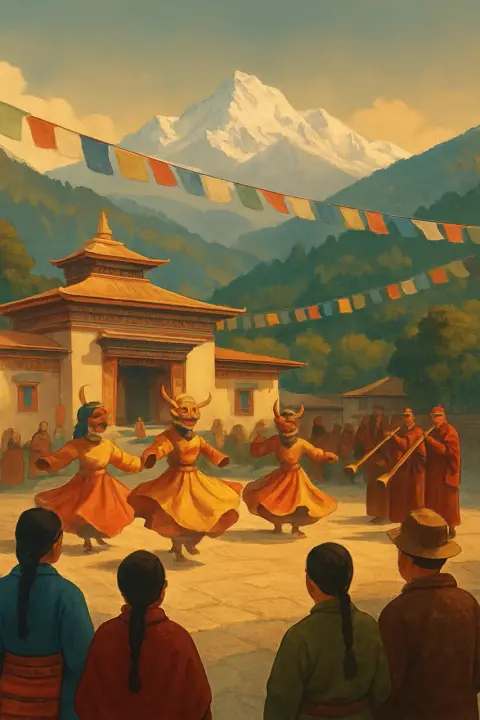
Losoong and Namsoong: Sikkim's harvest new year and the Kagyed cham
Masked monks burn the old year's evil, and Sikkim's harvest new year begins
Losoong is the new year Sikkim keeps for itself, a December festival that ends the harvest and starts the year. The Bhutia call it Losoong and the Lepcha Namsoong; it falls on the first day of the eleventh month of the Tibetan calendar, and the state holidays run for five or six days. Two days before it, masked monks dance the Kagyed cham at the Tsuklakhang in Gangtok, at Rumtek and at Phodong, and burn effigies of the year's evil. Dates: 7–14 December 2026, from the Kagyed dance to the end of the Losoong holidays.
The Sikkim government fixes the days in its holiday notification for the year, published in October or November of the previous year; the state almanac repeats it.
The legend
Losoong is the Bhutia festival of the harvest's end, on the first day of the eleventh Tibetan month. The Lepchas keep it too, as Namsoong.
Its rites are adapted from Losar, the Tibetan new year, and Losoong is held to be Sikkim's own new year.
Before it the monks dance the Kagyed cham, closing a cycle begun in September with Pang Lhabsol in honour of Khangchendzonga.
Customs
Masked cham
At Tsuklakhang, Rumtek and Phodong masked monks dance tales from the life of Padmasambhava, with jesters bringing comic relief between dances.
Burning the demon
An effigy of the demon king is burnt, destroying the evil of the year that is ending.
Archers and guests
For days afterwards families host friends and relatives, and villages hold archery contests.
Where to celebrate
Gangtok
Two days before the Sikkimese new year masked monks dance the Kagyed cham at the Tsuklakhang, Rumtek and Phodong and burn effigies of the year's ills; Losoong follows with household rites and archery.
The Kagyed cham
Kagyed is the public, visible half of the festival. On the 28th and 29th days of the tenth Tibetan month masked monks dance in monastery courtyards, acting out episodes from the life of Padmasambhava (Guru Ugyen, also called Guru Rinpoche). The dances are serious in intent, and jesters come on between them for comic relief. At the end effigies of the demon king and the ills of the passing year are burnt, clearing the way for the new one.
At the Tsuklakhang, the royal chapel in the palace grounds in Gangtok, the cham is danced by monks of Pemayangtse. Kagyed also closes a ritual cycle that begins in September with Pang Lhabsol, the festival in honour of Mount Khangchendzonga.
Losoong itself
Losoong is the festival of the harvest's end, and its rites are adapted from Losar, the Tibetan new year. The celebration begins when the priest offers chi-fut, a special alcohol, to the gods. After that it moves into homes and villages: for days families host friends and relatives, and villages hold archery contests. The Lepcha keep the same days as Namsoong, their own new year.
This half of the festival is much more domestic than the cham. There is no single public venue; what a visitor sees is the town on holiday, offices closed, and archery matches where they are held.
Where to watch the Kagyed cham
The cham is free at every monastery. Gangtok is the practical base for the first two.
Tsuklakhang (Palace Monastery), Gangtok
The royal chapel in the palace grounds, a short walk from MG Marg. The cham is danced on the day before Kagyed and on Kagyed day, ending with the burning of effigies.
Rumtek Monastery
About 24 km from Gangtok, a monastery of the Karma Kagyu school; it also keeps the Kagyed cham.
Phodong Monastery
On the North Sikkim road, a day trip from Gangtok, and one of the main Kagyed venues.
Ralang Monastery
Near Ravangla in South Sikkim: a long day from Gangtok, easier from a base in Ravangla.
At the cham
- Watch from the edges of the courtyard. The front belongs to monks and elders.
- Never cross the dance ground while the cham is on, not even to reach a better spot.
- It is a religious rite, not a show. Treat the courtyard as you would a temple.
- Dress for the cold. December nights in Sikkim are cold, and the cham is watched standing or sitting outdoors.
Planning the trip
- Arrive two days before Losoong to catch Kagyed. Two nights cover Kagyed and Losoong; four give you the first day of the cham and the archery after.
- Book about six weeks ahead: rooms in Gangtok, and trains to New Jalpaiguri or flights to Bagdogra. December is a popular month in Sikkim, even though the festival itself does not fill the town.
- Check the dates in autumn. The Sikkim government fixes the days in its holiday notification, usually published in October or November of the year before. In some years the holidays run into early January.
- Allow for weather. Some higher roads can close in snow in December; Phodong and Ralang need a full day each.
- For foreign nationals: Sikkim requires a Restricted Area Permit (RAP). Where and how to apply (an Indian mission abroad, an FRRO in India, an online form) and any fee are set by the authorities and change; check the Sikkim Tourism and Bureau of Immigration pages well before the trip.
FAQ
What is Losoong?
Losoong is the Sikkimese new year and harvest festival of the Bhutia, on the first day of the eleventh Tibetan month, usually in December. It is preceded by the Kagyed masked dance and followed by family visits and archery.
What is the difference between Losoong and Namsoong?
They are the same festival under two names: Losoong for the Bhutia, Namsoong for the Lepcha, kept on the same days.
Which festival marks the new year in Sikkim?
Losoong (Namsoong), held to be Sikkim's own new year. Its rites are adapted from Losar, the Tibetan new year, but it is a separate festival.
When is Losoong?
Next: 7–14 December 2026, counting from the Kagyed dance to the end of the state holidays. The Sikkim government confirms the days in its holiday list in October or November of the previous year.
Where can I see the Kagyed dance?
At the Tsuklakhang (Palace Monastery) in Gangtok, at Rumtek and Phodong, and at Ralang near Ravangla. It is free.
Do I need a permit to visit Sikkim for Losoong?
Foreign nationals need a Restricted Area Permit (RAP) for Sikkim. Application routes and fees change, so check the Sikkim Tourism and Bureau of Immigration pages well before travelling.
Sources (8)
Facts checked: 21 October 2026. Prices and hours are approximate; check locally.