 India GO
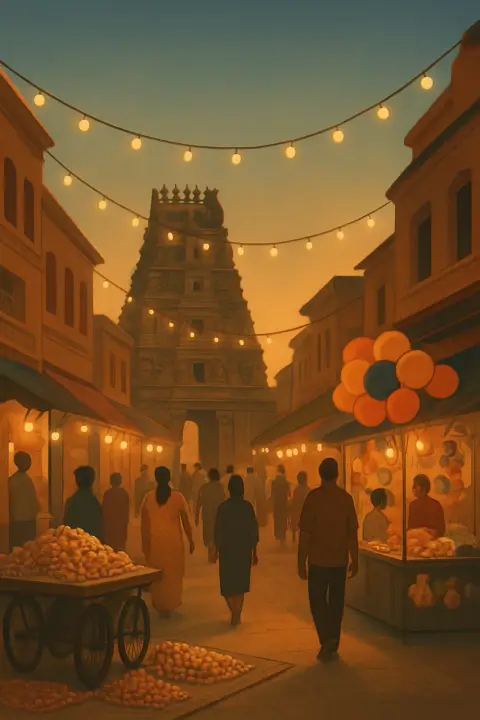
Kadalekai Parishe: the groundnut fair at the Bull Temple
Roasting smoke and mountains of groundnuts on the lane of the Bull Temple
Kadalekai Parishe, Kannada for "groundnut fair", is Bengaluru's annual fair of the first groundnut harvest, held around the Bull Temple (Dodda Basavana Gudi) in Basavanagudi. It runs for about three days from the last Monday of the lunar month of Karthika, usually between mid-November and mid-December. Next: 7–9 December 2026 (expected).
The temple department fixes the Basavanagudi fair at a meeting about a week ahead; the Malleshwaram organisers announce theirs three to seven days before.
The legend
In legend, farmers in the village of Sunkenahalli, now Basavanagudi, grew groundnuts, and every full moon a bull came and ate the crop.

One night they lay in wait. The bull ran up a hill and vanished, and on top stood a stone Nandi that began to grow.
To stop Nandi outgrowing any shrine, an iron peg shaped like a trident was driven into his head, and he grew no more.
The farmers vowed Nandi their first crop. Ever since, on the last Monday of Kartika, mountains of groundnuts rise by the Bull Temple.
Meaning
Malleshwaram
Malleshwaram, in north Bengaluru, holds its own groundnut fair too: in 2025 it ran for the ninth time.
Customs
Nuts on the scales
In a pandal before the temple groundnuts are weighed on scales as a token and handed out as prasad, to be eaten right there in the temple yard.
From all around
Groundnuts come from Chintamani, Kolar, Tumakuru, Mandya, Mysuru and even neighbouring Andhra and Tamil Nadu.
At least one seru
Raw, roasted, boiled, two-seed or three-seed: the custom is to take home at least one seru, an old measure.
Wheels and bangles
All around are a Ferris wheel, swings, merry-go-rounds and stalls of bangles, earrings, clay toys and mehndi.
Nandi in butter
The stone Nandi in the temple is constantly covered with fresh layers of butter, benne in Kannada.
What people eat
Boiled groundnuts
fresh groundnuts boiled in the shell, straight from the fair's heaps
Bendu and battasu
sugar-coated gram and coloured sugar candies
Words of the festival
ಕಡಲೆಕಾಯಿ ಪರಿಷೆ
Kadalekai Parishe
Kannada for "groundnut fair"
ಬಸವ
Basava
the bull Nandi in Kannada; hence Basavanagudi, the bull temple
ಸೇರು
seru
an old Indian dry measure of about a litre; groundnuts go by the seru
ಬೆಣ್ಣೆ
benne
butter, layered over the Nandi of the Bull Temple
True or myth
❌ Myth. It is usually a little dearer here, yet people still buy: it is part of the custom and helps the farmers.
✅ True. Kempe Gowda, the city's founder, built it in 1537 in the Vijayanagara style.
✅ True. The monolith is about 4.6 m tall and 6.1 m long, one of the largest Nandis in the world.
The legend of the bull
The story is told as a legend. Farmers in the village of Sunkenahalli, today's Basavanagudi, grew groundnuts, and on full-moon nights a bull came and ate the crop. One night they lay in wait. The bull ran up a hill and vanished, and in its place stood a stone Nandi, the sacred bull of Shiva, that began to grow. To stop it outgrowing any shrine, an iron peg shaped like a trident was driven into its head, and it grew no more. The farmers vowed to offer Nandi their first crop, and ever since, on the last Monday of Karthika, groundnuts are heaped by the temple.
The Bull Temple itself was built in 1537 by Kempe Gowda, the founder of Bengaluru, in the Vijayanagara style. Its monolithic Nandi is about 4.6 m tall and 6.1 m long, one of the largest in the world, and it is kept covered with fresh layers of butter, benne in Kannada. Basava means bull and gudi temple, which is how the district got its name. More on the deity: Nandi.
What to see and buy
The fair fills the streets around the Bull Temple, the Dodda Ganesha shrine and Bugle Rock Park. Farmers from across Karnataka bring their first crop, and the middle evening is usually the busiest.
- Groundnuts, by the seru — Raw, roasted, boiled, two-seed or three-seed, from Chintamani, Kolar, Tumakuru, Mandya, Mysuru and neighbouring Andhra Pradesh and Tamil Nadu. The custom is to take home at least one seru, an old dry measure of about a litre, bought directly from the farmers.
- Nuts on the scales — In a pandal in front of the temple groundnuts are weighed on scales as a token offering and handed out as prasad, to be eaten in the temple yard. Special poojas are held at the Bull Temple.
- Sweets and snacks — Boiled groundnuts straight from the heaps, bendu and battasu (sugar-coated gram and coloured sugar candies), bajji and bonda.
- Wheels and bangles — A Ferris wheel, swings and merry-go-rounds, and stalls of bangles, earrings, clay toys and mehndi.
When the fair is held
The date follows the Hindu calendar, so it moves each year: the fair starts on the last Monday of Karthika and is usually described as a two-to-three-day fair. The temple department fixes the Basavanagudi dates at a meeting about a week ahead. Karnataka Tourism advises watching media announcements in November for the exact dates.
Malleshwaram, in north Bengaluru, now holds its own, smaller groundnut fair a little earlier; its organisers announce it three to seven days before. For other festivals in the city, see festivals in Bengaluru and Bengaluru Karaga.
Getting there and practical tips
Two Green Line metro stations serve Basavanagudi: National College and Lalbagh. Karnataka Tourism warns to expect crowds, since locals come to celebrate and shop as well.
The fair is free; you pay only for what you buy. Buying straight from the farmers is part of the custom. The temple is a place of worship during the fair, so dress modestly for the darshan and take off your shoes at the entrance. The Basavanagudi guide covers the district, and the Dodda Ganapathi Temple and Bugle Rock Park are a short walk away.
FAQ
When is Kadalekai Parishe?
Next: 7–9 December 2026 (expected). It starts on the last Monday of the lunar month of Karthika; the temple department confirms the dates about a week ahead.
How many days is Kadalekai Parishe?
Usually two to three days at Basavanagudi, with the busiest evening in the middle.
Where is Kadalekai Parishe held?
Around the Bull Temple, the Dodda Ganesha shrine and Bugle Rock Park in Basavanagudi, south Bengaluru. A smaller fair is held earlier in Malleshwaram.
Why is Kadalekai Parishe celebrated?
It welcomes the first groundnut harvest. By legend, farmers whose crops were eaten by a bull vowed their first harvest to Nandi, and the fair keeps that vow.
Is there a groundnut festival in Bangalore?
Yes, Kadalekai Parishe, the groundnut fair of Basavanagudi, held every year in Karthika around the Bull Temple.
Facts checked: 21 October 2026. Prices and hours are approximate; check locally.