 India GO
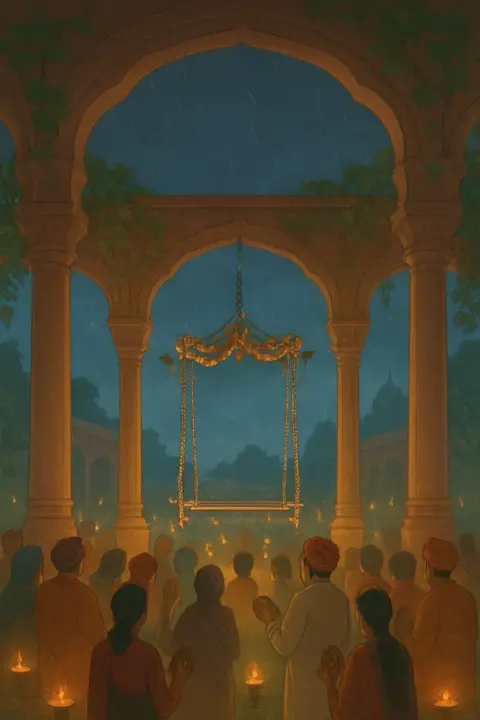
Jhulan Yatra: the swing festival of Radha and Krishna
Gods lifted onto flower-hung swings and rocked to monsoon songs
Jhulan Yatra, also called Jhulan Purnima or Hindola, is the monsoon swing festival of Radha and Krishna. In the month of Shravana the images are lifted from the altar onto decorated swings and rocked to devotional songs, ending on the Shravana full moon, the day of Raksha Bandhan. In Vrindavan the main days are 12–17 August 2027 (expected).
Jhulan Yatra begins on the third day of the bright fortnight of Shravana and runs to the full moon. The Radha-Krishna images are lifted from the altar and set on heavily decorated swings, sometimes worked in silver or gold, and swung to song. In Braj the main houses for it are the Banke Bihari and Radha Raman temples in Vrindavan, the Dwarkadhish temple in Mathura and the Ladli Lal temple at Barsana.
The days follow the lunar calendar; the temples announce their swing programmes in the week before.
The legend

Legend says that in the rains Krishna swings with the gopis in the groves of Vrindavan; the Bhagavata Purana and the Gita Govinda tell of these games.
The swing became an image of monsoon love: poets and songs about the swings of Sawan sing of lovers in the rainy season.

The Vaishnava manual Hari Bhakti Vilasa tells devotees in the warm season to bring the Lord out and swing him in the moonlight.
And every year, from the third day of the bright half of Shravana to the full moon, Braj temples lift Radha and Krishna off the altar onto swings.
Meaning
Odisha
At the Jagannath temple in Puri and in Odisha's monasteries Jagannath himself is swung to music and dance.
Mayapur
At ISKCON's Mayapur the festival lasts five days: Radha and Krishna are swung with a flower rope amid showers of petals.
Pushtimarg
In the Pushtimarg tradition Hindola lasts fifteen days, with the swings decorated in a different material each day.
Customs
Gold and silver
The swings for the gods are richly dressed, and in the great temples they are made of silver or gold.
Once a year
In Vrindavan, Banke Bihari sits on his gold and silver swing only once a year, on Hariyali Teej, and crowds gather to see him.
Hindola songs
The swings are rocked to bhajans and kirtans, and the songs follow a special tune that is also called hindola.
New clothes daily
Through the festival the deities change clothes every day, prasad is shared and the whole temple sings.
What people eat
Ghevar
a honeycombed disc of fried batter in syrup, the sweet of Shravana
Words of the festival
झूलन
jhulan
"swinging", from jhula, a swing; hence the festival's name
हिंडोला
hindola
a swing or cradle; another name for the festival and for its tune
सावन
Sawan
the month of Shravana, the heart of the monsoon (July to August), when the festival falls
कीर्तन
kirtan
group singing of the divine names, the sound the swings move to
True or myth
❌ Myth. He is seated on the gold and silver swing only once a year, on Hariyali Teej.
✅ True. The word means a swinging cradle and also the special tune the festival's songs are sung to.
❌ Myth. Swings go up in Mayapur in Bengal and at the Jagannath temple in Puri as well.
What the festival means
The name comes from jhula, a swing: jhulan means swinging. The festival is inspired by the story of Krishna swinging with the gopis, the cowherd girls, in the groves of Vrindavan during the rains, a scene told in the Bhagavata Purana and the Gita Govinda. Over time the swing of Sawan, as the month of Shravana is called in the north, became a wider image of monsoon love in poetry and song.
The festival's other name, Hindola, means a swing or cradle, and it is also the name of the special tune the festival songs are sung to. Vaishnava tradition, in the manual Hari Bhakti Vilasa, is said to instruct devotees to bring the Lord out in the warm season and swing him in the moonlight.
For the deity at the centre, see Krishna.
When Jhulan Yatra takes place
The festival follows the lunar calendar and falls in Shravana, the heart of the monsoon, usually between late July and late August. Traditions differ on its length:
- In Braj, temples hang the swings from the third day of the bright half of Shravana, Hariyali Teej, and keep them up until the full moon.
- The main five days run from Pavitra Ekadashi, the eleventh lunar day of the bright half, to the Shravana full moon. ISKCON temples keep these five days.
- In the Pushtimarg tradition Hindola lasts fifteen days, with the swings decorated in a different material each day.
In Vrindavan the main days are 12–17 August 2027 (expected). Each temple announces its own swing programme in the week before, so check locally.
What you see in the temples
The core of the festival is the same everywhere: the images come off the altar onto a swing.
- Decorated swings — The swings are richly dressed with flowers and cloth; in the great temples they are worked in silver or gold.
- Hindola songs — The swings are rocked to bhajans and kirtan, group singing of the divine names, in the hindola tune.
- New clothes every day — Through the festival the deities are dressed in new clothes each day, prasad (blessed food) is shared and the temple sings together.
- Ghevar — The sweet of Shravana: a honeycombed disc of fried batter soaked in syrup.
Where to see Jhulan Yatra
Braj, around Vrindavan and Mathura, is the main centre, but the swings go up in Bengal and Odisha too.
Banke Bihari, Vrindavan
Banke Bihari sits on his gold and silver swing only once a year, on Hariyali Teej, and crowds gather to see him. Banke Bihari Mandir.
Radha Raman, Vrindavan
One of the main Vrindavan temples for the swing festival. Radha Raman Mandir.
ISKCON Vrindavan
Keeps the five days from Pavitra Ekadashi to the full moon. ISKCON Vrindavan.
Dwarkadhish, Mathura
The main temple for Jhulan in Mathura. Dwarkadhish Temple.
Ladli Lal, Barsana
The hilltop temple of Radha in Barsana, by tradition her home village. Radha Rani Temple, Barsana.
Mayapur and Puri
At ISKCON Mayapur in Bengal Radha and Krishna are swung with a flower rope amid showers of petals for five days (ISKCON Mayapur). At the Jagannath temple in Puri, Jagannath himself is swung to music and dance.
Etiquette
Jhulan Yatra is temple worship, open to visitors who respect it. Dress modestly, take off your shoes where others do, and follow the temple's rules on photography. The days around Hariyali Teej and the full moon draw large crowds in Vrindavan, so keep valuables close and agree a meeting point if you go in a group. Dress rules for Braj temples are on the temple dress code page, and the full moon itself is also Raksha Bandhan.
FAQ
When is Jhulan Yatra?
In Vrindavan the main days are 12–17 August 2027 (expected). It always ends on the Shravana full moon, Raksha Bandhan; some temples hang the swings from Hariyali Teej, about twelve days earlier.
Why is Jhulan Yatra celebrated?
It recalls Krishna swinging with the gopis in the groves of Vrindavan during the rains, as told in the Bhagavata Purana and the Gita Govinda.
How many days does Jhulan Yatra last?
Five days in ISKCON temples, from Pavitra Ekadashi to the full moon. In Braj some temples keep the swings from Hariyali Teej, and the Pushtimarg tradition keeps Hindola for fifteen days.
Is Jhulan Yatra celebrated only in Vrindavan?
No. Braj is the main centre, but swings also go up at ISKCON Mayapur in Bengal and at the Jagannath temple in Puri.
What does hindola mean?
A swing or cradle. It is another name for the festival and also the name of the tune its songs are sung to.
Facts checked: 21 October 2026. Prices and hours are approximate; check locally.