 India GO
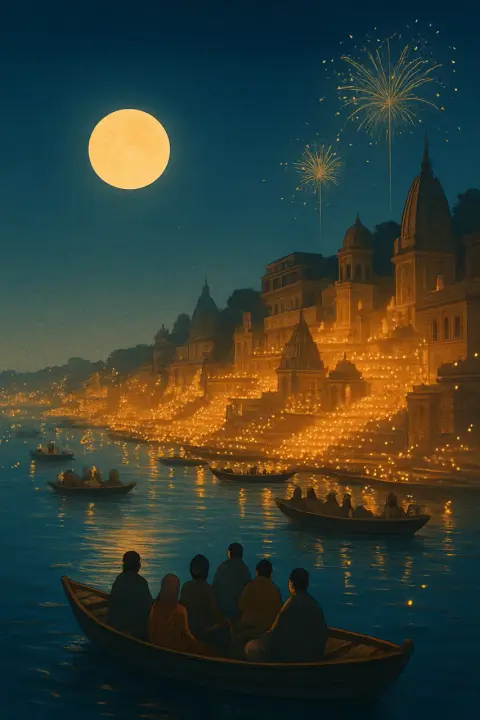
Dev Deepawali: the Diwali of the gods in Varanasi
Eighty-four ghats, and a clay lamp on every step for the gods
Dev Deepawali, "the Diwali of the gods", is Varanasi's festival of Kartik Purnima, the full moon of the month of Kartik, about fifteen days after Diwali. The festival days run 21–24 November 2026, from Prabodhini Ekadashi to the full moon, but the ghats are lit on one evening only, the last: 24 November 2026. That evening more than a million clay lamps are set out along the river, from Ravidas Ghat in the south to Raj Ghat in the north.
Varanasi lights the ghats on the Kartik Purnima bathing day even when the full moon begins the evening before (27 November in 2023); the Varanasi district administration announces the date and the boat rules in October.
The legend
In a Kashi legend, King Divodasa bars the gods from entering his city.

But on the full moon of Kartika Shiva himself, in disguise, comes to Panchganga Ghat, bathes in the Ganga and sits in meditation.
When Divodasa learns who is meditating on his riverbank, he lifts the ban.
That same day all the gods enter Kashi and light lamps, celebrating a Deepavali of their own.

So on this night Varanasi lights lamps on the steps of every ghat, from Ravidas Ghat to Raj Ghat.
Meaning
The Ganga
The lamps on the ghats honour the Ganga, river and goddess: on this night she is revered as a mother.
Ancestors
All through Kartika, akash deeps, lanterns on tall poles, burn above the ghats: by Kashi custom they light the way for the ancestors.
Customs
Floating lamps
Clay lamps are not only set on the steps but floated on the Ganga: deepdaan, an offering of light to the river.
Maha aarti
At Dashashwamedh Ghat 21 priests and 42 young women perform the aarti for the Ganga, with fire, conches and drums.
At home
Homes glow with lamps too, doorsteps get coloured designs, and many families hold an unbroken reading of the Ramayana.
Ganga Mahotsav
The same week brings the state's Ganga Mahotsav: classical music concerts, a boat race and a crafts fair.
Words of the festival
काशी
Kashi
Varanasi's ancient name, from the Sanskrit kash, "to shine"
पंचगंगा
Panchganga
"five Gangas": the ghat where five rivers are said to meet
आकाशदीप
akash deep
"sky lamp": a lantern in a basket on a tall pole
How to greet
देव दीपावली की शुभकामनाएँ
Dev Deepawali ki shubhkamnayein!
"Best wishes for Dev Deepawali": the greeting for friends and family on the night.
True or myth
❌ Myth. Today's custom took shape in the late 20th century: local people lit the first lamps, and year by year the lights spread along the whole riverfront.
✅ True. At Dashashwamedh Ghat wreaths are laid at a replica of the Amar Jawan Jyoti, and the army, navy and air force sound the Last Post.
❌ Myth. It runs five days, from Prabodhini Ekadashi to Kartik Purnima, and the ghats are lit on the last evening.
Where to celebrate
Dev Deepawali and Diwali: not the same night
Diwali falls on the new moon of Kartik and is kept at home across India: a Lakshmi puja, lamps on doorsteps, fireworks. Dev Deepawali comes a fortnight later, on the full moon, and belongs to one city and one river. It is Varanasi's own festival, and its stage is the riverfront: the stone steps of the 84 ghats.
The idea behind it is in the name. Varanasi tradition holds that on this night the gods come down to Kashi, the old name of the city, to bathe in the Ganga, and they light lamps for a Diwali of their own. The day is also called Tripura Purnima and is linked with the worship of Shiva. The lamps honour the Ganga as a river and a goddess, and through the whole month of Kartik people bathe in the river at dawn and float lamps on it in the evening, an offering called deepdaan. The legend of King Divodasa and the gods, told in the cards above, is the city's own story of why the gods come to Kashi on this night.
In short: Diwali is for the home, Dev Deepawali is for the river. People who picture Varanasi's ghats covered in lamps are picturing Dev Deepawali, not Diwali.
When it falls and how the date is set
Dev Deepawali follows the lunar calendar, so the date moves: usually it is in November, in some years late October. The festival begins on Prabodhini Ekadashi, a few days before the full moon, and these days are a religious window with temple rites and bathing. The great lamp evening is only the last one, the Kartik Purnima: 24 November 2026.
When the full moon begins on the evening before, almanacs can disagree about which evening is right. Varanasi lights the ghats on the Kartik Purnima bathing day, the day on which the full moon is current at sunrise, and it has done so even in years when some scholars recommended the evening before. The Varanasi district administration usually confirms the date and the rules for boats by October, so treat any date as provisional until then. The dates on this page come from the India GO calendar and are marked when they are still expected rather than announced.
How the custom grew
Lamps for the river in Kartik are an old practice, but the festival in its present form is recent. It was begun at Dashashwamedh Ghat in 1991, with Pandit Kishori Raman Dubey, known as Babu Maharaj, named as its initiator. Local people lit the first rows of lamps, other ghat committees followed year by year, and the lights spread along the whole riverfront. Today it is the city's largest night of the year, and the Uttar Pradesh government takes part: at a recent edition the state counted about 2.5 million lamps on the 84 ghats.
Two parts of the evening are set ceremonies. At Dashashwamedh Ghat the Ganga aarti is performed on a larger scale than on ordinary nights, by a row of young priests and young women, with fire, conches and drums. On the same ghat wreaths are laid at a replica of the Amar Jawan Jyoti, and the army, navy and air force sound the Last Post for fallen soldiers.
If you want to see it
Dev Deepawali is a mass gathering, and Varanasi plans for it like one: riverfront rooms and boats are booked weeks or months ahead, and the lanes to the river close to vehicles on the evening. Plan for four or five nights and arrive about three days before the full moon. The same week the state holds Ganga Mahotsav, with classical music, a boat race and a crafts fair, and Sarnath and Ramnagar are easy additions. Where to stand, how to book a boat and where to stay: Dev Deepawali in Varanasi.
FAQ
How many days is Dev Deepawali?
Usually five, from Prabodhini Ekadashi to Kartik Purnima, though the span shifts by a day with the lunar calendar (21–24 November 2026). The ghats are lit with lamps on the last evening only, the full moon: 24 November 2026.
What is the difference between Dev Deepawali and Diwali?
Diwali is the new moon of Kartik, kept at home all over India. Dev Deepawali is the full moon about fifteen days later, kept on the river steps of Varanasi, where the gods are said to come down to bathe in the Ganga.
Why is Dev Deepawali celebrated?
Varanasi tradition holds that on Kartik Purnima the gods enter Kashi and light lamps for their own Diwali. The lamps honour the Ganga, and the day is also linked with the worship of Shiva.
Which city is famous for Dev Deepawali?
Varanasi. The lamps are set out on the ghats from Ravidas Ghat to Raj Ghat, with Dashashwamedh, Assi and Namo Ghat as the focal points.
Is Dev Deepawali free to watch?
Yes. The ghats are public and the lamps are on their steps. Boats and riverfront rooms are paid and sell out early.
Sources (4)
Facts checked: 21 October 2026. Prices and hours are approximate; check locally.