 India GO
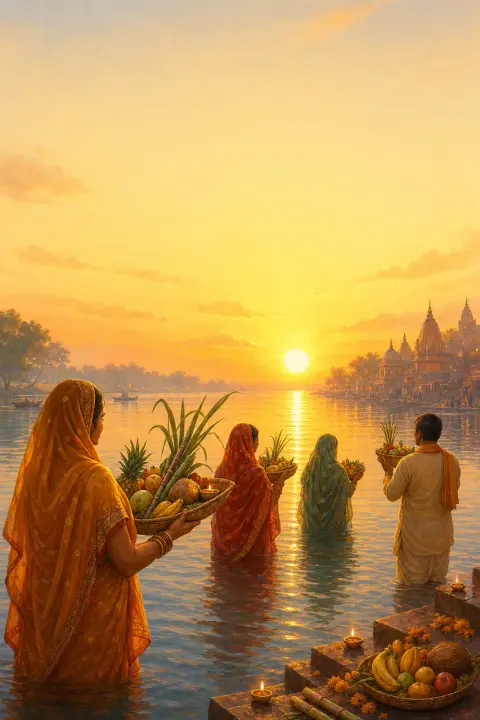
Chhath Puja in Varanasi: sunset and dawn on the Ganga ghats
Standing in the river to greet the rising sun
Varanasi lies in eastern Uttar Pradesh, one of the heartlands of Chhath, and for two short windows the whole ghat line becomes standing room: at sunset on the main day, Kartik Shukla Shashthi, and before dawn the next morning. Next Chhath: 13–16 November 2026 (the main festival is in Kartik; a smaller Chaiti Chhath falls in spring). Assi Ghat at the southern end is the most-named site, Dashashwamedh draws the largest single gathering, and about nine days later the same steps are lit for Dev Deepawali.
For two tides of light, at sunset on the main day and before dawn the next morning, the entire Varanasi riverfront stops being a walkway and becomes standing room, first for the setting sun and then for the rising one.
Where to watch
Assi Ghat: the southern end of the ghat line and the most consistently named Chhath site in Varanasi. Broad, open to the sky, facing the sunrise across open water. The only ghat a vehicle can get near, by a wide street; the last stretch is on foot. No ticket, no booking.
Dashashwamedh Ghat and the adjoining Shitala Ghat: the largest single congregation, on the ghat of the daily evening Ganga Aarti, and a site for Kharna and both offerings. On foot through the Godowlia lanes; vehicles stop well back. Free. Barricades and one-way walking routes are normal on crowded nights.
The Assi–Dashashwamedh stretch: the continuous run of steps between the two. The crowd spreads along the whole band rather than at one point, so walking north from Assi finds standing room the named ghats have lost. Ghat to ghat on foot along the river; where a ghat is barricaded, a short climb into the lanes gets you round it.
Rajghat and Adi Keshav Ghat: the far northern end, near where the Varuna meets the Ganga, well away from the central crowd. Road access from the Rajghat side. Less documented for Chhath; check locally.
Namo Ghat (Khirkiya Ghat): the newest ghat, at the northern end, with wide modern steps and lighting, often described as taking the overflow. Road access, free. Its Chhath role is less documented; check locally.
Surya Sarovar, Bareka: a pond used for Chhath inside the Banaras Locomotive Works township in the south of the city, named with the Ganga ghats in the state's disaster-response deployment. The township belongs to a working railway factory, so going in is not the same as walking onto a public ghat; whether outsiders are let in during Chhath is unclear.
Rewa Ghat, Ganga Mahal Ghat and Tulsi Ghat: the ghats just north of Assi, named together with Assi in coverage of the 2025 arrangements. Open riverfront steps, on foot from Assi; barricades set how far down the steps the crowd goes.
Free viewing
- Assi Ghat: the open southern end, the best angle for the dawn offering
- The steps between Assi Ghat and Dashashwamedh Ghat, working north until the crowd thins
- Dashashwamedh Ghat and Shitala Ghat, for the largest single gathering at sunset
- The upper steps and lane-level terraces above any ghat, which stay passable after the lower steps fill
- Rajghat and Adi Keshav Ghat at the northern end (less documented for Chhath; check locally)
Programme
Nahay Khay (Kartika Shukla Chaturthi)
Households that keep the vrat bathe in the river or a clean water body, put on fresh clothes and cook one sattvik meal, usually lauki (bottle gourd) with rice and chana dal. The house and the path down to the water are cleaned. This is the last ordinary meal before the fast.
 Ganga ghats and neighbourhood water bodies across the city
Kharna (Kartika Shukla Panchami)
A day-long fast is broken after sunset with gur ki kheer (rice cooked in jaggery) and roti, eaten in silence. The moment that plate is finished the nirjala fast starts: roughly 36 hours with neither food nor water, ending only after the dawn offering on day 4.
Homes and courtyards across the city; the ghats stay comparatively quiet
Sandhya Arghya (Kartika Shukla Shashthi), main day
The state arrangement at the ghats is set up before the two offering days: barricading along the steps to keep people out of deep water, water police and divers on station, high-mast and LED lighting plus decorative lighting on the ghats, drinking water, toilets and emergency medical points, bins and a single-use plastic ban. Seven National Disaster Response Force teams of about thirty personnel each are stationed across the Ganga ghats, the Bareka pond and neighbouring Chandauli, with rescue boats, water ambulances, divers, paramedics and oxygen.
Along the Varanasi ghat line
Sandhya Arghya (Kartika Shukla Shashthi), main day
Families carry the daura baskets down to the water and claim a patch of step. Sugarcane stalks are stood up in pairs, lamps are set out, the soop is loaded with thekua, coconut, banana, sugarcane and seasonal fruit.
The ghats from Assi to Dashashwamedh first, then the rest of the city's ghats
Sandhya Arghya (Kartika Shukla Shashthi), main day
Vratis stand waist-deep facing west and raise water and milk from a brass or copper lota to the setting sun, again and again, while the family holds the loaded soop. The singing is continuous.
Assi Ghat, Dashashwamedh Ghat and the adjoining Shitala Ghat
Sandhya Arghya (Kartika Shukla Shashthi), main day
Many families do not go home. They keep the patch of step they claimed, light lamps on the baskets and wait out the night beside the water until the dawn offering.
All along the ghat line
Usha Arghya (Kartika Shukla Saptami)
Getting to the water and finding anywhere to stand. The lanes down to the ghats are already moving by then and the lower steps are occupied.
Same stretch as the evening before
Usha Arghya (Kartika Shukla Saptami)
The dawn offering to the rising sun, made from the water facing east. The 36-hour nirjala fast ends here with paran: a little prasad and the first water in a day and a half.
Assi Ghat faces open river and catches the sunrise cleanly; Dashashwamedh is the larger congregation.
Usha Arghya (Kartika Shukla Saptami)
The ghats empty fast. Prasad, mostly thekua, is handed around widely.
All ghats
Not the evening aarti
Visitors to Varanasi know the ghats through the daily Ganga Aarti, a ceremony led by priests and watched by an audience. Chhath works the other way round. There are no idols, priests or temples: families come down to the river themselves, and those keeping the vow, mostly women, stand waist-deep in the Ganga and offer fruit, sugarcane and thekua straight to the sun, with bamboo baskets, lamps and folk songs on the steps.
The festival is dedicated to Surya, the Sun, and to Chhathi Maiya. It is one of the few rites in which the setting sun is worshipped as well as the rising one, and the waterless fast that began after Kharna ends only after the dawn offering. A smaller Chaiti Chhath is kept in spring, in Chaitra.
For the four days in full, see Chhath Puja; for the ghats themselves, Varanasi ghats.
Choosing a ghat
All ghats are free and need no booking. The crowd spreads along the whole river rather than at one point.
- For the dawn offering: Assi
Assi Ghat is broad, open to the sky and faces the sunrise across open water. It is also the one ghat a vehicle can get near.
- For the biggest gathering: Dashashwamedh
Dashashwamedh and Shitala Ghat hold the largest single crowd at sunset. Vehicles stop well back; expect barricades and one-way walking routes.
- When the named ghats fill
Walk north from Assi along the steps until the crowd thins, or watch from the upper steps and lane-level terraces, which stay passable.
Etiquette and safety
On the offering days stay inside any barricades along the steps and follow police instructions.
- Keep back from the vratis — Photograph respectfully, keep your distance from those fasting and never enter the water near them.
- Arrive early for dawn — The morning offering is the more powerful of the two; be on the steps well before sunrise.
- Prasad — Thekua is shared widely after the dawn offering; accept with thanks if offered.
- Crowds — The UK government notes that stampedes have occurred at large religious gatherings in India and that Indian rivers have strong currents. Follow police instructions and the barricades, and agree a meeting point.
Chhath and Dev Deepawali
Kartik stacks two festivals on the Varanasi ghats. About nine days after the Chhath sunset offering comes Dev Deepawali, when the ghat line is lit with lamps on the Kartik full moon. Room prices for that peak are already rising in Chhath week, river-view rooms first, so if you want both, book once for the whole stretch.
FAQ
When is Chhath Puja in Varanasi?
Next Chhath: 13–16 November 2026. The evening offering is on Kartik Shukla Shashthi and the dawn offering the next morning; the main Kartik festival falls between late October and late November.
Is Chhath celebrated in Uttar Pradesh?
Yes. Chhath is a major festival of Bihar and eastern Uttar Pradesh, and in Varanasi it fills the Ganga ghats from Assi to Dashashwamedh and beyond.
Which ghat is best for Chhath in Varanasi?
Assi Ghat for the dawn offering, with open water to the east; Dashashwamedh and Shitala Ghat for the largest gathering at sunset.
Is the Ganga Aarti held during Chhath?
Dashashwamedh is the ghat of the daily evening aarti, and on Chhath days it also hosts the largest Chhath gathering, so expect barricades and very dense crowds there.
Facts checked: 22 October 2026. Prices and hours are approximate; check locally.