 India GO
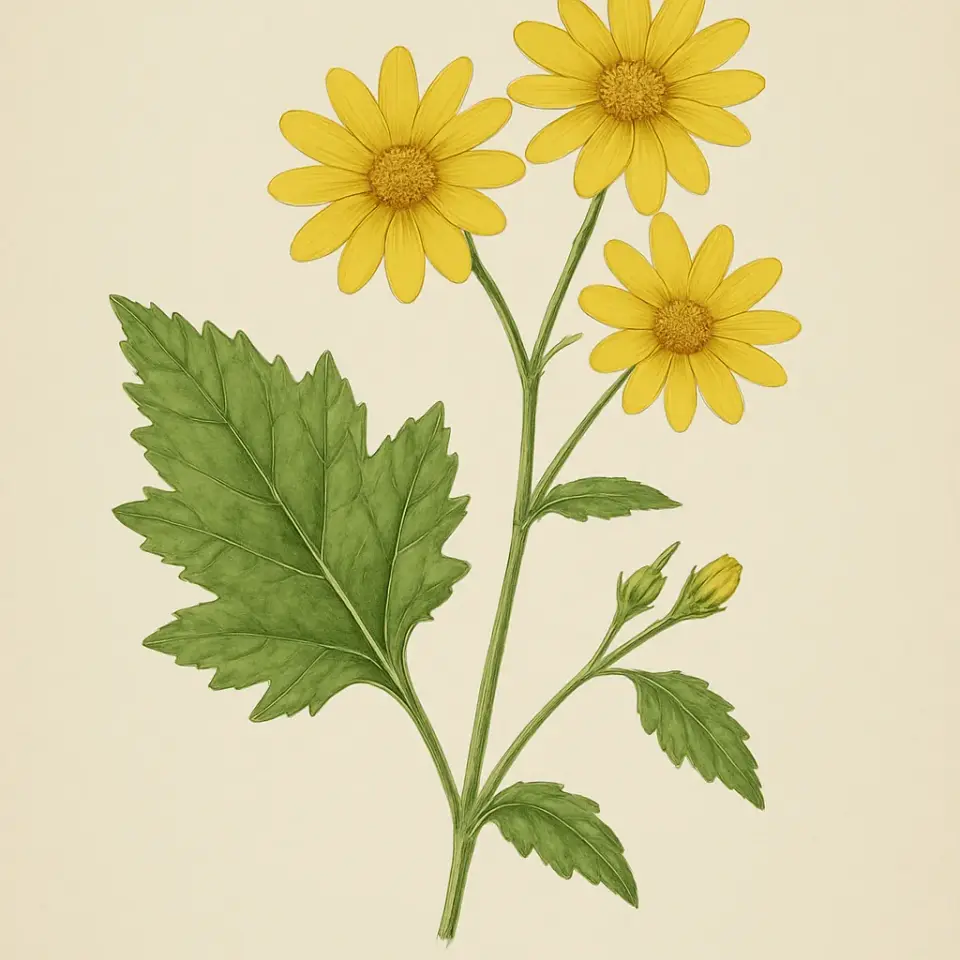
Sonki, the yellow flower of the Western Ghats after the rains
सोनकी (sonki)
Sonki is a tall yellow daisy found only in the Western Ghats. As the monsoon eases, from about August to October, it turns open laterite plateaus and roadside banks yellow, and in Goa and the Konkan it is picked for Ganesh Chaturthi, when the flowers are said to represent the goddess Parvati.
A tall daisy that turns laterite plateaus and roadside banks bright yellow as the monsoon eases, in the same weeks as Ganesh Chaturthi.
How to recognise it
Loose sprays of small yellow daisy flowers on thin stems, waist-high, covering open ground rather than growing under trees.
Where to see it
Goa
Sonki is picked for Ganesh Chaturthi in Goa and the Konkan, where the flowers are associated with Parvati; the bloom and the festival fall together, which is why the plant is so recognisable locally.
 Chorla Ghat (in season) · Budbudyanchi Tali (Bubbling Lake), Netravali (in season) · Arvalem Waterfall & Rudreshwar Caves (in season)
How to recognise it
Sonki is an annual of the daisy family, 30–100 cm tall, with loose sprays of small yellow flower heads on thin stems. It grows on open ground in full light rather than under trees, often in dense patches that colour a whole slope. A useful detail if you look closely: the undersides of the leaves are white.
The plant is endemic to the Western Ghats and is recorded in Maharashtra at Mulshi near Pune, Mahabaleshwar, Matheran, Nashik and the Kaas plateau, and also in Goa, Karnataka and Gujarat. Its English book name is Graham's groundsel; botanists have called it Senecio bombayensis since 1970. In Marathi and Konkani it is sonki (सोनकी), and in Goa also harna.
The flower of Parvati at Ganesh Chaturthi
The bloom and the festival fall together, and that is why everyone in Goa knows the plant. Sonki is picked for Ganesh Chaturthi in Goa and the Konkan, where the flowers are said to represent Parvati, the mother of Ganesha.
Where and when to see it in Goa
The flowering season in Goa runs from about September to November, after the heaviest rain. Look on open plateau ground, not on the forest floor: at Chorla Ghat the open plateau on top is the place. In the south it also appears around the Bubbling Lake (Budbudyanchi Tali) at Netravali, and in the north near Arvalem waterfall and the Rudreshwar caves. Other seasonal plants of the state are on the Goa trees and flowers page.
FAQ
When does sonki flower?
As the monsoon eases: botanical records give August to October, and in Goa it is seen from about September to November.
Why is sonki used at Ganesh Chaturthi?
In Goa and the Konkan the flowers are said to represent Parvati, Ganesha's mother, and they bloom exactly in the festival weeks.
Where can I see sonki in Goa?
On open plateau ground, for example at the top of Chorla Ghat, and around Netravali and Arvalem in the flowering season.
Does sonki grow outside the Western Ghats?
No. It is endemic to the Western Ghats of India.
Sources (3)
Facts checked: 8 October 2026. Prices and hours are approximate; check locally.