 India GO
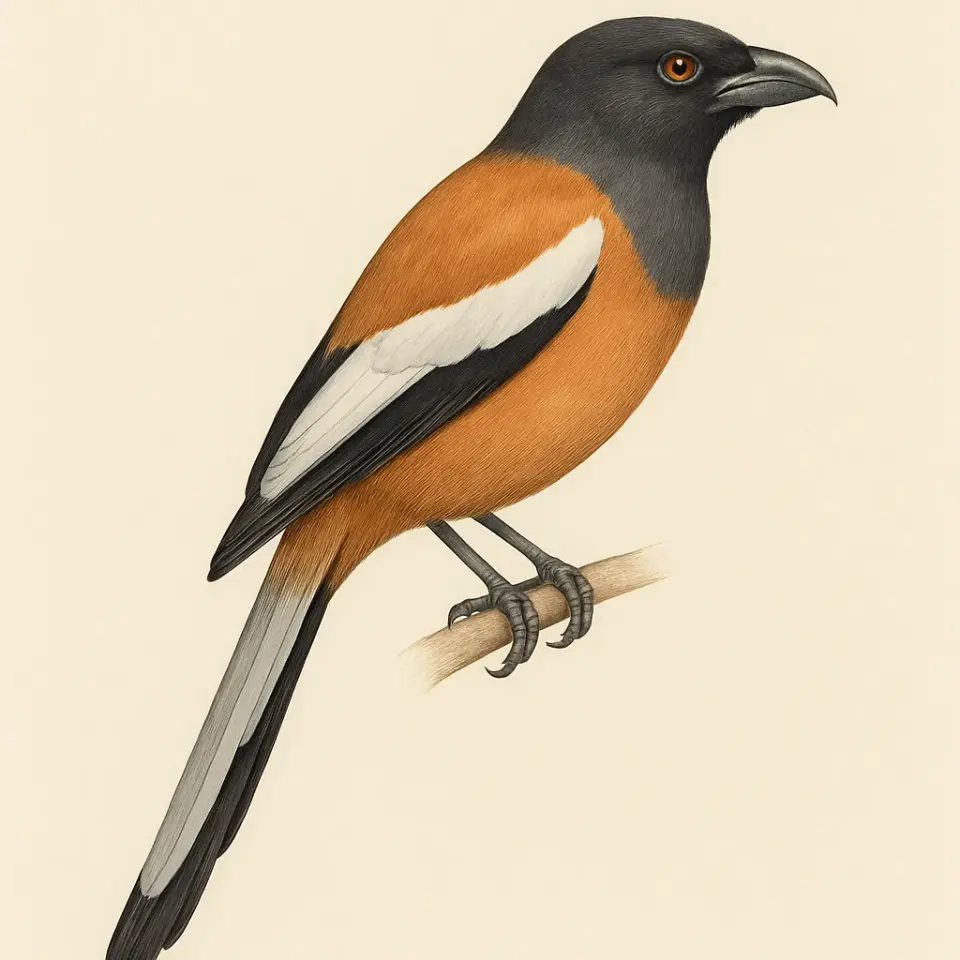
Rufous treepie (Dendrocitta vagabunda)
महालट (mahalat)
The rufous treepie is a cinnamon-brown member of the crow family with a black head and a grey tail longer than its body. It lives across India year-round, in scrub, forest edges, farmland and city gardens, and it is bold: at Mughal monuments and Rajasthan forts treepies take scraps from visitors and sometimes land on an outstretched hand. Local names include kotri, from its call, and taka chor, the coin thief.
A long-tailed relative of the crows, cinnamon-brown with a grey-and-black head and a very long grey tail tipped black. It is bold and noisy.
How to recognise it
The tail is the mark — longer than the body, grey with a black end, and constantly in motion. The usual call is a ringing metallic «ko-ki-la», with a harsh chatter mixed in.
Where to see it
Agra
Treepies around the Taj and at Keoladeo have learned to take food from an open hand. Feeding them is discouraged: it concentrates the birds and changes what they eat.
 Taj Nature Walk · Keoladeo Ghana National Park (Bharatpur) · Mehtab Bagh
Delhi
Treepies have learned the rhythm of monument opening hours; at Mughal sites they gather where visitors stop to eat.
Lodhi Garden · Sunder Nursery · Sanjay Van
Jaipur
Rajasthan's fort courtyards are its best habitat: it takes scraps at Amber and Nahargarh and is bold enough to come to an outstretched hand, which is how most people meet it.
Jhalana Leopard Reserve · Nahargarh Biological Park · Sisodiya Rani Bagh (often)
Mathura
Treepies work fruit trees, flower offerings and any food left out, and where people feed birds they will come to an outstretched hand within a few minutes. They also follow langurs through the canopy and take what the monkeys dislodge. They are thoroughly at home in the groves and gardens of Mathura.
Raman Reti, Gokul (often) · Brahmand Ghat, Mahavan (often)
How to recognise it
The tail is the first thing you see: long, graduated, bluish grey with a black tip, and rarely still. The body is cinnamon to orange-brown, the head and neck sooty black, and there is a white patch on the wing. The bill is stout and hooked. Males and females look alike.
The only bird in India easily confused with it is the grey treepie, which lacks the bright rufous back. The voice settles it anyway: a loud, ringing, almost musical "ko-tree" or "bob-o-link", mixed with harsh chatter.
An opportunist in the treetops
Like other crows, the treepie is adaptable and eats almost anything. It takes insects and other invertebrates, small reptiles, the eggs and chicks of other birds, fruit, seeds and the nectar of the red silk-cotton tree (semal), and it does not turn down carrion. It clambers through branches, joins mixed flocks with drongos and babblers, and hides surplus food for later.
Two habits are worth watching for. In forests it acts as a cleaner for sambar deer, which stand still and let the birds pick ticks off them. And it follows langur troops through the canopy, picking up what the monkeys shake loose. In south Indian palm groves it is counted as an ally, because it eats the grubs of the red palm weevil.
In India it breeds from April to June, building a shallow nest in a tree or bush.
Where to see it
It is resident and common, so any big garden with old trees may have a pair. The places in the India GO guide where it is reliably seen:
Delhi: Lodhi Garden, Sunder Nursery and Sanjay Van. At Mughal sites treepies gather where visitors stop to eat. See also birds of Delhi.
Agra: the Taj Nature Walk, Mehtab Bagh across the river from the Taj, and Keoladeo at Bharatpur.
Jaipur: Jhalana Leopard Reserve, where it is the third most often camera-trapped bird, Nahargarh Biological Park and the big trees of Sisodiya Rani Bagh.
Mathura: the groves and sandy lanes around Raman Reti in Gokul and above Brahmand Ghat at Mahavan. Listen for the metallic call first.
Tempting, but don't feed them
A treepie taking a crumb from your palm makes a great photo, and around the Taj, at Keoladeo and in Jaipur's forts the birds have learned to expect it. Feeding is discouraged all the same: it crowds the birds into one spot and changes what they eat. In India the species is in Schedule II of the Wild Life (Protection) Act as amended in 2022; globally the IUCN lists it as Least Concern.
FAQ
Is the rufous treepie a crow?
It belongs to the crow family, Corvidae, alongside crows, jays and magpies. Like them it is adaptable and eats almost anything.
What does the rufous treepie sound like?
A loud, ringing, musical "ko-tree" or "bob-o-link", mixed with harsh chatter. The local name kotri comes from that call.
Why is it called taka chor?
Taka chor means "coin thief"; it is one of its local names, along with kotri from its call.
Is it OK to feed rufous treepies?
Better not. Feeding concentrates the birds and changes their diet, even where they have learned to take food from a hand.
Where can I see a rufous treepie in Delhi?
In Lodhi Garden, Sunder Nursery and Sanjay Van, all year. It is common in any large garden with old trees.
Facts checked: 8 October 2026. Prices and hours are approximate; check locally.