 India GO
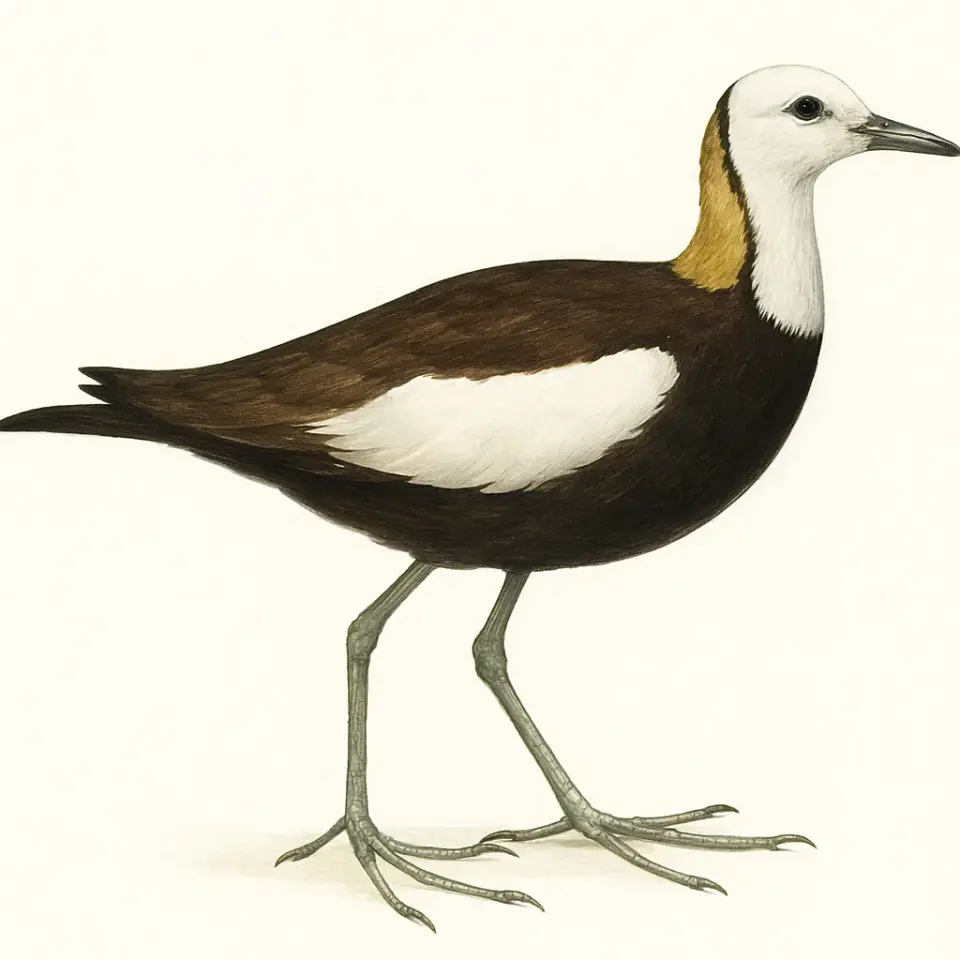
Pheasant-tailed jacana: the long-toed bird of India's lily ponds
The pheasant-tailed jacana (Hydrophasianus chirurgus) is a waterbird with enormously long toes that let it walk across floating lily and lotus leaves. In the monsoon breeding season it grows a long, curved tail and a silky golden nape; the rest of the year it is a plain brown-and-white bird without the long tail. It is also known for reversed family roles: the female lays several clutches and the males incubate the eggs and raise the chicks alone.
A long-toed waterbird that walks on floating leaves as if on solid ground. In the monsoon it grows a long curved tail and a golden nape and becomes one of the most striking birds on a city lake.
How to recognise it
Scan the water-lily and lotus mats, not the open water. In breeding plumage the tail trails behind like a pennant; outside the monsoon the bird is plain and tail-less.
Where to see it
Bengaluru
The males incubate and raise the chicks alone, carrying them tucked under the wings: one of the clearest examples of reversed sex roles you can watch from a lake path.
 Sankey Tank
How to recognise it in breeding and winter plumage
Breeding plumage (monsoon). Unmistakable. The body is chocolate brown, the face and front of the neck white, and the nape a silky golden yellow; the back of the crown is black, and a stripe down each side of the neck separates the white from the gold. The wings are mostly white and flash brightly in flight. The long, curved central tail feathers that give the bird its name trail behind like a pennant; with them it is the longest of all jacanas.
Non-breeding plumage. Much plainer: dark brown on the crown and back, a dark eye-stripe running down the neck into a dark “necklace” across a whitish breast, only a trace of gold on the nape, and no long tail. White wings in flight still give it away.
The similar bronze-winged jacana shares much of its range in India. Young pheasant-tailed jacanas can be told from young bronze-wings by the black stripe on the side of the neck and the white wings. On the water, the pheasant-tailed jacana walks on lily pads, swims, and wades, picking insects, snails and other small animals off the leaves and the surface. Its call is a mewing sound, which earned it the name “cat teal” in Sri Lanka.
A father raises the chicks
In southern India the jacana breeds in the monsoon, from June to September, on lakes with enough floating vegetation. The female is larger than the male and courts several males in turn. She builds a nest of leaves and stalks on floating plants, lays a clutch of four glossy, dark olive-brown eggs, and then leaves to court the next male; in a single season she may lay up to ten clutches, each raised by a different father.
The male incubates for 26 to 28 days. If disturbed, he can move the eggs, dragging them between bill and breast or floating them across to another patch of leaves. Once the chicks hatch he raises them alone, a case of reversed sex roles you can watch from a lake path. In some jacanas the parent carries young chicks under the wing to safety. At the first sign of danger the downy chicks freeze, sometimes lying half-submerged with only the bill above water.
Where to look for the pheasant-tailed jacana
The species lives on small to large lakes with plenty of floating vegetation across tropical India and Southeast Asia, and in Sri Lanka. In much of its range it is resident, while birds that breed in the Himalayas move south to peninsular India for the winter. The key is to scan the mats of water lilies and lotus, not the open water.
In Bengaluru the India GO database records it as an occasional bird on the vegetated edge of Sankey Tank, the 1882 reservoir in Malleswaram, where more than fifty bird species have been counted. Treat a sighting as luck rather than a promise. Other birds of the city are on the Bengaluru birds page.
Protection status
Globally the pheasant-tailed jacana is listed as Least Concern by the IUCN; in Taiwan, where it is resident, it is considered endangered. In India it is protected under Schedule II of the Wild Life (Protection) Act as amended in 2022, among the jacanas, so it may not be caught, kept or harmed.
FAQ
How does the jacana walk on water?
It does not walk on the water itself but on floating leaves. Its very long toes and claws spread its weight across lily and lotus pads.
Why does the pheasant-tailed jacana lose its tail?
The long tail is part of the breeding plumage worn in the monsoon. Outside the breeding season the bird is plain brown and white, with a short tail.
Do male jacanas raise the chicks?
Yes. The female lays a clutch for each of several males, and each male incubates the eggs for 26 to 28 days and raises the chicks alone.
When does the pheasant-tailed jacana breed in India?
In southern India it breeds in the monsoon, from June to September, which is also when it wears the long tail.
Where can I see the pheasant-tailed jacana in Bengaluru?
The database records it occasionally on the vegetated edge of Sankey Tank. Scan the floating plants rather than the open water.
Sources (3)
Facts checked: 8 October 2026. Prices and hours are approximate; check locally.