 India GO
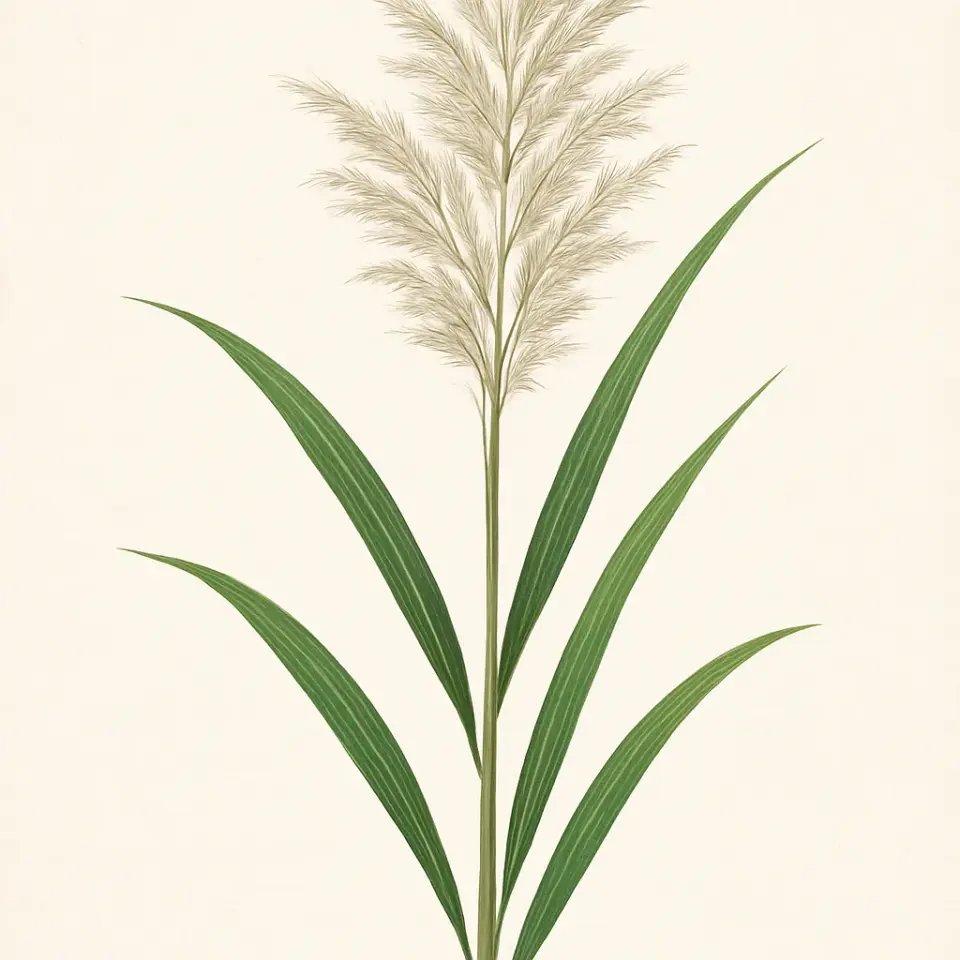
Kans grass: the white plumes that end the monsoon
कांस
Kans grass is wild sugarcane, Saccharum spontaneum: a tall cane of river sand and damp ground that throws up silver-white plumes as soon as the rains end. Across north and east India those plumes are read as a calendar. In Hindi it is कांस (kans), in Bengali kash or kaash phool, and when it flowers the festival season is about to begin.
A tall wild cane of river sand and damp ground that throws up silvery-white flowering plumes once the rains end, turning river flats and wetland margins white for a few weeks.
How to recognise it
Head-high clumps of narrow blue-green leaves with a white midrib. From late September the plumes open silver-white and catch the low light at either end of the day.
Where to see it
Vrindavan
Kans in flower is the sign across north India that the monsoon is over and the autumn festival season is about to start. It is also one of the plants that holds the Yamuna's sandbars together, and it is the dominant cover at the Braj wetlands. After the rains its plumes turn the Yamuna flats white for a few weeks.
 Jodhpur Jhal Wetland · Keshi Ghat (in season)
Wild cousin of sugarcane
Kans is a perennial grass up to about 3 m tall that spreads by rhizomes, the creeping underground stems that let one clump turn into a whole bank of cane. It is native across much of tropical and subtropical Asia, northern Australia and eastern and northern Africa, and in India it holds river sandbars and wetland margins together.
It is a true relative of the cane in the fields. Wild Saccharum spontaneum crossed with cultivated sugarcane, Saccharum officinarum, and the hybrids gave rise to the old Indian and Chinese canes, Saccharum barberi and Saccharum sinense. The same toughness has a downside: it is often treated as a weed and is described as an invasive plant that colonises grassland and threatens cropland.
The sign that autumn has come
In Bengal the white kash flowers against a blue sky with heaped clouds are the picture of sharat, the autumn after the rains, and they bloom as Durga Puja approaches, the great autumn festival of Durga. The plant also has a famous film scene: in Satyajit Ray's «Pather Panchali», Apu and his sister Durga run through a field of kash towards the whistle of a passing train.
In Braj the meaning is the same without the cinema. When the Yamuna drops after the monsoon and its sand flats turn white, the rains are over and the season of Sharad Purnima, Diwali and Govardhan Puja is near.
Where and when
The plumes open from late September and the white lasts a few weeks, through October in a normal year. Look on river sand flats and wetland margins. Near Vrindavan, the Jodhpur Jhal wetland is recorded as one of the places where kans is the dominant plant, and the sand flats below Keshi Ghat whiten once the river falls; the town's other plants are on the Vrindavan trees and flowers page.
Go early or late: with the sun low behind them, the plumes catch the light and glow silver-white.
FAQ
What is kans grass?
Wild sugarcane, Saccharum spontaneum: a tall perennial grass of river sand and wet ground with silver-white plumes after the monsoon.
What is kans grass called in Hindi and Bengali?
कांस (kans) in Hindi and kash or kaash phool in Bengali.
When does kans grass flower?
From late September, once the rains end; the plumes stay white for a few weeks, usually through October.
Why is kash phool linked to Durga Puja?
It flowers at the start of autumn, as Durga Puja approaches, so in Bengal it has become the visual sign of the festival season.
Is kans grass related to sugarcane?
Yes. It hybridised with cultivated sugarcane, and those crosses produced the old Indian and Chinese canes.
Sources (2)
Facts checked: 8 October 2026. Prices and hours are approximate; check locally.