 India GO
Parks and gardens in Munnar
Munnar's parks are not lawns with benches but what is left of the hills before the tea: high grassland, dark pockets of shola forest and, on the dry side, thorn scrub. Three protected areas are within reach, Eravikulam, Pampadum Shola and Chinnar, each with its own rules of entry. For a gentler hour there are two gardens close to town.
Forest, grassland and tea
The high ground around Munnar is a shola-grassland mosaic: dense, low evergreen forest (shola) in the folds of the hills and grass on the open slopes. It is not degraded forest but an old natural system, and it is the habitat the endemic birds and the neelakurinji shrub depend on. Tea replaced much of it after the first planting in 1880. Some of the "forest" seen from the road is in fact wattle, an invasive tree that photographs like woodland and is squeezing the grassland.
The three protected areas
All three are run by the Kerala Forest Department, and inside them you move on set routes or with forest staff.
Eravikulam National Park (about 13 km)
The park holds the largest single population of the Nilgiri tahr, a wild mountain goat found only in these hills, and in its Rajamala tourism zone the tahr graze a few metres from the path. Visitors are usually taken up by park bus. Entry runs 8:00–14:00, a visit usually takes about two to three hours, tickets can be booked on the park's website, and the park closes every year for the calving season, usually February to March. Fees are on the Eravikulam page.
Pampadum Shola National Park (about 35 km)
Kerala's smallest national park, 1.32 sq km of mossy montane shola at 1,900–2,500 m on the road beyond Top Station towards Vattavada. You go in only with forest staff, on a trek that usually takes about three hours, from a checkpoint about 7 km before Vattavada (approx. ₹250 per person), and that is why it stays empty. The rare Nilgiri marten lives here, though a sighting is a bonus, never a plan.
Chinnar Wildlife Sanctuary (55–60 km)
Ninety square kilometres of dry thorn forest in the rain shadow on the Tamil Nadu border, open through the monsoon when the tea hills are soaked. It is known for the grizzled giant squirrel and India's only star-tortoise rehabilitation centre, with elephants and gaur seen regularly. Forest staff lead walks from the roadside checkposts, including the trek to Thoovanam Falls, which usually takes about three hours. See Chinnar.
Gardens near town
Two calmer places for an hour between longer drives.
Botanical Garden and Flower Garden
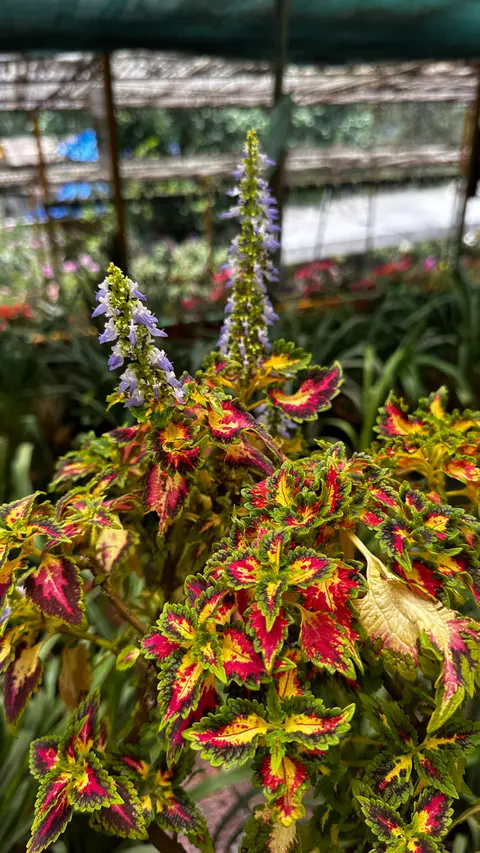
Ten minutes' ride from the centre: orchids, beds of flowers and benches, a place to walk slowly and not rush anywhere. Good on a day of mist, when the viewpoints are hidden anyway.
Munnar Spice Palace Ayurvedic Garden
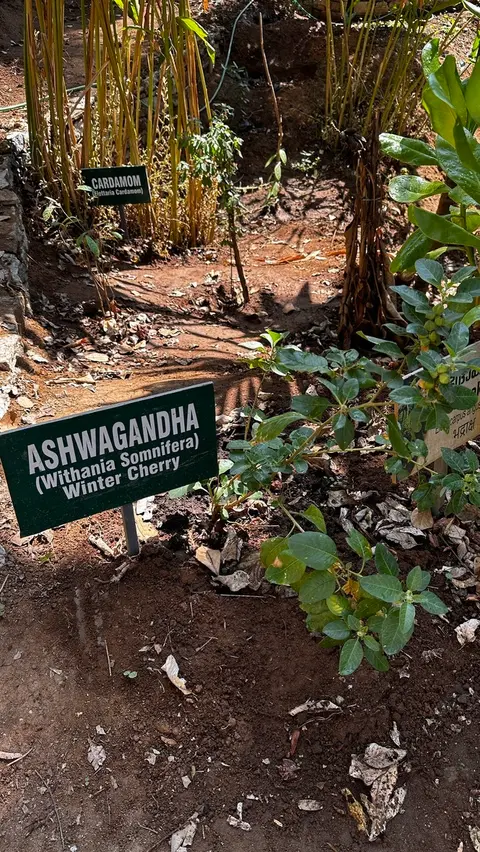
At Chithirapuram, about 10 km from town, a guide walks you through plots of medicinal plants: ashwagandha, brahmi, neem, tulsi (holy basil) and the rudraksha tree whose seeds become prayer beads. You can smell fresh cardamom and green peppercorns and see vanilla growing as an orchid. The shop at the end costs more than the bazaar, and what the difference buys is freshness and an explanation.
What you may see
Besides the tahr, Eravikulam's grassland is the last stronghold of the Nilgiri pipit, and the shola patches hold birds found only in these hills: the Palani laughingthrush, the white-bellied sholakili (literally "shola bird"), the Nilgiri flycatcher and the Nilgiri wood pigeon. Away from protected forest, Nilgiri langurs stay high and wary. On burnt slopes, lone old rhododendrons stand out: they are the one shola tree that survives grassland fire.
The neelakurinji, the shrub that turns the slopes blue once in twelve years, grows here in two populations on different cycles. The Eravikulam population last flowered in 2018; the one on Chokramudi, Korandakkad near Mattupetty and the Meesapulimala slopes keeps its own twelve-year cycle, with past blooms in 1990, 2002 and 2014. More on the animals, birds and trees and flowers pages.
Park rules worth knowing
Inside Eravikulam, smoking and alcohol are prohibited, and feeding, teasing or disturbing animals is strictly forbidden; the tahr are used to people, but they are wild. In Pampadum Shola and Chinnar you walk only with forest staff. Carry water and a warm layer: the grassland is open, and fog often rolls in by afternoon.
FAQ
Is Munnar a forest area?
Partly. The town sits among tea estates, but the hills around it are a mosaic of shola forest and high grassland, protected in Eravikulam and Pampadum Shola, with dry thorn forest at Chinnar on the rain-shadow side.
Which national parks are near Munnar?
Eravikulam, about 13 km away, and Pampadum Shola, Kerala's smallest national park, about 35 km out beyond Top Station. Chinnar Wildlife Sanctuary is 55–60 km away past Marayoor.
Is Eravikulam National Park open all year?
No. The park closes every year for the Nilgiri tahr calving season, usually February to March. The rest of the year entry runs 8:00–14:00.
Is there a botanical garden in Munnar?
Yes, the Botanical Garden and Flower Garden is about ten minutes from the centre. The Spice Palace Ayurvedic garden at Chithirapuram, about 10 km out, shows medicinal plants and spices with a guide.
Sources (4)
Facts checked: 15 October 2026. Prices and hours are approximate; check locally.
The full catalogue, hidden spots and districts on the map, plus “nearby” mode.
Open in India GO