 India GO
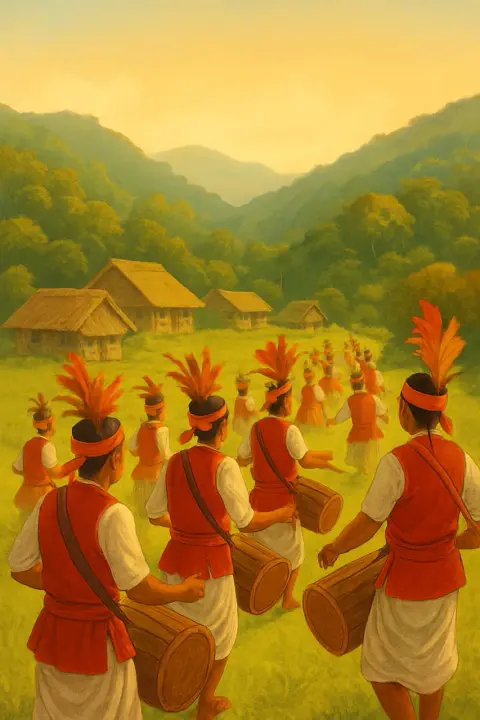
Wangala: the Garo harvest festival and the Hundred Drums near Tura
Long drums and feathered dancers thank the sun for the harvest
Wangala is the post-harvest festival of the Garo people of Meghalaya, a thanksgiving to Misi Saljong, the sun god who gives the harvest. It takes two forms. Each village holds its own Wangala on a date it chooses, between September and December, and near Tura in the West Garo Hills the state-supported Hundred Drums Wangala Festival brings troupes from across the Garo Hills together for three days. Next Hundred Drums festival: 12–14 November 2026.
The Hundred Drums festival committee with the West Garo Hills administration announces the three days, usually in late October or early November; Meghalaya lists a Wangala holiday in its October notification.
The legend

Wangala is the Garo festival after the harvest, a thanksgiving to Misi Saljong, the sun god. Each village sets its own date, from September to December.

In a village it begins at the house of the nokma, the chief: the kamal priest performs the Rugala libation and burns incense in Cha·chat So·a.
The first Hundred Drums Wangala was held on 6–7 December 1976 at Asanang near Tura; it has run every year since, drawing Garo troupes even from Bangladesh.
Customs
Feathers and dress
Young and old put on bright dakmanda and daksari and feathered headdresses.
Dama Gogata
On the last day men and women dance the Dama Gogata in two lines to the long oval dama drums, flutes and brass instruments.
Katta Doka
There is katta doka, talk in a singing style, songs describing Wangala, and the playful pomelo dance.
Where to celebrate
Tura
Three days of the Hundred Drums Wangala at Chibragre, 18 km from Tura, ending with all the troupes drumming together; village Wangalas run on their own dates around it.
What Wangala is
The Meghalaya government describes Wangala as a harvest festival in honour of Saljong, the sun god of fertility. It marks the end of a season of work in the fields and the start of winter. Misi Saljong is also called Patigipa Rarongipa, the giver and provider.
In a village, Wangala traditionally lasts two or three days, sometimes up to a week, and two or three villages may hold it together. The most traditional celebrations are found in Songsarek villages, where people keep the old Garo faith. Today Wangala is also celebrated by Garo Christians and in towns as a festival of Garo identity: at the closing of a recent Hundred Drums festival, Meghalaya's tourism minister spoke of how it has grown beyond its religious roots into a shared cultural expression.
The Hundred Drums Wangala Festival began on 6 and 7 December 1976 at Asanang, about 18 km from Tura, organised under Meghalaya's first chief minister, Captain Williamson A. Sangma. It has been held every year since, and troupes come even from the Garo communities of Bangladesh.
Rituals, drums and dance
A village Wangala begins in the house of the nokma, the village chief. There the kamal, the priest, performs the Rugala, an offering of rice beer to Misi Saljong, and the Cha·chat So·a, the burning of incense.
The days that follow belong to music and dance. Young and old put on their brightest clothes, the dakmanda and daksari, with feathered headdresses. The dance moves as two parallel lines, one of men and one of women: the men beat the long oval drums called dama, and the lines advance in step. The orchestra adds gongs (rang), flutes (bangsi) and horns (adil), and the Meghalaya government notes a primitive flute made of buffalo horn. This dance, the Dama Gogata, comes on the last day. Between dances there is katta doka, talk in a singing style, songs about Wangala, and a playful pomelo dance.
The Hundred Drums festival, day by day
The festival is held at Wangala A·dam in Chibragre, the permanent festival ground and Garo Heritage Village, near Goeragre on NH-51, about 18 km from Tura. It is organised by the Hundred Drums Wangala Festival Committee with the state government. The programme below is that of the 49th festival; details can change from year to year. That time the troupes arrived and rehearsed the day before the opening.
- Day one: opening
Prayers, the Wangala theme song Dimdim Dimchong Dachichong, speeches, then the introductory round of the Rhythm of 100 Drums. The handloom and handicrafts exhibition and the indigenous games open the same day.
- Day two: the Rugala
The Rugala ceremony, the offering of rice beer to Misi Saljong, followed by the first round of the drum competition and folk song contests.
- Day three: the hundred drums
The finale: all the troupes, ten at the 49th festival, drum and dance together, with the Cha·chat So·a incense ceremony, the prize-giving and a closing music festival of regional artists. This is the moment the festival is named for.
Seeing a village Wangala
The Hundred Drums festival is public. A village Wangala is a community's own thanksgiving, held on a date the village sets.
- Ask in Tura — Find out which villages are holding Wangala while you are there, and go with someone the village knows.
- The nokma's house is a ritual space — The Rugala in the chief's house is an offering to Misi Saljong. Follow your host's lead, including on photographs.
- Dress modestly — The UK Foreign Office asks travellers to respect local dress codes and customs, particularly in rural areas.
Getting there and where to stay
Tura has few hotels, and the usual way in is by road from Guwahati. Plan the journey and the room together.
- Fly or take the train to Guwahati
Most travellers reach Guwahati by air or rail and continue by road to Tura, about 220 km.
- Book about six weeks ahead
Tura's hotels are few and modest, and they fill for the festival. The festival keeps to early or mid-November: book for that window and adjust once the days are announced. Book the Guwahati leg at the same time, and earlier when Diwali or Chhath falls in early November.
- Arrange transport to Chibragre
The ground is 18 km from Tura. Arrange a car for the festival days rather than counting on finding one there.
- Stay two to four nights
Arrive in Tura the day before the festival opens. Two nights cover the finale; four let you see all three days and look for a village Wangala.
- Registration for foreigners
Meghalaya Tourism says foreign nationals must register on arrival and may need additional permits for certain border areas. Ask your hotel how registration works.
- Other Meghalaya festivals
The Khasi Nongkrem Dance and the Pnar Behdienkhlam fall in other seasons and make a second reason to return.
FAQ
When is Wangala?
The Hundred Drums Wangala Festival near Tura: 12–14 November 2026. It runs three days in early to mid-November; village Wangalas are held on dates each village chooses, between September and December.
In which state is Wangala celebrated?
In Meghalaya, among the Garo people of the Garo Hills. The main organised festival is held near Tura in West Garo Hills, and Meghalaya gives a state holiday for it.
Why is it called the Hundred Drums festival?
Because on the final day of the organised festival all the troupes beat their long dama drums together, a massed performance of around a hundred drums.
What is the traditional dance of Wangala?
The Dama Gogata: men and women dance in two parallel lines to the long oval dama drums, with gongs, flutes and horns, wearing feathered headdresses.
Who is honoured at Wangala?
Misi Saljong, the sun god of the Garos, also called Patigipa Rarongipa, the giver and provider, thanked for the harvest.
Is there an entry fee?
No ticket has been reported for recent editions of the Hundred Drums festival at Chibragre; all three days are open.
Sources (8)
- Meghalaya Government Portal: Wangala, the 100 Drums Festival
- Government of Meghalaya: holiday notification
- FCDO travel advice: India, safety and security
- Wangala
- Meghalaya Tourism: FAQs and planning help
- Hundred-drums Wangala Festival concludes, The Shillong Times
- GH readies for grand Wangala Fest, The Shillong Times
- Tura, Meghalaya
Facts checked: 21 October 2026. Prices and hours are approximate; check locally.