 India GO
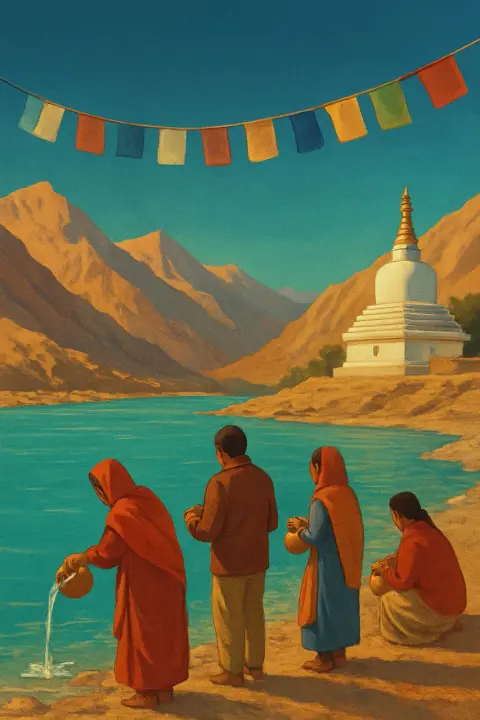
Sindhu Darshan Festival: river water from across India poured into the Indus
Water carried from rivers across India, poured into the Indus below Shey
The Sindhu Darshan Festival is held every year on the bank of the Indus (Sindhu) at Sindhu Ghat near Shey, about 15 km from Leh. It usually falls in the last week of June and runs four to six days; the organisers, the Sindhu Darshan Yatra Samiti, and Ladakh Tourism set the dates each year and publish them by April or May. Leh stands at about 3,500 m, so the official acclimatisation advice matters more for this trip than the programme itself.
The Sindhu Darshan Yatra Samiti and Ladakh Tourism set the dates and publish them by April or May (the 2026 dates were in the press by mid-April).
The legend

The idea came in 1996: journalist Tarun Vijay, visiting Leh, proposed a festival on the Indus, the river that gave the words India and Hindu.
Since 1997 it has been annual. For Sindhi Hindus it is also a pilgrimage: before Partition they worshipped the river in their homeland, Sindh.
Customs
Water from home rivers
Participants bring water from their own states' rivers in clay pots and immerse the pots in the Indus.
Welcome at Shey
On day one at Shey, Buddhist, Shia, Sunni, Christian, Hindu and Sikh groups welcome participants together, and senior lamas pray by the river.
Shows from the states
Artists from different states perform their programmes by the river.
What happens at Sindhu Ghat
The festival is built around one gesture. Participants bring water from the rivers of their own states in clay pots and immerse the pots in the Indus, the river that gave India and Hindu their names. On the first day the participants are received at Shey by Ladakh's Buddhist, Shia, Sunni, Christian, Hindu and Sikh community bodies together, and senior lamas pray by the river. The following days bring cultural programmes by artists from different states on the riverbank, and a puja (ritual worship) at the ghat.
The festival began in 1997, a year after journalist Tarun Vijay, visiting Leh with L. K. Advani, proposed a celebration on the Indus. For Sindhi Hindus it is also a pilgrimage: before Partition they worshipped the river in their homeland, Sindh, which is now in Pakistan.
Two separate events can share the name. Besides the multi-day yatra run by the Sindhu Darshan Yatra Samiti, the Bharatiya Sindhu Sabha in Leh has held its own one-day Sindhu Darshan celebration at Sindhu Ghat earlier in June. Check which programme a tour package or news item refers to.
Altitude: what the Leh district advises
Leh is at about 3,500 m, and the Leh district gives Ladakh's elevation as roughly 8,370 to 25,400 ft (about 2,550 to 7,740 m). The flight from Delhi takes about an hour, and the official advice is written for exactly that jump from the plains.
- The district asks everyone arriving by air to take complete rest for the first two days, with no physical exertion.
- The Leh health advisory says all visitors should acclimatise for at least 48 hours before going on to higher areas, and that road travel does not replace this.
- Drink 2 to 3 litres of water a day; avoid alcohol, smoking, sleeping pills and sedatives; eat light on the first day.
- Warning signs include headache, nausea, cough, breathlessness, irregular breathing, poor sleep and loss of appetite. HAPE and HACE (fluid on the lungs or brain) can be fatal: see a doctor at once if symptoms appear. The advisory lists SNM Hospital in Leh for emergencies.
- The advisory also mentions preventive medication; discuss it with your own doctor before the trip.
In its trekking advice the UK Foreign Office says to make sure insurance covers altitudes over 2,400 m; Leh is higher than that.
Permits and fees
Shey and Sindhu Ghat are on the Indus close to Leh, not in the protected border areas. What you need depends on your passport and on where else you go.
- Everyone: the Leh fees — The Leh district charges visitors an environmental (green) fee, a Red Cross contribution and a wildlife fee. They are paid online on the district's Leh Tourist Management System, lahdclehpermit.in, with no need to visit an office.
- Indian citizens — The district's permit FAQ says the inner line permit applies only to foreign tourists. Indians pay the fees above and do not need a separate permit for Leh and Shey.
- Foreign nationals going further — Pangong, Nubra, Khardung La, Tso Moriri and other areas inside the inner line need a Protected Area Permit, applied for through the same portal or a registered Leh travel agent. Citizens of some countries, and holders of diplomatic, official or journalist passports, must get it from the ministries in New Delhi instead.
- Rules change — The UK Foreign Office notes that permit rules can change at any time. Check the portal before you book, especially if the festival is part of a longer Ladakh trip.
Getting to Leh and Shey
- By air
Daily flights connect Leh with Delhi, and some airlines also fly from Jammu, Chandigarh and Srinagar. Flying in means the two rest days above are not optional.
- By road
The Srinagar to Leh highway (434 km, via Kargil) is usually open from May to November or December, the Manali to Leh highway (473 km) from May or June to September or October. Both are open in festival season, and buses and taxis run from both ends.
- Leh to Sindhu Ghat
Shey is about 15 km from Leh on the road towards Hemis, so Sindhu Ghat is an easy day trip from a base in town.
What to combine it with
Sindhu Darshan is a short ceremony that fits into a June stay in Ladakh rather than a reason to fly in on its own. In some years it falls close to Hemis Tsechu, the monastery festival up the same road, Shey village is at the ghat, and Thiksey monastery is a little further along the same road. The Leh district notes accommodation in hotels and guest houses for most budgets.
FAQ
When is the Sindhu Darshan Festival?
Usually in the last week of June, for four to six days. The Sindhu Darshan Yatra Samiti and Ladakh Tourism fix the dates each year and publish them by April or May.
Where is Sindhu Ghat?
On the bank of the Indus near Shey, about 15 km from Leh on the road towards Hemis.
What is the Sindhu Darshan pilgrimage?
A yearly gathering, held since 1997, at which participants pour water carried from their home rivers into the Indus. For Sindhi Hindus it is a pilgrimage to the river their community worshipped in Sindh before Partition.
Do I need a permit for the Sindhu Darshan Festival?
Indian citizens do not need a permit for Leh and Shey, but all visitors pay the Leh environmental, Red Cross and wildlife fees online on lahdclehpermit.in. Foreign nationals need a Protected Area Permit only if they go on to areas such as Pangong, Nubra or Tso Moriri.
How high is Leh?
About 3,500 m. The Leh district advises complete rest for the first two days after flying in and at least 48 hours of acclimatisation before going higher.
Sources (14)
- Sindhu Darshan Festival
- Leh District Tourist Management System: Health Advisory
- District Leh: How to Reach
- UT Ladakh: Sindhu Darshan Festival at Sindhu Ghat
- Deccan Chronicle: 30th Sindhu Darshan Yatra opens in Leh
- District Leh: About District
- FCDO: India safety and security
- Leh
- Leh District Tourist Management System
- Leh District Tourist Management System: FAQs
- Leh District Tourist Management System: Circuits to visit
- FCDO: India entry requirements, access permits
- Shey
- District Leh: Tourism
Facts checked: 21 October 2026. Prices and hours are approximate; check locally.