 India GO
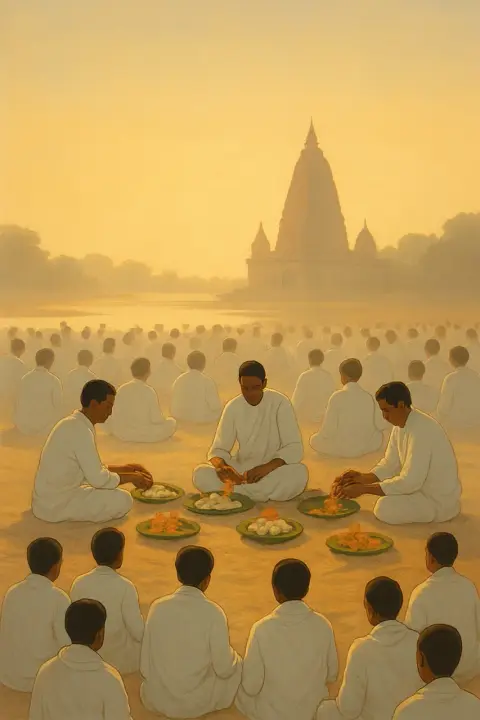
Pitripaksha Mela in Gaya: the fortnight of the ancestors
Rice-ball offerings for the dead on the dry sands of the Phalgu
The Pitripaksha Mela is the fortnight when Hindu families come to Gaya Ji in Bihar to perform shraddha, rites for their dead. Pitru Paksha runs from the full moon of Bhadrapada to Sarvapitri Amavasya, the new moon also called Mahalaya, and the Gaya mela opens the day before the full moon. Dates: 14–29 September 2027 (expected), ending on Amavasya, 29 September 2027 (expected). It is a time of remembrance and mourning, not a spectacle.
The fortnight follows the lunar calendar; the Gaya district administration and Bihar Tourism announce the mela and the tent-city dates in August.
The legend
By legend Vishnu set his foot on the asura Gayasura and pressed him beneath the earth. The Vishnupad temple keeps a 40 cm footprint in basalt.
In the Ramayana, Sita offered her father-in-law Dasharatha a pinda of sand by the Phalgu. Since then, it is said, the river at Gaya runs beneath dry sand.

A shraddha performed at Gaya is held to be the most fruitful, so in the fortnight of Pitru Paksha families come from across India to honour their ancestors.
Customs
Pinda daan
The ancestors are offered pindas, balls of rice and barley flour with ghee and black sesame, as water is poured from the hands.
Phalgu and Vishnupad
Pilgrims bathe in the river, and local priests, the Gayawal Pandas, lead the rites on the sandy bed of the Phalgu and at the Vishnupad temple.
Pind daan and tarpan: what the rites are
Hindu tradition holds that rites for ancestors performed at Gaya are especially fruitful, and Bihar Tourism describes the belief that through these rites at Gaya the souls of the ancestors attain salvation and peace. Families therefore come from across India during Pitru Paksha.
The two central rites are pind daan and tarpan. In pind daan, pindas, balls of rice and barley flour with ghee and black sesame, are offered to the ancestors; in tarpan, water is poured from the hands. Pilgrims bathe in the river first. The rites are led by local priests, the Gayawal Pandas, who guide each family through the sequence.
Bihar Tourism counts 48 principal sacred sites for pind daan in Gaya. The most important are the Phalgu river, the Vishnupad temple, Panch Tirtha, Sita Kund and the Gaya Shiro Mani temple; offerings are also made at the Akshayavat, the sacred banyan tree. Much of the ritual takes place on the sandy bed of the Phalgu, which outside the monsoon shrinks to a stream across a wide expanse of sand.
The legends of Gaya
Several legends explain why Gaya holds this place. By one, Vishnu set his foot on the asura Gayasura and pressed him beneath the earth; the Vishnupad temple on the bank of the Phalgu keeps a footprint about 40 cm long in basalt, and the city takes its name from Gayasura. By the Ramayana tradition, Rama performed pind daan for his father, King Dasharatha, at Gaya, and Sita offered him a pinda of sand by the Phalgu; it is said that since then the river at Gaya runs beneath dry sand. The custom known as Sita pind daan continues.
If you come to perform the rites
Families usually arrange the rites with a Gayawal Panda. The state also offers organised options.
- Bihar Tourism packages
The Bihar State Tourism Development Corporation sells pind daan packages for the mela, from a one-day trip from Patna (with Punpun ghat) to one- and two-day stays in Gaya. They include transport, the panda’s fee and puja items, and rites at the Phalgu, the Vishnupad temple and the Akshayavat. The one-day package from Patna for one person costs roughly ₹14,500–16,500 depending on the hotel category. Booking is online at bookingtourism.bihar.gov.in.
- E-pind daan
For families who cannot travel, Bihar Tourism offers e-pind daan: a priest performs pind daan and tarpan at the Vishnupad temple, the Akshayavat and the Phalgu on their behalf and the ceremony is recorded on video. It costs roughly ₹23,000.
- Where to stay
For a recent mela the state tourism corporation prepared a tent city of about 2,500 beds for pilgrims; the top category of its packages uses hotels in Bodh Gaya, about 16 km away.
Visiting with respect
If you are in Gaya or Bodh Gaya during the fortnight and are not performing the rites, the riverbank can be witnessed quietly. Keep in mind that people around you are mourning.
- Do not photograph the rites without asking — Families are performing rites for their own dead. Keep a distance and ask before taking any picture.
- Vishnupad temple — Check the rules of entry at the temple itself. Darshan during the mela is by organised queue, after tarpan at the ghats.
- Crowds and safety — The administration divides the mela area into super zones, zones and sectors with magistrates and police, and posts SDRF teams, divers, life jackets and boats at the ponds and ghats. The UK Foreign Office notes that stampedes have happened at large religious gatherings in India and advises following local authorities’ instructions.
Getting to Gaya
Gaya is about 116 km south of Patna. Gaya Junction is a major station on the Grand Chord line, and Gaya airport, about 7 km from the city, has regular domestic flights to Delhi and Kolkata as well as seasonal international flights for Buddhist pilgrims. Bodh Gaya, about 16 km away, is the other base; the same autumn trip can take in Chhath on the Patna ghats a few weeks later.
FAQ
When does the Pitripaksha Mela start?
The mela opens the day before the full moon of Bhadrapada and ends on Sarvapitri Amavasya: 14–29 September 2027 (expected). The district administration and Bihar Tourism announce the dates in August.
Why is pind daan performed in Gaya?
Shraddha at Gaya is held to be the most fruitful, and by tradition the rites here bring the ancestors salvation and peace. By legend, Rama and Sita offered pind daan for King Dasharatha by the Phalgu.
Where are the rites performed?
Bihar Tourism counts 48 principal sites; the most important are the Phalgu river, the Vishnupad temple, Panch Tirtha, Sita Kund and the Gaya Shiro Mani temple, with offerings also at the Akshayavat banyan.
Can pind daan be booked online?
Yes. Bihar Tourism sells pind daan packages with the panda’s fee and puja items on bookingtourism.bihar.gov.in, and offers e-pind daan for families who cannot travel.
Can visitors watch the rites?
Yes, quietly and at a distance, on the Phalgu riverbank. Ask before photographing anyone, and check the rules of entry at the Vishnupad temple itself.
Sources (7)
Facts checked: 22 October 2026. Prices and hours are approximate; check locally.