 India GO
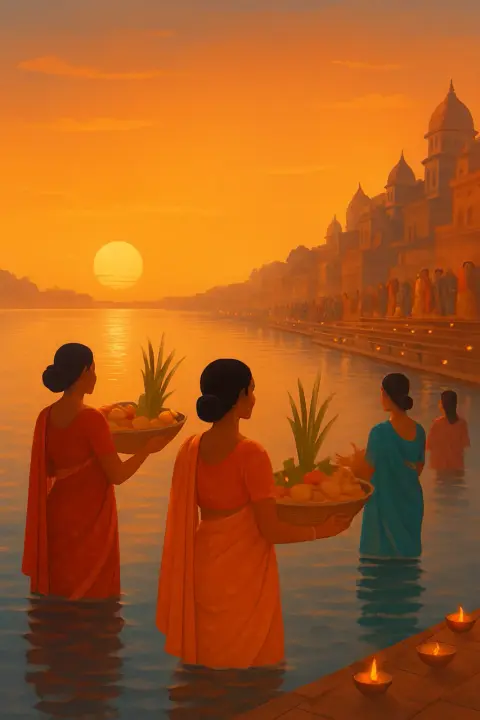
Chhath in Patna: the Ganga ghats at sunset and dawn
A whole riverfront raising bamboo trays of fruit to the setting sun
Chhath is kept across Bihar, but in Patna it happens at river scale: the Ganga runs the length of the city, and the district administration prepares a long chain of ghats so that the whole riverfront becomes one ritual site. Dates: 13–16 November 2026. The two moments that matter are the offering to the setting sun on day 3 and to the rising sun at dawn on day 4, and on both the only way to the river is on foot.
The Bihar holiday list, usually out in November or December of the previous year, fixes the two Chhath holidays; the Patna district administration publishes the ghat list and traffic plan about a week before.
The legend

Chhath is devoted to Surya, the Sun, as the source of all life, and to his sister Chhathi Maiya, who is held to protect children.

Tradition ties it to the epics: in the Ramayana Sita keeps the rite, in the Mahabharata Kunti and Draupadi.
The vow is mostly kept by women, for the family and its children. In many families, once begun, it passes from generation to generation.
Customs
Arghya to the sunset
On the third evening the family goes with the one fasting to the Ganga, where bamboo baskets of fruit and sweets are offered in the water to the setting sun.
Kosi bharai
At home 5–7 sugarcanes are tied into a canopy, and beneath it 12 to 24 lamps are lit with thekua and fruit.
Arghya to the sunrise
Before dawn on the fourth day people return to the river to greet the rising sun, then break the fast with a little water and prasad.
What people eat
Thekua
Crisp fried biscuits of wheat flour, jaggery and ghee.
Where to celebrate
Patna
For two short windows, the sunset offering on day 3 and the dawn offering on day 4, Patna's whole Ganga front becomes one ritual site, and the only way to the river is on foot.
The four days
Chhath runs from the fourth to the seventh lunar day of the bright half of Kartik, about six days after Diwali. It is dedicated to Surya, the Sun, and to Chhathi Maiya, and it is one of the few rites in which the setting sun is worshipped as well as the rising one. The vow is mostly kept by women, for the family and its children.
- Day 1: Nahay Khay
Those keeping the vow bathe in the river or another water body, carry Ganga water home and clean the house; one simple sattvik meal is eaten.
- Day 2: Kharna
A full day's fast, broken in the evening with kheer after worship of Mother Earth. Then the waterless fast begins and lasts until the dawn offering.
- Day 3: Sandhya Arghya
The main day. Families carry bamboo baskets of fruit and thekua to the Ganga and make the offering to the setting sun, standing in the water. At night the Kosi canopy of sugarcane and lamps is set up at home.
- Day 4: Usha Arghya
Before dawn the families return to the river to greet the rising sun, then break the fast with a little water and prasad, which is shared with neighbours.
Patna's ghats
In recent years the district has prepared more than a hundred ghats inside the city, from Digha in the west to Patna City in the east, shared among sector teams. The biggest crowds gather at Collectorate Ghat, Mahendru, the Digha ghats (Patipul and Minar), the ghats by JP Setu and Gai Ghat.
Ghats the river has made unsafe are closed to everyone, and the list changes every year with the water level. For households that keep the vow away from the river, the city also sets up offering points in parks and ponds. The district's official Chhath website, chhathpujapatna.in, publishes the year's ghat list, parking points and precautions shortly before the festival.
Everything is free. Watch from the upper steps or the embankment behind the families, not from the steps they are using.
Getting to the river
Vehicle movement near the ghats is restricted on both offering days; the district traffic plan comes out about a week before.
- JP Ganga Path (Marine Drive) — The riverside road has been closed to all vehicles on both offering days; it is the easiest way to walk between ghats.
- Ashok Rajpath — Closed to vehicles for several hours around each offering, from midday into the evening and from the small hours to the morning.
- Where to sleep — Stay on the river side of the city so you can walk to a ghat. Arrive by Kharna, day 2, at the latest.
- Book early — Chhath is Bihar's great homecoming. Indian Railways opens reserved booking 60 days ahead: book trains that day and the room early too; flights into Patna are the fallback.
Watching respectfully and safely
- Keep your distance — This is a private vow made in public. Photograph discreetly, keep back from the vratis (those fasting) and never enter the water near them.
- No boats, no swimming — Boats and swimming are not allowed during the puja.
- Accept prasad — Thekua and fruit are shared widely after the dawn offering; accept with thanks if offered.
- Crowds — The UK government notes that stampedes have occurred at large religious gatherings in India. Follow police instructions and barricades, and agree a meeting point with your group.
FAQ
When is Chhath in Patna?
Dates: 13–16 November 2026. The main moment is the evening offering to the setting sun on day 3, on Kartik Shukla Shashthi, followed by the dawn offering the next morning.
Which ghats in Patna are best for Chhath?
The biggest crowds gather at Collectorate Ghat, Mahendru, the Digha ghats (Patipul and Minar), the ghats by JP Setu and Gai Ghat. Check the district's list for ghats closed as unsafe that year.
Can visitors watch Chhath?
Yes, it is free and open. Watch from the upper steps or embankment, not from the steps families are using, and ask before photographing anyone.
Can I drive to the ghats?
Not on the offering days: vehicles are kept away from the ghats, and JP Ganga Path has been closed to all traffic. Plan to walk.
Where else in Bihar is Chhath famous?
Beyond Patna, Deo (Aurangabad district), Ulaar and Baragaon (Nalanda district) are among the best-known Chhath places in Bihar.
Sources (7)
Facts checked: 22 October 2026. Prices and hours are approximate; check locally.