 India GO
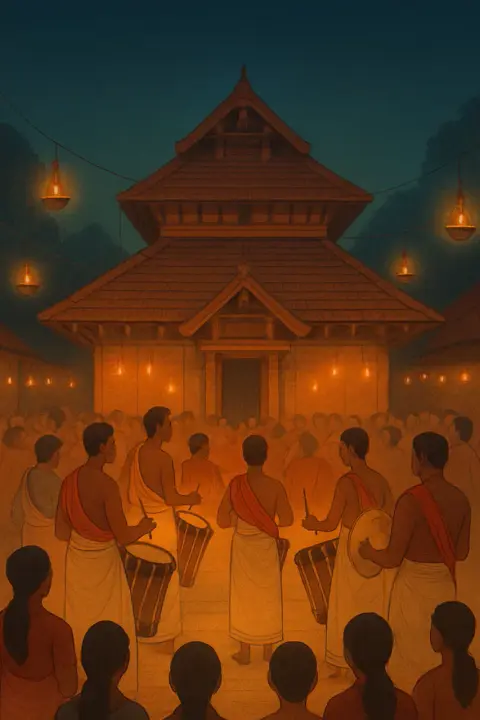
Peruvanam Pooram: the night of drums at Cherpu
Four hours of temple drums before dawn at the old Shiva temple of Cherpu
Peruvanam Pooram is the temple festival of the Peruvanam Mahadeva temple at Cherpu in Thrissur district, Kerala, held in the Malayalam month of Meenam (March–April), a few days before Arattupuzha Pooram. Kerala Tourism dates its history to AD 583, which makes it one of the oldest organised ritual festivals anywhere. It is smaller than Thrissur Pooram and known for strict ritual and for its percussion: processions of goddesses and Sasthas on caparisoned elephants arrive through the night, with panchari and pandi melams that run until after dawn.
It falls in the same Meenam festival cycle as Arattupuzha Pooram, whose date the Arattupuzha Devaswom proclaims a year ahead; no separate announcement was found.
The legend

The Peruvanam temple chronicle dates the start of the pooram to AD 583; once the deities of 108 temples of the region gathered here.

The temple's own Shiva takes no part; he silently receives the guests, as goddesses and Sastha arrive in procession from neighbouring temples.
The panchari melam is said to have been first played here. Thrissur Pooram later overshadowed Peruvanam, which still keeps strictly to ritual and sound.
Customs
Melam at dawn
Around 4 am the Cherpu Bhagavathy panchari melam begins on the Nadavazhi walkway and runs until about 8, well after sunrise.
Vilakku
At midnight the oil lamps of eleven deities line up outside the Irattayappan shrine, and the drummers play a melam with no electric light.
The goddesses' bath
Each Bhagavathy, once her own pooram is over, takes a ritual bath in the temple pond, the Thotukulam.
History of the oldest pooram
According to the temple chronicle, the Peruvanam Granthavari, the pooram began in AD 583. In those days, Kerala Tourism says, about 108 temples of the Peruvanam Kshetra sanketham (the temple federation) took part; today 23 do. Wikipedia adds that the great gathering of that era was held at the Arattupuzha Sastha temple and that the old festival faltered about five hundred years ago, when participating temples drifted away. In the 18th century Sakthan Thampuran started Thrissur Pooram, which overshadowed Peruvanam.
Peruvanam still claims several firsts. The panchari melam is said to have been first performed here, for the pooram of Urakathamma Thiruvadi, and nettipattams, the golden caparisons on the elephants' foreheads, were first introduced by the Cherpu Bhagavathy temple at this pooram. A legend explains the temple's name: a sage named Puru did penance in what was then a forest, vanam, so the place became Peruvanam.
The host who does not take part
The presiding deity of the Peruvanam temple is Shiva, worshipped as Irattayappan because there are two Shiva lingas on one pedestal. He takes no part in the pooram: he silently receives his guests. The participants are temples whose main deities are Devi (the goddess, Bhagavathy) or Sastha. Each arrives in procession, an ezhunnallippu, with the deity carried on a caparisoned elephant and accompanied by drummers.
How the night runs
The order of the processions is fixed. Times below are approximate and come from published accounts of the festival.
- Afternoon: Pisharikkal Bhagavathy
The Bhagavathy of the Pisharikkal temple at Kadalassery opens the day at about 4 pm with three elephants and a panchari melam. All the other poorams wait for her.
- Sunset: Arattupuzha Sastha
The first main pooram. Sastha arrives through the southern gateway before sunset with seven decorated elephants, and an elaborate pandi melam begins, continuing on the walkway until about 10 pm.
- Midnight: the lamps
The oil lamps of eleven deities line up outside the Irattayappan shrine, and the drummers play a melam with no artificial light.
- Before dawn: Cherpu Bhagavathy
At about 4 am the panchari melam of the Cherpu Bhagavathy begins on the Peruvanam Nadavazhi, the walkway that works as a natural theatre for percussion, and runs until about 8 am, well after sunrise.
- The bath
Each Bhagavathy, once her own pooram is over, takes a ritual bath in the temple pond, the Thotukulam, which closes the festival.
When it falls
Peruvanam Pooram follows the Malayalam calendar and falls in Meenam, usually in late March or early April. It belongs to the same festival cycle as Arattupuzha Pooram, whose date the Arattupuzha Devaswom proclaims a year ahead, and is held a few days before it. Kerala Tourism treats such festival dates as approximate and advises confirming them with the local authorities. Next Arattupuzha Pooram: 20 March 2027 (expected).
Etiquette and practical notes
Peruvanam is a temple festival first and a concert second.
- Plan for the whole night — The best melams come late at night and before dawn, so plan to stay or to return before 4 am.
- Elephants — Keep well clear of the elephants and their mahouts, and do not stand behind or between them.
- Temple customs — Inside the temple, follow the instructions of the temple staff on entry and dress.
- Crowds — The FCDO notes that stampedes have occurred at some events with large crowds, including religious gatherings. Agree a meeting point and avoid crushes on the walkway.
FAQ
When is Peruvanam Pooram?
In the Malayalam month of Meenam, usually late March or early April, a few days before Arattupuzha Pooram. Next Arattupuzha Pooram (not Peruvanam): 20 March 2027 (expected). Confirm the exact date of Peruvanam locally.
Where is the Peruvanam Mahadeva temple?
At Peruvanam, Cherpu, in Thrissur district, Kerala.
How old is Peruvanam Pooram?
The temple chronicle dates it to AD 583, so it is over 1,400 years old.
What does pooram mean?
A pooram is an annual temple festival in Kerala, held mainly in temples of goddesses such as Durga or Kali after the summer harvest, usually with decorated elephants in procession.
How is Peruvanam different from Thrissur Pooram?
It is older and smaller and is known for strict ritual and the quality of its melams. The Peruvanam temple's own Shiva takes no part and only receives the visiting deities.
How many temples take part?
Today 23 temples send processions; historically about 108 took part.
Sources (5)
Facts checked: 21 October 2026. Prices and hours are approximate; check locally.