 India GO
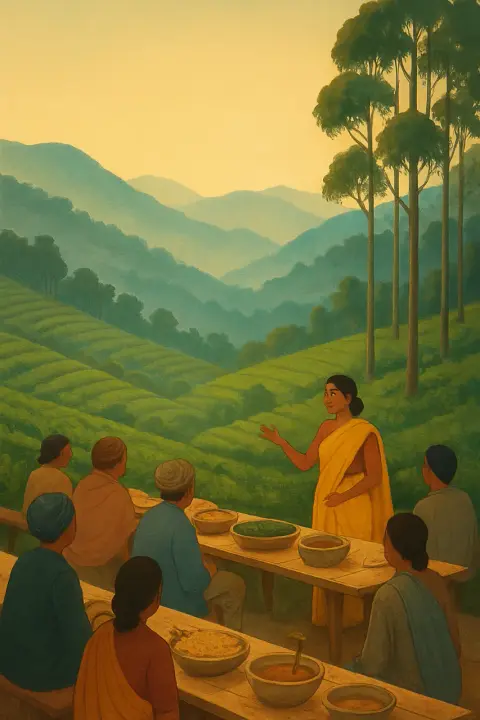
Nilgiris Earth Festival: the hills' food and forests
Wild honey, millet and forest greens, served by the hills that grow them
The Nilgiris Earth Festival is a four-day festival of food, culture and ecology in the Nilgiri hills of Tamil Nadu, usually held in the week before Christmas across Ooty, Coonoor and Kotagiri. It is run by The Nilgiris Foundation with the Keystone Foundation, which works with Indigenous communities of the Nilgiri Biosphere Reserve. The programme is built around what the hills grow and eat: foraged greens, millets and heritage grains, wild honey and tea. Most events are ticketed separately.
Run by The Nilgiris Foundation with the Keystone Foundation, which has worked with Indigenous communities of the Nilgiri Biosphere Reserve since the 1990s. The programme is built around what the hills actually produce and eat: foraged greens, heritage grains and millets, wild honey, single-estate tea. Events are hosted by named cooks, growers and naturalists rather than by a stage.
The Nilgiris Foundation, a sister organisation of the Keystone Foundation in Kotagiri, sets the dates each year; press previews appear in early December.
The legend

The festival grew out of the Nilgiris Wild Food Festival and has run under its present name since 2022.
It is run by The Nilgiris Foundation, directed by Keystone Foundation founder Pratim Roy; Keystone works on eco-development in the biosphere reserve.

In 1986 the Nilgiris became India's first UNESCO biosphere reserve. The Toda, Kota, Irula, Kurumba, Paniya and other peoples are native here.
The festival brings ecologists, communities, farmers and cooks together to show how tradition, food and wildlife connect in these fragile hills.
The fourth festival ran in 2025: four days in Ooty, Coonoor and Kotagiri, with more than fifteen communities of the reserve taking part.
Customs
Walks with ecologists
A restoration ecologist leads walks showing how restored habitat in the upper Nilgiris holds water and soil.
Foraging
Workshops teach how to know edible wild greens: foraging is presented as both an ecology lesson and a food security practice.
Heritage grain
Sessions cover millets, heritage rice and seeds, and their diversity is discussed as a defence against a changing climate.
The Habba
The festival's shared ground, The Habba, is a market of indigenous food with music and plenary talks.
A Badaga meal
The programme has included a traditional Badaga meal with performances, and Kurumba cooks have served breakfast out in the forest.
What people eat
Millets
the hills' heritage grain, with workshops of its own
Wild honey
forest honey; the communities themselves explain how it is gathered
Words of the festival
சோலை
shola
patches of stunted montane forest in valleys amid grassland; from the Tamil for "grove"
நீலகிரி
Nilgiri
"blue mountains", from neelam, blue, and giri, mountain
குறிஞ்சி
kurinji
a shrub with bluish flowers, thought to have given the hills their name
habba
a word in Badaga festival names such as Devva Habba; also the festival's main ground
True or myth
✅ True. It used to be the Nilgiris Wild Food Festival; the present name dates from 2022.
❌ Myth. Nilgiri means blue mountains, perhaps after the bluish flowers of the kurinji shrub.
✅ True. It was set up in September 1986 under UNESCO's Man and the Biosphere Programme and spans three states.
What the festival is
The festival grew out of the Nilgiris Wild Food Festival, held in December 2022, and has run under its present name since. The fourth edition, the latest with a published programme, had more than fifteen communities of the reserve taking part. It is a project of The Nilgiris Foundation, a non-profit, and the proceeds from tickets go to its work on eco-development, conservation and cultural preservation in the Nilgiri Biosphere Reserve.
The setting explains the theme. In 1986 the Nilgiris became India's first biosphere reserve under UNESCO's Man and the Biosphere programme; it spans three states. The Toda, Kota, Irula, Kurumba, Paniya and other peoples are native here. The name Nilgiri means 'blue mountains', perhaps after the bluish flowers of the kurinji shrub. Events are hosted by named cooks, growers, ecologists and writers rather than run from one big stage.
What is on the programme
The line-up is rebuilt every year. These are the kinds of events the festival has run, from its most recent published programme.
The Habba
The festival's shared ground, at the Keystone Foundation in Kotagiri: a day of plenary talks, Indigenous food, demonstrations, music and artisan stalls; in the latest edition it was free to attend. Habba is a word found in Badaga festival names.
Forest and shola walks
Guided forest immersions with nature walks and night jungle listening (in the latest edition, for donors only), and walks with a restoration ecologist through an endemic plant nursery, showing how restored habitat in the upper Nilgiris holds water and soil.
Forgotten greens and heritage grains
Workshops on recognising edible wild greens and on millets, heritage rice and seeds; foraging is taught as both an ecology lesson and a food-security practice.
Badaga and settler kitchens
A Badaga kitchen workshop and a traditional Badaga meal with performances; in other years Kurumba cooks have served breakfast in the forest. A day-long Heritage Table fête covers the settler cuisines of the hills.
Tea, honey and a heritage walk
Single-estate tea sessions, wild honey explained by the communities who gather it, and a guided walk through Ooty's historic and archaeological sites.
Tickets and practical notes
The festival site lists events and sells tickets; the Foundation sets the dates each year, and press previews usually appear in early December.
- Tickets — Bought online or at the venue. The festival FAQ has described general and premium passes and special rates for students, seniors and local residents; most events are priced separately. Outside food and drink are not allowed at venues.
- Pack for cold evenings — Ooty in December averages about 21°C by day and 7°C at night. The organisers suggest comfortable clothes and shoes for outdoor events, and layers for the evenings.
- Families — The organisers describe the festival as family-friendly, with activities for all ages.
- Getting there and staying — Events are spread over several towns, so choose a base by the events you book. See how to get to Ooty and Coonoor and where to stay.
FAQ
When is the Nilgiris Earth Festival?
Usually over four days, Thursday to Sunday, in the week before Christmas. The Nilgiris Foundation announces the dates each year, with press previews in early December.
Where is it held?
At venues across the Nilgiris: Ooty, Coonoor and Kotagiri, with forest events around Masinagudi; the Habba is at the Keystone Foundation in Kotagiri.
Do I need tickets?
For most events, yes: each is ticketed separately, online or at the venue; the Habba was free in the latest edition. Proceeds go to The Nilgiris Foundation's work in the biosphere reserve.
What other festival is held in Ooty?
The best known is the Ooty Flower Show at the Government Botanical Garden, usually in mid to late May.
What is the Nilgiri Biosphere Reserve?
India's first biosphere reserve, set up in 1986 under UNESCO's Man and the Biosphere programme, spanning three states; the festival is built around its peoples, food and forests.
Facts checked: 22 October 2026. Prices and hours are approximate; check locally.