 India GO
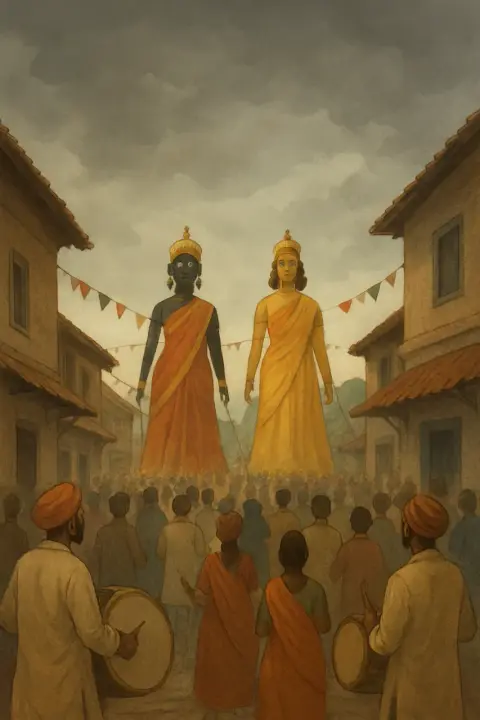
Marbat and Badgya: the day Nagpur burns its troubles
Giant black and yellow effigies carried off to burn with the city's ills
Marbat and Badgya is a procession found only in Nagpur. On Tanha Pola, the day after the bullock festival of Pola, the city carries two giant effigies, the black and the yellow Marbat, with a crowd of smaller satirical figures called badgyas, about 10 km through the lanes of Itwari and East Nagpur, and then burns them. Next date: 1 September 2027 (expected).
The day follows the lunar calendar; the organisers in Nagpur announce the procession routes in the week before.
The legend
The Marbat procession belongs to Nagpur alone. It takes place the day after Pola, the festival in which farmers honour their bullocks.
The black Marbat was first carried through the eastern part of the city in 1880 and the yellow one from 1884, started by the Teli community.
Marbat is asked to carry away disease and bad customs, while the badgya figures each year mock whatever the city argued about.
Customs
“Take it, Marbat”
From the morning children run through the lanes shouting “Gheun ja re Marbat”, “Take it away, Marbat”.
Procession and fire
Huge figures of bamboo and rags are carried through the streets, families line the route, and at the end the effigies are burnt.
Words of the festival
बडग्या
badgya
Marbat's companion, hung with broken brooms and rags; each year it stands for a new evil.
What happens on Marbat day
The day starts in the lanes. From the morning children run about shouting "Gheun ja re Marbat", "Take it away, Marbat": the chant asks the effigy to carry off disease, misery and bad customs. Then the two big figures come out.
The yellow (pivli) Marbat is taken out by the Teli community mandal in Tarhane. The black (kali) Marbat is made by shopkeepers near Nehru Putla square, according to the government MyGov blog. Both are huge figures of bamboo, paper and cloth; the MyGov blog says the work on them begins in May. They are carried on a route of about 10 km through Itwari and East Nagpur, with families lining the way, and at the end they are set on fire.
Around them move the badgyas: smaller effigies made by neighbourhood groups, hung with broken brooms and rags. Each year they stand for a new evil, and they mock whatever the city has argued about that year. The MyGov blog lists alcoholism, rising prices and corruption among the usual targets. The Ministry of Tourism's Utsav portal calls the badgya tradition much younger, probably a few decades old: it was started by children with paper, twigs and household waste, and the adults took it up.
The story behind Marbat
Wikipedia dates the Marbat processions to 1880 in the eastern part of the city; the yellow Marbat is dated to 1884, started by the Teli community. The festival is therefore well over a century old.
Nagpur explains the figures through popular tradition. In the version given by the MyGov blog, the black Marbat stands for Bankabai, a Bhonsle queen remembered for siding with the British, and the yellow one for British rule and for the epidemics and diseases of the time. These are local explanations rather than recorded history, and accounts differ in detail. What is not in dispute is the purpose: the effigies take the city's ills with them into the fire.
Planning a visit
- Confirm the day — Marbat falls the day after Pola, the new moon that ends the month of Shravana, usually between late August and mid-September. The organisers announce the procession routes in the week before.
- Where to be — The procession belongs to the old city: Itwari and East Nagpur. Watching from the street is free.
- Crowds and fire — The UK Foreign Office notes that stampedes have occurred at crowded religious gatherings and parades in India and advises following the local authorities. Keep your distance when the effigies are lit and watch your phone and wallet in the crush.
- Getting there — Nagpur has Dr. Babasaheb Ambedkar International Airport and the main railway station, Nagpur Junction.
- In the same season — Ganesh Chaturthi usually follows within days, and Dhammachakra Pravartan Din at Deekshabhoomi comes in autumn. Pench and Tadoba tiger reserves open only their buffer zones until 1 October.
FAQ
What is the Marbat festival in Nagpur?
A procession held only in Nagpur on Tanha Pola, the day after Pola. Giant black and yellow effigies and smaller satirical badgyas are carried about 10 km through Itwari and East Nagpur and then burnt, to carry away disease and social evils.
When is Marbat?
Next date: 1 September 2027 (expected). It follows the lunar calendar and falls the day after Pola, usually between late August and mid-September.
What is the story behind Marbat?
By local tradition the black Marbat stands for the Bhonsle queen Bankabai, remembered for siding with the British, and the yellow one for British rule and epidemics. The processions date from the 1880s.
What is a badgya?
A smaller effigy, hung with broken brooms and rags, that walks with the Marbat. Each year badgyas are made to stand for a new evil or a current controversy.
Sources (6)
Facts checked: 22 October 2026. Prices and hours are approximate; check locally.