 India GO
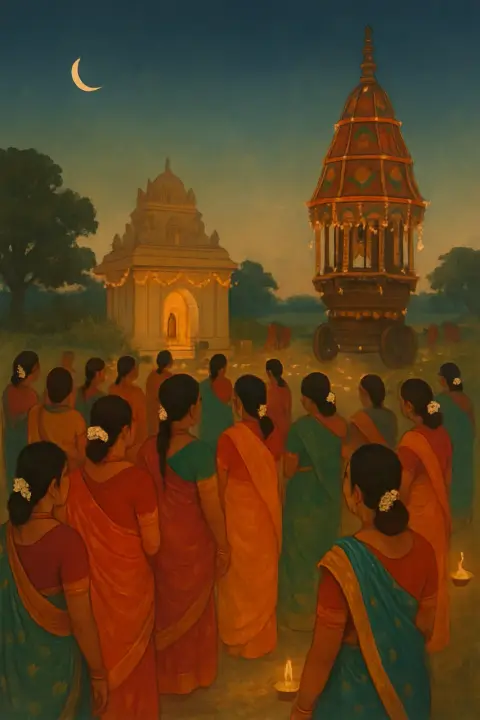
Koovagam Koothandavar festival: the brides of Aravan
A village temple where transgender women wed a god and mourn him by morning
The Koovagam festival is the 18-day festival of the Koothandavar (Aravan) temple in the village of Koovagam, Kallakurichi district, Tamil Nadu, held in the Tamil month of Chithirai. For transgender women from Tamil Nadu and across India it is the largest gathering of the year: they marry Aravan through the temple priests on one night and mourn him as widows the next day. Dates: 6–23 April 2027 (expected); the wedding night is 20 April 2027 (expected).
The temple committee sets the days, and the press carries the schedule one to three weeks before the start.
The legend

In the Mahabharata, Aravan, son of Arjuna and the Naga princess Ulupi, agreed to give his life so the Pandavas could win the war.
Before dying he asked to be married. Krishna took the form of Mohini and married him, and the next day mourned him as a widow.

At Koovagam the story is lived by the Aravanis, the transgender women of Tamil Nadu, for whom the festival is the great gathering of the year.
Customs
Marrying Aravan
On the wedding day the women come to the temple in their finest clothes, and priests tie the thali on them in Aravan's name.
Procession, mourning
Next morning Aravan's image is carried through the village. At the mourning ground the brides take off the thali, break their bangles and put on white saris.
A community's voice
During the festival there are performances and meetings where the community speaks up for its rights.
Whose festival this is
Koothandavar is the local name of Aravan (also Iravan), the son of Arjuna and the Naga princess Ulupi in the Mahabharata. In the version told in Tamil Nadu, Aravan agreed to be sacrificed so that the Pandavas would win the war, and asked to be married before he died. Krishna took the female form of Mohini to marry him, and mourned him as a widow the next day.
Transgender women in Tamil Nadu, called thirunangai in Tamil, the term in the Tamil Nadu government's glossary (the older word aravani is also used), see their own story in Mohini, and many have come to Koovagam for years. Wikipedia speaks of tens of thousands of transgender women at the festival, from Tamil Nadu, other states and abroad. The festival is at the same time a religious rite, a reunion and an occasion to speak up: there are performances, meetings on the community's rights and, according to Wikipedia, health awareness and HIV testing run by organisations. It is also a village temple festival: devotees of Aravan and of Draupadi pull his chariot through Koovagam.
How the 18 days run
The first two weeks are filled with performances, programmes and the Miss Koovagam pageant, held in recent years in nearby Viluppuram; its winners are reported in the Tamil Nadu press.
The central night falls on the Tuesday nearest the Chithirai full moon. Women come to the temple in their finest saris and bangles. Priests, acting for Aravan, tie a thali (the sacred marriage thread) around each woman's neck and mark her forehead with kumkum. The night is spent celebrating as newlyweds.
The next morning Aravan's freshly painted image is carried through the village on a chariot to the azhukalam, the mourning ground. As it goes, his decorations are taken off, a sign that he has died on the battlefield. At the azhukalam the brides cut or remove their thalis, break their bangles and put on white saris to mourn him. The widowhood is symbolic and short: the women return to their usual colours, and many come back the following year. The festival closes a couple of days later.
Visiting respectfully
This is a community's own ritual and reunion. Guests who come respectfully are welcome, but it is not an event to watch as a spectacle.
- Ask before taking photos — Ask before photographing anyone, and accept a no. Not every participant wants her picture shared.
- Use the names people use — Refer to participants as women and use the names they give you. Thirunangai is the Tamil term the community and the state glossary use.
- The mourning is a rite — The breaking of bangles and the grief at the azhukalam are a religious rite. Keep a respectful distance and do not push in for pictures.
- Dress modestly — FCDO advises respecting local dress codes at religious sites and in rural areas.
- Crowds — The wedding night and the chariot morning draw the largest crowds. FCDO notes that stampedes have occurred during events with large crowds: follow police instructions and keep your belongings close.
- For LGBT+ travellers — FCDO: same-sex relationships are legal in India, but attitudes to LGBT+ people can be less accepting than in the UK, with a risk of harassment, especially outside big cities.
Getting there
Koovagam is a village in Ulundurpettai taluk, about 15 km from Ulundurpet and 25 km from Viluppuram, the nearest larger towns. The dates follow the Tamil calendar: the temple committee sets them, and the Tamil Nadu press carries the schedule one to three weeks before the start. If you want to see the main rites, plan around the wedding night and the following morning.
FAQ
What is the Koovagam festival?
An 18-day festival at the Koothandavar (Aravan) temple in Koovagam, Tamil Nadu, where transgender women ritually marry Aravan and mourn him the next day, re-enacting the story of Krishna as Mohini. It is the community's largest gathering of the year.
When is the Koovagam festival?
Next: 6–23 April 2027 (expected), with the wedding night on 20 April 2027 (expected) and the chariot procession and mourning the next day. The dates are a projection from the Tamil calendar until the temple committee announces them.
Who is Koothandavar?
Koothandavar is Aravan, son of Arjuna and Ulupi in the Mahabharata, who in the Tamil tradition gave his life for the Pandavas' victory and was married to Krishna in the form of Mohini the night before.
In which district is Koovagam?
Kallakurichi district, Tamil Nadu, in Ulundurpettai taluk, about 25 km from Viluppuram.
What is Miss Koovagam?
A beauty pageant for transgender women held during the festival; the winner is named in the press each year.
Can visitors attend the Koovagam festival?
Yes, guests who come respectfully are welcome. Ask before taking photos and treat the wedding and mourning rites as the religious rituals they are.
Sources (5)
Facts checked: 21 October 2026. Prices and hours are approximate; check locally.