 India GO
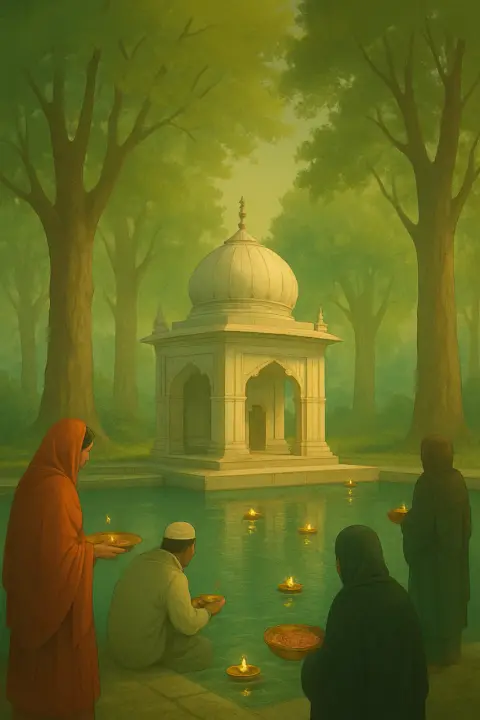
Kheer Bhawani Mela: a day at the spring of Tulmulla
Families home for a day, offering rice and milk at a spring beneath the chinars
Kheer Bhawani Mela is the yearly gathering of Kashmiri Hindus at the temple of the goddess Ragnya Devi, known as Mata Kheer Bhawani, built over a sacred spring in Tulmulla village, Ganderbal district, about 25 km north-east of Srinagar. It falls on Jyeshtha Ashtami, the eighth lunar day of the bright half of Jyeshtha, usually between late May and late June; next: 11 June 2027 (expected). Before planning a visit, read the official travel advice below: the UK Foreign Office (FCDO) advises against all travel to the Union Territory of Jammu and Kashmir, including the city of Srinagar.
The day follows the lunar calendar; the Jammu and Kashmir administration and the temple trust announce the travel and camp arrangements in May.
The legend

The Kheer Bhawani temple at Tulmulla stands over a sacred spring. The goddess, also called Ragnya Devi, is the family deity of Kashmiri Hindus.

Devotees believe the water of the seven-sided spring changes colour, and a dark shade is taken as an ill omen.

The shrine is already mentioned in Kalhana's Rajatarangini. The present temple and pond were built under Maharaja Pratap Singh in the 1910s.
Customs
Kheer for the goddess
The goddess is offered kheer, rice cooked in milk, and the offering gave her her name.
Under the chinars
Pilgrims sit and sleep on grass mats beneath the old chinar trees around the shrine.
Words of the festival
Zyeth Atham
The Kashmiri name of the day: the eighth day of the bright half of Jyeshtha.
Official travel advice (FCDO, verbatim)
The UK Foreign, Commonwealth & Development Office (FCDO) travel advice for India says, word for word:
FCDO advises against all travel to the Union Territory of Jammu and Kashmir (including Pahalgam, Gulmarg, Sonamarg, the city of Srinagar and the Jammu-Srinagar national highway), except for:
>
- travel by air to and from the city of Jammu - travel within the city of Jammu
>
There have been frequent terrorist incidents in Jammu and Kashmir. There is a continuing threat, towards Indian government targets and civilians including tourists and foreign nationals.
>
The authorities can impose and lift curfews and other restrictions frequently and quickly.
>
Foreign nationals are vulnerable in rural districts and outside the main population centres and tourist areas. There is a risk of unpredictable violence, including bombings, grenade attacks, shootings and kidnapping. [...] The level of consular assistance that the British High Commission in India can provide in Jammu and Kashmir is severely limited.
>
Your travel insurance could be invalidated if you travel against advice from the Foreign, Commonwealth & Development Office (FCDO).
Tulmulla and the Kheer Bhawani temple are in Ganderbal district, inside the Union Territory of Jammu and Kashmir. If you are not a British national, check your own government's advice as well.
What happens on the day
Devotees begin arriving from the early hours, from across Jammu and Kashmir and the rest of India, and queue with flowers and offerings to enter the shrine. Kheer, rice cooked in milk, and milk are offered at the seven-sided spring around the goddess; the offering gave her the name Kheer Bhawani. Devotees believe the water of the spring changes colour, and a dark shade is taken as an ill omen, so its colour on the day is watched closely. Pilgrims sit and sleep on grass mats beneath the old chinar trees of the temple grounds.
For most of those present the mela is also a homecoming. Many Kashmiri Pandit families left the valley in 1990, and for them the day is a yearly return to the family deity, with prayers for peace and for a return home. Devotees speak of the support of local residents during the mela, and community leaders describe it as a symbol of Hindu–Muslim brotherhood.
The goddess and the temple
Ragnya Devi, also called Rajna or Bhagavati, is the kuladevi, the protective family goddess, of Kashmiri Hindus. The spring of Tula Mula is already mentioned in Kalhana's Rajatarangini, the 12th-century chronicle of Kashmir. Maharaja Ranbir Singh built the first dharamshala (pilgrims' rest house) here, and the present spring, pond and temple took their form under Maharaja Pratap Singh in the 1910s; Maharaja Hari Singh later renovated the temple. The day of the mela, Jyeshtha Ashtami, is called Zyeth Atham in Kashmiri and is a provincial holiday in the Kashmir province.
The same day in Jammu
Jyeshtha Ashtami is also kept at the Kheer Bhawani Peeth in Janipur, Jammu, regarded as a replica of the Tulmulla shrine, where thousands of displaced Kashmiri Pandits gather on the same day. The FCDO advice against all travel to Jammu and Kashmir makes two exceptions: "travel by air to and from the city of Jammu" and "travel within the city of Jammu".
FAQ
When is Kheer Bhawani Mela?
On Jyeshtha Ashtami, the eighth lunar day of the bright half of Jyeshtha: next, 11 June 2027 (expected). The Jammu and Kashmir administration and the temple trust announce the travel and camp arrangements in May.
Where is the Kheer Bhawani temple?
In Tulmulla village, Ganderbal district, about 25 km north-east of Srinagar. The temple stands over a sacred spring in a grove of chinar trees.
Who is Mata Kheer Bhawani?
Ragnya Devi, the family goddess of Kashmiri Hindus. Her name comes from kheer, the rice and milk offered to her at the spring.
Is it safe to visit Kheer Bhawani?
The UK Foreign Office (FCDO) says: "FCDO advises against all travel to the Union Territory of Jammu and Kashmir (including Pahalgam, Gulmarg, Sonamarg, the city of Srinagar and the Jammu-Srinagar national highway), except for: travel by air to and from the city of Jammu; travel within the city of Jammu." Tulmulla is inside the Union Territory. Check the current FCDO advice and your own government's before deciding.
Sources (5)
Facts checked: 21 October 2026. Prices and hours are approximate; check locally.