 India GO
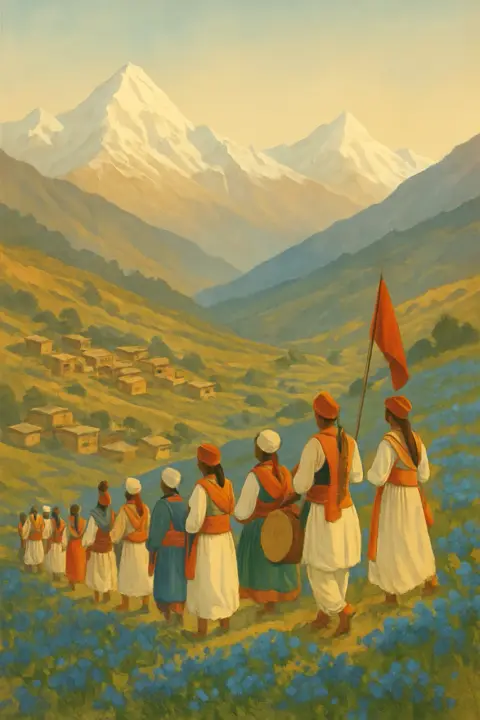
Kandali Festival in the Chaudans valley
A valley that waits twelve years for a shrub to flower, then goes to war with it
The Kandali Festival is held by the Rung people of the Chaudans valley in Pithoragarh district, Uttarakhand, once in twelve years, in the year the kandali shrub flowers. It lasts about a week between August and October, opens with worship of Shiva, and remembers how the valley drove back the army of Zorawar Singh, which came from Ladakh in 1841. The villages fix the exact days in the flowering year, once the shrub is in bloom.
The Rung communities of the Chaudans valley fix the day when the Kandali flowers; the year is known well ahead.
The legend

The kandali shrub, a Strobilanthes, flowers in the Chaudans valley once in twelve years, and that year the Rung people hold their festival.
It remembers how in 1841 the valley drove back the army of Zorawar Singh, which had come from Ladakh.

The week opens with worship of Shiva: a lingam is shaped from barley and buckwheat flour, and each home prays for prosperity in a decorated corner.
Customs
Flag at the tree
After a shared feast, men and women in traditional dress with gold and silver gather at a tree, tie white strips of cloth to it and raise a flag.
Charge on the kandali
The valley's defence is re-enacted and the flowering kandali bushes are symbolically charged; celebrations run on through the night.
Where to celebrate
Chaudans valley
Once in twelve years, when the kandali flowers, the Rung villages of the Chaudans valley worship Shiva, raise their flag and ritually cut the shrubs down, remembering the army they drove off in 1841.
The Rung villages and the kandali
Chaudans is a valley in Dharchula tehsil of Pithoragarh district, near India's border with Nepal. Its fourteen villages, among them Sirkha, belong to the Rung community, whom the Kumaon division's official page calls Rang or shaukar. The kandali, identified in official and encyclopedic sources as Strobilanthes wallichii, flowers in the valley about once every twelve years, and the festival is held only in that year. The Kumaon division's page records the festival of 1999; the most recent one was held in October 2023.
The festival is a victory celebration. It recalls the valley's resistance in 1841 to the army of Zorawar Singh, which had marched in from Ladakh, and the flowering shrubs stand in for the enemy.
How the week unfolds
The week opens at home. Each household worships Shiva in a decorated corner of its courtyard, at a lingam shaped from barley and buckwheat flour, and prays for prosperity; local liquor is traditionally part of the celebration. A shared feast follows the household pujas. Then men and women in traditional dress, with gold and silver jewellery, gather at a tree on the village's sacred ground, tie white strips of cloth to it and raise the community's flag.
The climax is the day the valley marches on the kandali. To victory cries and re-enactments of the old battles, villagers go out to the flowering shrubs and cut and uproot them; women take part with the ril, a carpet-weaving tool. In 2023 people from all fourteen villages gathered at Chidangyar ground, about 1.5 km from Sirkha, and Rung elders from the Changru area of Nepal came as well. The celebrations run on through the night, and the festival closes by honouring the married daughters of the villages and their husbands; more than fifty couples were honoured in 2023. Rung women in traditional dress perform dances during the gatherings.
Why the shrub: the stories
Accounts of why the valley turns on the kandali differ, and they are told as legends. In one, dacoits hid behind the flowering bushes to ambush the valley; the women pulled the plants up with their rils and exposed them, and the men drove the attackers off. Here the shrub stands for the enemy the festival commemorates. Another story tells of an old woman whose only son, twelve years old, died after eating the flowers about four hundred years ago; she cursed the plant, and since then it is destroyed each time it blooms.
Planning a visit in a flowering year
This is a community festival in a remote border valley, open to guests of the villages rather than to the public at large. There are no tickets.
- Come with a host — Go through a local contact or homestay host in the valley, and ask before photographing people and rituals.
- Permits — The district's official Inner Line Permit portal says a permit is mandatory beyond Chiyalekh, on the Adi Kailash and Om Parvat route. Ask the SDM office in Dharchula whether your route into the valley needs one, and allow time there for it.
- Foreign nationals — This border belt is restricted and the rules for foreigners change; check the current rules with the district administration before planning. The UK Foreign Office reminds travellers to check whether they need special permits, and notes that in some border areas only the Indian Air Force can carry out air rescues.
- Where to stay — Dharchula is the last town with hotels; beyond it there are only a few homestays in the Chaudans and Darma valleys. In a flowering year book them two to three months ahead.
- Getting there — The nearest railheads are Tanakpur and Kathgodam, a long drive from Dharchula; the valley is reached by road from Dharchula.
FAQ
When is the next Kandali Festival?
Once every twelve years, in the year the kandali flowers: the Rung villages fix the days in that year, between August and October. The most recent festival was held in October 2023.
Which state is the Kandali Festival in?
Uttarakhand: the Chaudans valley in Dharchula tehsil, Pithoragarh district, near the border with Nepal.
What is the kandali plant?
A shrub that flowers in the Chaudans valley about once every twelve years; official sources identify it as Strobilanthes wallichii.
Who celebrates the Kandali Festival?
The Rung people of the fourteen villages of the Chaudans valley.
What is eaten at the Kandali Festival?
The household pujas are followed by a shared community feast, and local liquor is traditionally part of the celebration; the Shiva lingam itself is shaped from barley and buckwheat flour.
Can tourists attend?
As guests of the community, yes, through a local host; ask the SDM office in Dharchula whether you need an Inner Line Permit, and foreign nationals should check the border-area rules first.
Sources (5)
Facts checked: 21 October 2026. Prices and hours are approximate; check locally.