 India GO
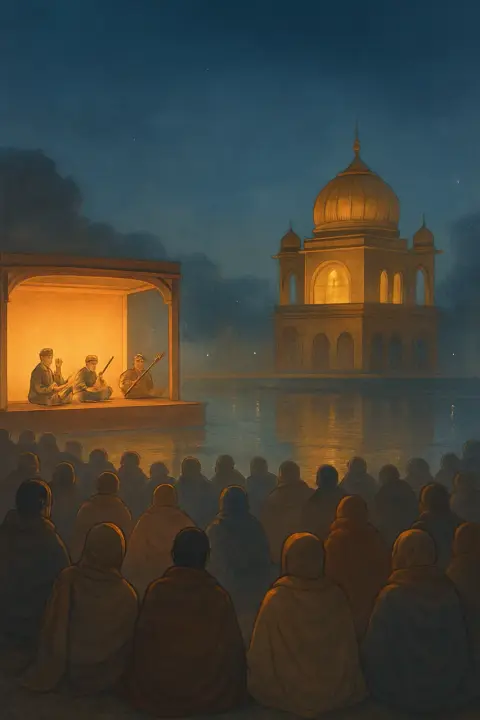
Harballabh Sangeet Sammelan: classical music by Devi Talab
Ragas by a temple tank through a cold night, the audience wrapped in blankets
The Harballabh Sangeet Sammelan, also spelt Harivallabh, is a festival of Hindustani classical music held every year since 1875 at the Devi Talab Mandir in Jalandhar, Punjab. It runs over three evenings in the last week of December, entry is free, and the concerts go on long past midnight, with the senior artists saved for the final night.
The organisers in Jalandhar announce the dates and the line-up in December, one to two weeks ahead.
The legend
In the 19th century the saint and singer Harballabh lived by the Devi Talab tank in Jalandhar, a disciple of Swami Tulja Gir.
He trained under Pandit Duni Chand, and at Devi Talab kept up the guru-shishya tradition with scores of disciples.
The festival began as a barsi, the death anniversary of his teacher Tulja Gir, which Harballabh marked with music.

The first sammelan was held in 1875. It has run every year since, through colonial rule and Partition.
Music by the tank still runs until morning, and the last performer is showered with marigolds until the stage disappears under petals.
Customs
Until dawn
Concerts run far past midnight; listeners once brought their own cots to last until morning.
On the ground
The audience sits cross-legged under a large pandal marquee inside the temple complex.
Young talent
Before the concerts a competition is held each year to find new talent.
No tickets
Entry is free: the festival was meant to draw as many people as possible to classical music.
Words of the festival
ਸੰਗੀਤ ਸੰਮੇਲਨ
sangeet sammelan
"gathering of music"; the name is spelt both Harballabh and Harivallabh
barsi
a death anniversary; the festival grew from one
ध्रुपद
dhrupad
one of the oldest forms of Hindustani music, always heard here
राग
raga
a melodic framework on which a performance is improvised
True or myth
✅ True. The future star of the Gwalior gharana made his debut at this festival as a teenager.
❌ Myth. A disciple started it in his teacher's memory; the tourism department named it a national festival much later.
✅ True. He came in the year the Indian National Congress held its session in Punjab.
When it is held
The sammelan falls in the last week of December, the winter slack season in Punjab’s farming year, which is why it drew rural listeners from the start and is still called a mela locally. A music competition for new talent is held in the days before the main concerts. The organisers announce the exact dates and the line-up in December, usually one to two weeks ahead, so a trip has to stay flexible until then.
What to expect
This is a concert in a temple complex, not a ticketed hall.
- The programme — Each afternoon opens with a documentary film, then vocal and instrumental recitals: tabla, flute, santoor, sitar, sarangi, and dhrupad, one of the oldest forms of Hindustani music. Over the years the stage has hosted Bade Ghulam Ali Khan, Bhimsen Joshi, Ravi Shankar and Zakir Hussain.
- On the ground, through the night — The audience sits cross-legged under a large pandal (marquee) inside the temple complex. Concerts run far past midnight, and December nights in Punjab are cold: bring warm layers and something to sit on. The final night ends with the last performer showered in marigolds.
- Free — There are no tickets. Incredible India, the national tourism site, notes that meals and accommodation are also offered free.
- At a temple — Devi Talab Mandir is a working Hindu temple: dress modestly, take your shoes off where asked and keep phone sound off during recitals.
How it began
Baba Harballabh, a saint and singer who lived by the Devi Talab tank, held the first sammelan in 1875 as a barsi, a death anniversary, for his teacher Swami Tulja Gir. It has run every year since, through colonial rule and Partition. Mahatma Gandhi is believed to have attended in 1919, and D. V. Paluskar gave his debut concert here as a teenager. The Department of Tourism of the Government of India later declared it a national festival.
Getting to Jalandhar
The nearest railway station is Jalandhar City Junction. The nearest airports are Adampur, near Jalandhar, and Sri Guru Ram Dass Jee International Airport in Amritsar. The sammelan pairs well with Amritsar and Chandigarh, and with the Shaheedi Jor Mela at Fatehgarh Sahib, held the same week.
FAQ
Which city hosts the Harballabh Sangeet Sammelan?
Jalandhar, in Punjab. The concerts are held at the Devi Talab Mandir, near the samadhi of Baba Harballabh.
When is the Harballabh Sangeet Sammelan?
Over three evenings in the last week of December. The organisers announce the dates and line-up in December, one to two weeks ahead.
When did the Harballabh Sangeet Sammelan start?
In 1875, as Baba Harballabh’s tribute to his teacher Swami Tulja Gir. It has been held every year since.
Is there an entry fee?
No. The festival has always been free, so that as many people as possible can hear classical music.
Sources (2)
Facts checked: 22 October 2026. Prices and hours are approximate; check locally.