 India GO
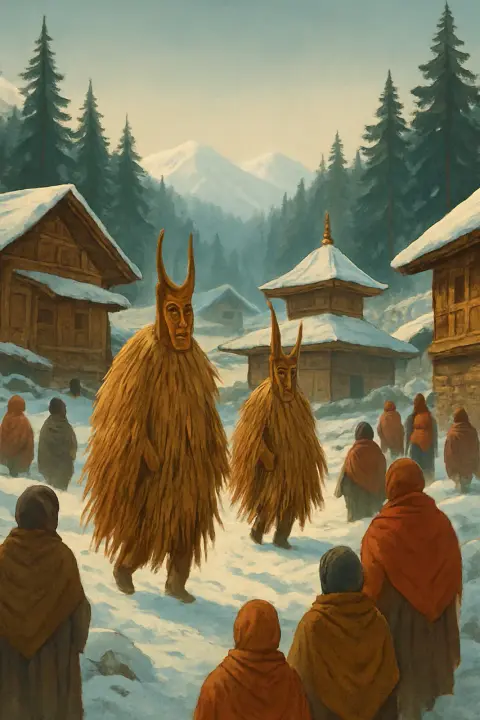
Fagli: masked dancers in Kullu, a ploughing rite in Lahaul
Masked dancers walking from village to village through the winter valleys
Fagli, or Phagli, is the end-of-winter festival of the Himalayan valleys of Himachal Pradesh, named after the month of Phalgun: it sees winter off and calls in the spring. It takes two forms. In the side valleys of Kullu, such as Parvati and Tirthan, masked dancers go from village to village performing songs and skits. In Lahaul's Pattan valley, where it is called Kus or Kuns, it is a household festival with lamps, offerings and a symbolic first ploughing done indoors. There is no single date: each village sets its own days, mostly in February.
Each village sets its own days by the local calendar, so the dates are known locally shortly before.
The legend
Fagli falls at the end of winter in the month of Phalgun, which gives it its name: it sees winter off and calls in the spring.
In Kullu the dances are masked: Vishnu is believed to have saved the people here from forest spirits, and his mask is among the best loved.
In the Pattan valley Fagli is called Kus. Homes set up a baraza, a bamboo figure in white cloth and marigolds: Shikhara Appa, grandmother of the peak.
Customs
Ploughing indoors
On Punha day the fields are still under snow, so ploughing is acted out indoors, with green willow sticks for the bullocks, yoke and plough.
Nati at the temple
At Manikaran deities from nearby villages are carried under umbrellas to the Naina Devi temple, and men and women dance in a chain to the dhol.
What people eat
Marchu
A local puri that neighbours exchange during Kus.
In the Kullu valleys: masks, songs and nati
In the Parvati and Tirthan valleys and elsewhere around Kullu, Fagli is a festival of masked dancers. Himachal Tourism describes them moving from village to village, singing folk songs and performing skits; by local accounts nobody has written the skits down. In Kullu the dances are masked because of a belief that Vishnu once saved the people of the valley from forest spirits, and his mask is among the best loved.
Fagli in the Kullu valleys begins from Phalgun Sankranti, the day the sun enters the month of Phalgun, and each village keeps its own days after that. At Manikaran, in the Parvati valley, the deities of nearby villages are carried under ceremonial umbrellas to the Naina Devi temple, and men and women dance the nati, the Himachali chain dance, to the dhol drum.
This is a village festival rather than a staged event. You meet it by being in the side valleys at the right moment: through a homestay or a host who knows which village is masked on which day.
In Lahaul's Pattan valley: Kus
In the Pattan valley of Lahaul, Fagli is called Kus or Kuns. The Lahaul and Spiti district administration places it after the torch festival of Khogla (Halda), on the new moon (Amavasya), usually in the first or second week of February. Himachal Tourism adds that it is kept by worshipping Shiva, the Naga deities and the goddess Hadimba.
Houses are decorated and oil lamps lit. Each home sets up a baraza: a bamboo stick two to three feet high, draped in white cloth and decorated with jewellery and marigolds. It stands for Shikhara Appa, the grandmother of the peak, whose presence is believed to bring prosperity to the house.
The rituals start early in the morning. The head of the family and their spouse prepare totu, made from roasted barley flour and buttermilk, and kwari. The totu is taken to the roof and offered to the deities, the kwari is offered to the crows, and the totu is then shared among the family as prasad. The couple also pay their yearly respects to the household's cows and sheep, in thanks for the animals the family depends on, and younger members bow and touch the feet of their elders. After breakfast families visit the elderly of the village, and neighbours exchange marchu, a local puri.
Each day has its own meaning. On Punha, the day of ploughing, the fields are still under snow, so ploughing is acted out indoors, with green willow sticks standing for the bullocks, the yoke and the plough. Visits between relatives and friends, with gifts of marigolds, carry on for the following weeks.
Seeing Fagli: practical notes
Fagli rewards being in the valleys in February more than planning for a date.
- Dates are local — Each village sets its days by the local calendar, so they are known only locally and shortly before. Ask your host or homestay.
- Lahaul in winter — Getting to Lahaul in February depends on snow on the road through the Atal Tunnel; see our Halda page for the winter route from Manali.
- Mountain winter — The UK FCDO lists sudden weather changes, avalanches, snow drifts and landslides among trekking hazards, especially above 3,000 m, and advises insurance that covers altitudes over 2,400 m and mountain rescue.
- A home festival — In Lahaul, Kus happens inside homes and between neighbours. Join only when invited, follow your hosts, and ask before photographing rituals.
- Pair it — Halda comes a few weeks earlier in Lahaul. In autumn the valley gathers its deities for Kullu Dussehra; see also Naggar in the Kullu valley.
FAQ
What is the Fagli festival?
The end-of-winter festival of Himachal's valleys: masked village dances and skits in the Kullu side valleys, and Kus, a household festival with lamps, offerings and symbolic ploughing, in Lahaul's Pattan valley.
What is the meaning of Fagli?
The name comes from Phalgun, the month at the end of winter in which it falls. The festival sees winter off and calls in the spring.
When is Fagli celebrated?
Mostly in February, village by village. In Lahaul's Pattan valley it falls on the new moon after Khogla (Halda), usually in the first or second week of February; in the Kullu valleys it begins from Phalgun Sankranti.
Is there a mask festival in Himachal Pradesh?
Yes: Fagli in the Kullu valleys, where masked dancers go from village to village; the mask of Vishnu is among the best loved.
Sources (3)
Facts checked: 21 October 2026. Prices and hours are approximate; check locally.