 India GO
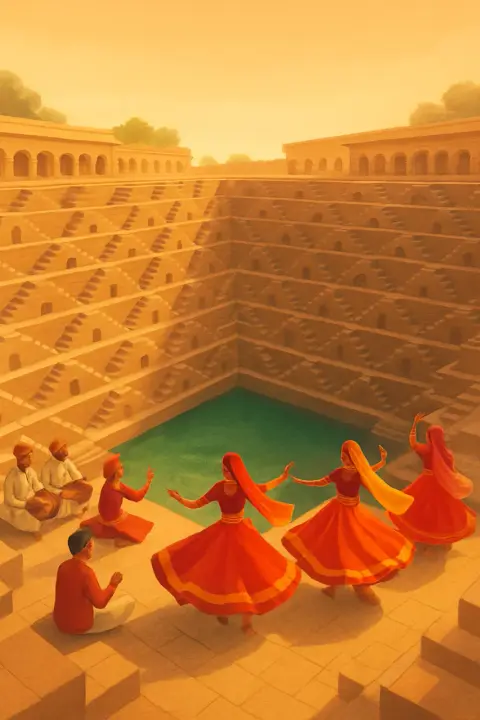
Abhaneri Festival: two days of folk dance at the Chand Baori stepwell
Folk dancers in low sun above thirteen storeys of stone steps
The Abhaneri Festival is a two-day programme of Rajasthani folk performance that Rajasthan Tourism has staged since 2008 at the Chand Baori, the great stepwell of Abhaneri village in Dausa district, about 90 km from Jaipur on the Agra road. Dates: 1–2 October 2027. It usually falls between late September and mid-October, and the state publishes the dates years ahead in its festival calendar.
Rajasthan Tourism publishes the dates years ahead (its current list runs to 2030) and can revise them; check its calendar a few months before.
The legend

The village of Abhaneri was once called Abha Nagari, the City of Brightness.
In the 8th or 9th century the Chand Baori was dug here: 3,500 narrow steps fall thirteen storeys to the water.
Local legend holds that spirits built the well, and so deep that whatever falls in can never be retrieved.
At the bottom the air is 5 to 6 °C cooler than above, and in the heat the well was where the village gathered.
Since 2008 Rajasthan's tourism department has given the well that role back: ghoomar and kalbeliya are danced by its steps for two days.
Customs
Ghoomar
Women in flowing ghaghara skirts twirl, moving in and out of a wide circle.
Puppets and theatre
Between dances come puppet shows, folk theatre and traditional games.
Crafts
Artisans from across the state bring pottery, mirror work, block prints and paintings.
Harshat Mata temple
Pilgrims once washed their hands and feet at the well before entering the nearby temple of the goddess of joy.
What people eat
Dal baati churma
baked wheat balls with dal and sweet crumble
Ghevar
a honeycomb disc of ghee batter in syrup
Words of the festival
बावड़ी
baori
a stepwell, with flights of steps leading down to the water
आभा नगरी
Abha Nagari
the village's old name, City of Brightness
घूमर
ghoomar
a twirling dance, from ghoomna, to spin
कालबेलिया
kalbeliya
the dance of the Kalbelia community of the Thar Desert
हर्षद माता
Harshat Mata
the goddess of joy, whose temple stands by the well
True or myth
❌ Myth. The well only inspired one of the film's sets; Indian films such as Paheli were shot there.
✅ True. They descend on three sides through thirteen storeys; the fourth side is pillared galleries.
❌ Myth. Historians think the well most likely came first.
What happens at the festival
For two days the stepwell becomes a stage. Rajasthan Tourism lists the programme as folk performances from across the state: kachhi ghodi, bhawai, kalbeliya, the dance of the Kalbelia community of the Thar Desert, and ghoomar, in which women in wide ghaghara skirts spin in and out of a circle. Between the dances there are puppet shows, folk theatre and traditional games, and craftspeople from around the state sell pottery, mirror work, block prints and paintings. The state's Dausa page also names village camel safaris as one of the attractions.
The festival is not a temple event, and there is no single rite to wait for. The database's advice is simple: either day works, and the late-afternoon light at the well is the time to be there.
Chand Baori and the Harshat Mata temple
Abhaneri was once called Abha Nagari, the City of Brightness, and its fame rests on two monuments side by side. The Chand Baori is a baori, a stepwell, dug in the 8th or 9th century: flights of narrow steps descend on three sides through thirteen storeys to the water in a diamond-like pattern, while the fourth, northern side rises as pillared galleries with small shrines. No inscription records who built it; the name is linked to a local ruler, Raja Chanda. At the bottom the air is 5 to 6 °C cooler than above, and in the hot months the well was where the village gathered.
Next to it stands the temple of Harshat Mata, the goddess of joy. Pilgrims once washed their hands and feet at the well before going in. The temple was badly damaged in the 10th century, and excavated stones of the temple are now kept by the Archaeological Survey of India in the arcades of the well. Local legend says spirits built the well, so deep that nothing dropped into it can be brought back; historians think it most likely came before the temple. Indian films such as Paheli were shot here, while The Dark Knight Rises only used it as the model for a set.
Getting there and planning the day
Most visitors come for the day from Jaipur, and the festival is the one time of year when it is worth staying longer than the usual short stop on the way to Agra.
- Base
Jaipur is the natural base: Abhaneri is about 90 km away on the Jaipur–Agra road, and Jaipur airport, about 62 km from Dausa, is the nearest.
- Road
Rajasthan Tourism suggests buses from Jaipur to Dausa and notes that Dausa is linked to Jaipur by rail. For a festival day a car with a driver from Jaipur is the simplest option.
- Timing
Aim to be at the well for the late afternoon of either day. Check the Rajasthan Tourism calendar a few months before: the dates are published years ahead but can be revised.
- Combine
Bhangarh Fort pairs with Abhaneri on a day from Jaipur, and the Matsya Festival in Alwar is another state-run cultural festival in the same corner of Rajasthan.
At the festival
- Crafts are sold by the makers — The craft stalls are run by artisans from across Rajasthan; prices are agreed directly with them.
- Try the local food — Look for dal baati churma, baked wheat balls with lentils and a sweet crumble, and ghevar, a honeycomb disc of ghee batter in syrup.
FAQ
When is the Abhaneri Festival?
Dates: 1–2 October 2027. It lasts two days, usually between late September and mid-October, on dates set by Rajasthan Tourism.
Where is Abhaneri?
In Dausa district of Rajasthan, about 90 km from Jaipur on the road to Agra.
When was Chand Baori built?
In the 8th or 9th century, dated by its style and carvings; no inscription records the builder. Some parts were added later.
Is Abhaneri worth visiting?
Yes, if you are travelling between Jaipur and Agra: the Chand Baori is one of the deepest and largest stepwells in India, and during the festival it is also a stage for folk dance.
What dances are performed?
Rajasthan Tourism lists kachhi ghodi, kalbeliya, ghoomar and bhawai, with puppet shows and folk theatre in between.
Sources (5)
Facts checked: 22 October 2026. Prices and hours are approximate; check locally.