 India GO
Temples in Delhi
Delhi's temples have little in common beyond the shoes left at the door: a small Mehrauli shrine that may predate the Sultanate, a seventy-acre marble complex founded in 1974 that fills during Navratri, a Hanuman statue tall enough to see from the metro. The list below gathers the main Hindu temples. Here is how to choose between them, which gurudwaras and shrines belong on the same route, and what to know at the door.
Which temple for what
A quick match from what each temple is known for.
History in the centre
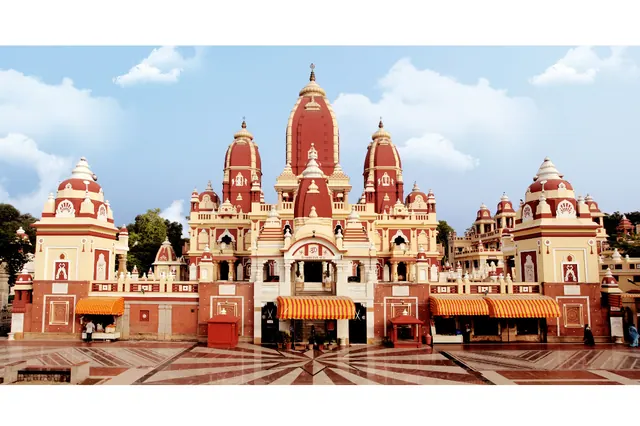
Laxminarayan Temple (Birla Mandir), west of Connaught Place, built 1933–1939. Gandhi agreed to open it only if people of every caste were admitted. The garden grounds stay calm even at midday.
Scale and craftsmanship
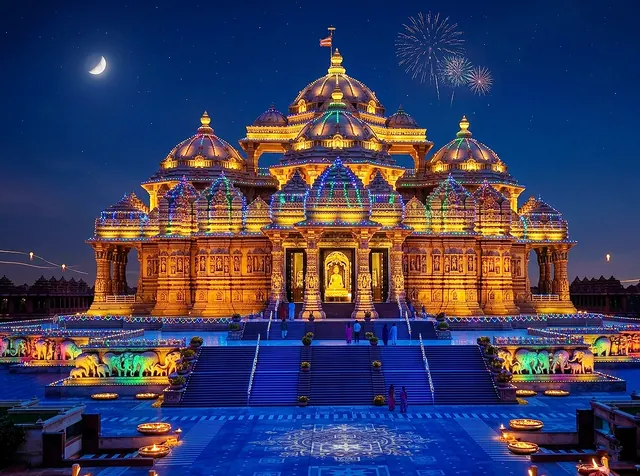
Akshardham, the Swaminarayan complex hand-carved from white marble and pink sandstone, with gardens and an evening water show of about 25 minutes. Plan for a long queue and a locker: phones and electronics are not allowed inside.
Kirtan in the evening
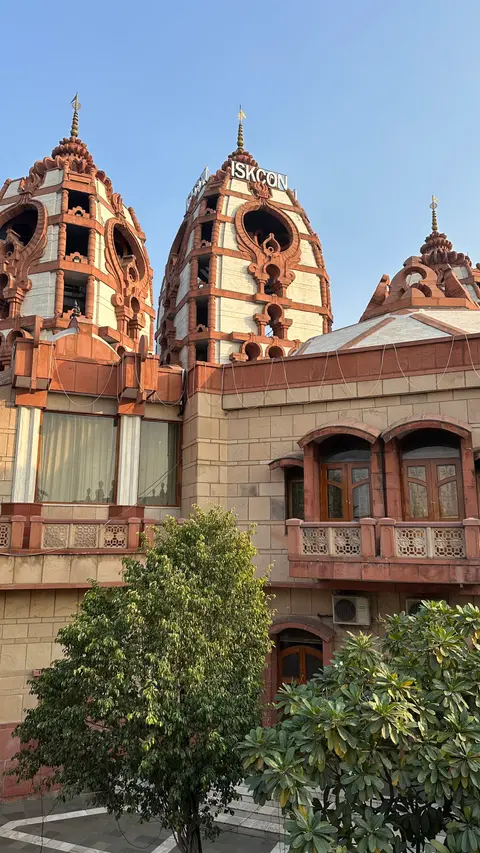
ISKCON Delhi, not far from the Lotus Temple: come for the evening service, when kirtan (devotional singing) fills the hall, and stay for the vegetarian restaurant inside.
A landmark you can see from the metro
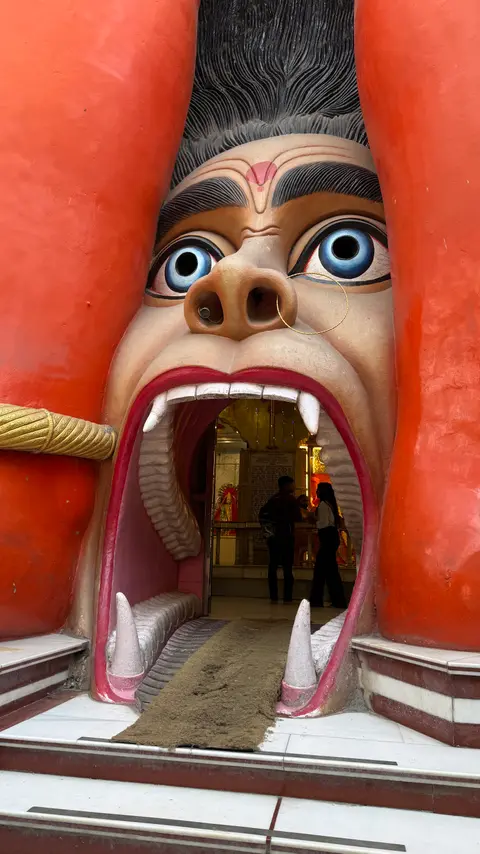
Jhandewalan Hanuman Temple in Karol Bagh: a 108-foot (33 m) Hanuman over the skyline, entered through the mouth of a demon's head. Tuesdays and Saturdays, Hanuman's days, are the busiest.
The goddess and Navratri
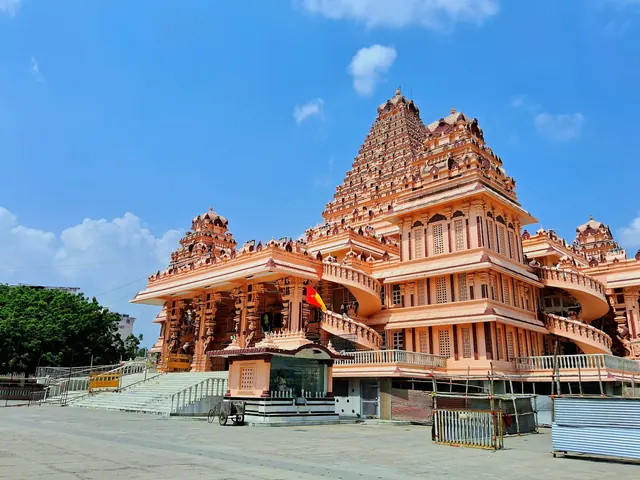
Chhatarpur Temple (Shri Adya Katyayani Shaktipeeth) on the southern edge: seventy acres of marble shrines founded in 1974. The main Katyayani sanctum opens fully only during the two Navratris, when more than a million people come.
The oldest and quietest
Yogmaya Temple in Mehrauli, a few steps from the Qutub complex. Tradition holds it to be the only temple in Delhi older than the Sultanate still in worship; it was rebuilt more than once. Easy to pair with Qutub Minar.
Gurudwaras, shrines and other houses of worship
Several of Delhi's most visited sacred places are not Hindu temples and sit on the same routes.
- Gurudwara Bangla Sahib: the principal Sikh shrine, near Connaught Place, open around the clock. Kirtan runs almost without pause, and the langar (free community kitchen) feeds anyone who comes in.
- Gurudwara Sis Ganj Sahib: in the middle of Chandni Chowk, where the ninth Guru, Tegh Bahadur, was executed in 1675.
- Jama Masjid: one of India's largest mosques, completed in 1656, with a minaret you can climb for the view over Old Delhi.
- Hazrat Nizamuddin Dargah: the Sufi shrine where qawwali is sung in the courtyard on Thursday evenings after sunset. More on the Thursday qawwali.
- Lotus Temple: the Bahá'í house of worship, open to every faith, with no rituals: a hall for sitting in silence, sometimes with readings in several languages.
- St. James' Church: consecrated in 1836 near Kashmere Gate, the oldest church still standing in Delhi.
What to know at the door
The rules differ by place, and each has a reason.
- Shoes off, modest dress — Shoes come off at temples, gurudwaras, the mosque and the dargah; there is a counter or a step for them. Dress modestly.
- Cover your head in gurudwaras and the dargah — At Bangla Sahib scarves are lent at the door. At Nizamuddin women see the inner chamber from the veranda, through marble screens.
- Cameras and phones — No cameras inside Birla Mandir. Akshardham allows no phones or electronics at all: leave them in a locker and bring only cash.
- Jama Masjid: fee and prayer times — Indian visitors enter free; Delhi Tourism lists approximately ₹400 for foreign visitors. Pay at the counter and ask for a receipt. Avoid the midday prayer, when the mosque closes to sightseers.
When to go
Timings differ widely, so check each place's card before setting out: Bangla Sahib never closes, while Birla Mandir shuts for a midday break. A few days change the picture:
- Tuesday and Saturday: Hanuman's days, the busiest at Jhandewalan.
- Thursday evening: qawwali at Nizamuddin; come early to sit close.
- Navratri: the autumn festival: 30 September – 8 October 2027 (expected), with Dussehra on 9 October 2027. This is when Chhatarpur's main sanctum opens and the crowds peak.
- Phool Walon Ki Sair: the Mehrauli festival in which Hindu and Muslim processions carry floral pankhas (fans) to Yogmaya Temple and the nearby Sufi dargah. Its dates change from year to year, so check before you go.
FAQ
What is the most famous temple in Delhi?
Akshardham is the one most people mean, and the Laxminarayan Temple (Birla Mandir) is the classic in the centre. Delhi's principal Sikh shrine is Gurudwara Bangla Sahib.
Which is the oldest temple in Delhi?
By tradition, Yogmaya Temple in Mehrauli: the only temple in Delhi predating the Sultanate that is still in worship, though it has been rebuilt several times.
Which is the biggest temple in Delhi?
Chhatarpur Temple covers seventy acres of marble shrines on the city's southern edge. Akshardham is the other vast complex, with gardens and an evening water show.
Can I take my phone into Akshardham?
No. Phones and all electronics stay in a locker, so bring only cash for tickets to the show, food or souvenirs.
Are Delhi's temples free to enter?
Birla Mandir, Chhatarpur, Yogmaya, Jhandewalan and the gurudwaras are free. Jama Masjid is free for Indian visitors; Delhi Tourism lists approximately ₹400 for foreign visitors.
Sources (7)
- Swaminarayan Akshardham, New Delhi (official)
- Gurdwara Bangla Sahib (DSGMC, official)
- Gurdwara Sis Ganj Sahib (DSGMC, official)
- Jama Masjid (Delhi Tourism, official)
- Hazrat Nizamuddin Auliya dargah (official)
- Holidays in Central Government offices, 2026 (DoPT)
- Delhi declares half-day holiday for Phool Walon Ki Sair (The Tribune)
Facts checked: 8 October 2026. Prices and hours are approximate; check locally.
The full catalogue, hidden spots and districts on the map, plus “nearby” mode.
Open in India GO