 India GO
Temples in Bangalore
Bangalore's temples are older than its tech-city reputation suggests. The city's name first appears in writing on a hero stone at a temple in Begur, around 890 CE, centuries before the modern town was laid out. The list above has eight temples; here is how to choose between them, which ones sit close enough to visit together, and what to know at the door.
How to choose: by what you want to see
Every temple in the list is a working place of worship, so the choice is less about sights than about mood: deep history, a giant stone image, a view, or a crowd singing.
The oldest stones
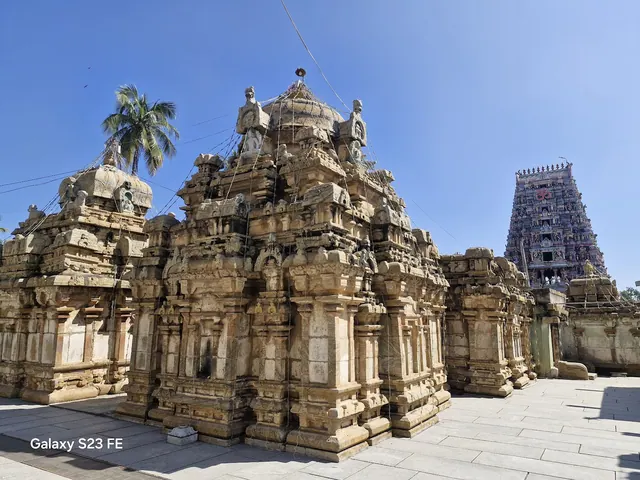
Nageshvara Temple in Begur is a 9th–10th-century Western Ganga compound still in daily use, with the hero stone that carries the earliest known written form of the city's name; it is almost never busy. Halasuru Someshwara is one of the oldest temples in the city, Chola-period at heart and rebuilt in the Vijayanagara style, with a granite gopura (gateway tower) and carved pillared halls.
Giant monoliths
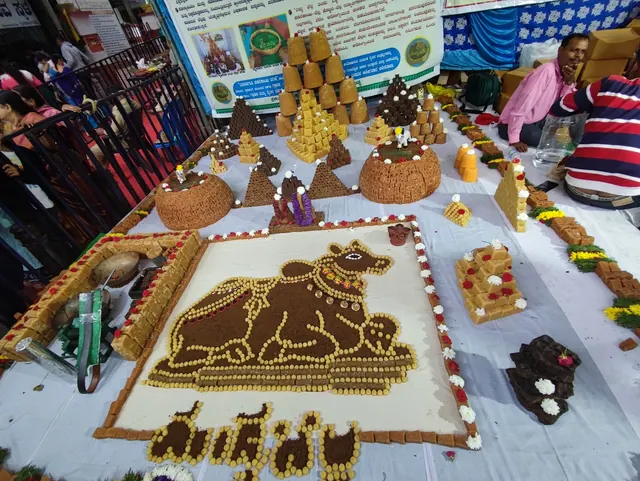
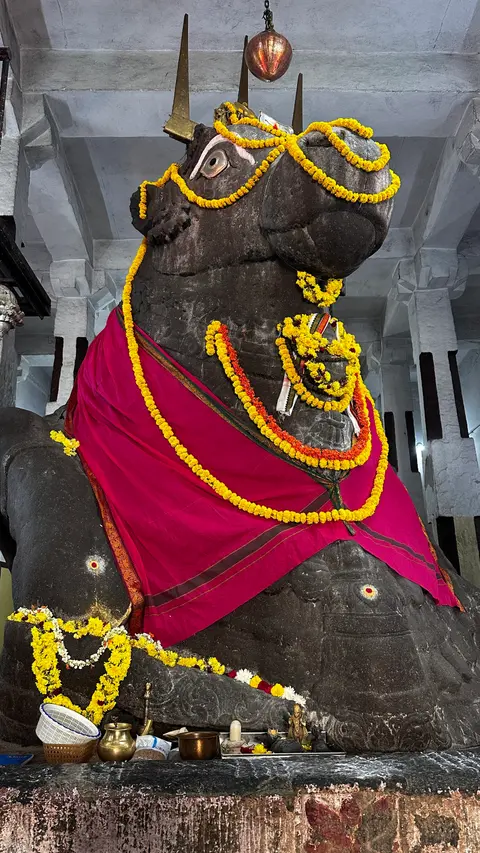
The Bull Temple holds a Nandi (Shiva's bull) carved from a single granite block, about 5 m high and over 6 m long, glossy with oil. A minute's walk away, the Dodda Ganapathi Temple has a Ganesha cut from one rock, some eighteen feet high, which is periodically coated in about a hundred kilos of butter.
Sunset and a horizon
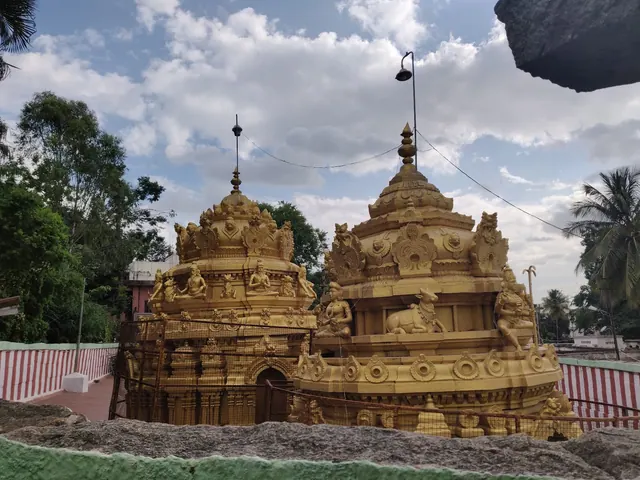
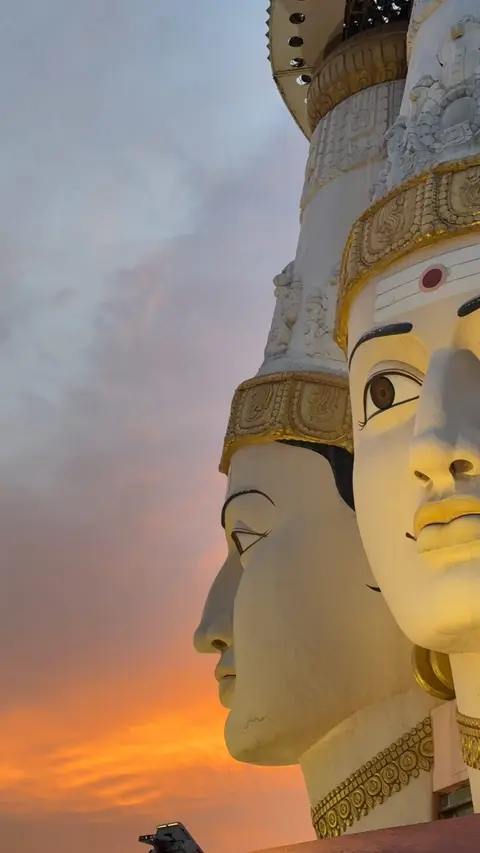
Shrungagiri Sri Shanmukha Swami Temple in Rajarajeshwari Nagar is dedicated to Murugan, with six giant faces on its tower. It stands on a hill, and at sunset the terrace looks over the whole west of the city. Rarely crowded.
Kirtan and prasad
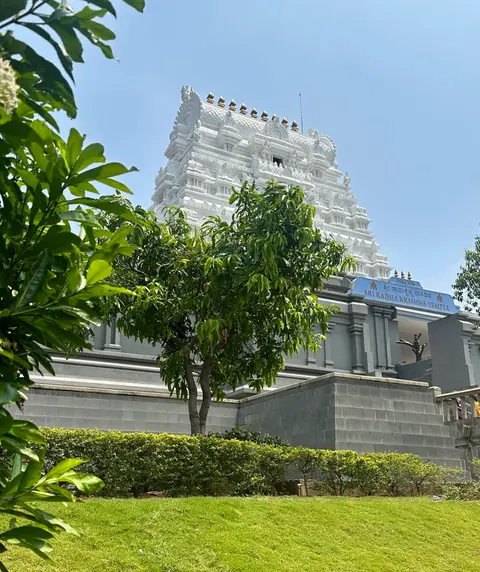
ISKCON Bangalore sits on a hill: walk the 108-step labyrinth while chanting the Maha Mantra, stay for kirtan (devotional singing with drums), and take prasad, the blessed vegetarian food given out daily.
A neighbourhood shrine
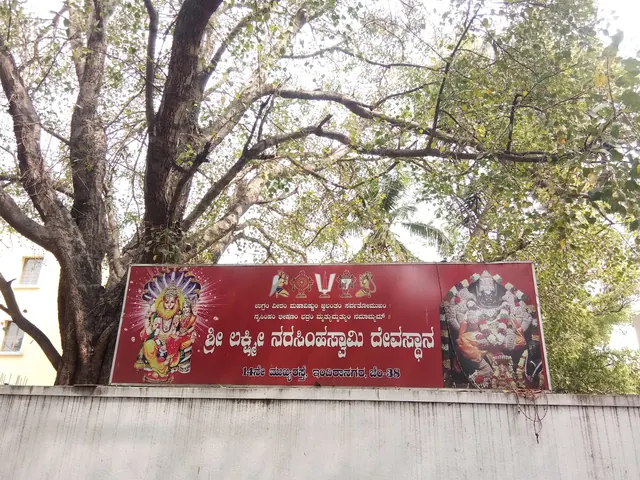
Shree Lakshmi Narasimha Swamy Temple in Indiranagar is tiny, with shrines to Narasimha, Krishna and Ganesha and a courtyard where people sit and talk.
Three temples and a bazaar in Basavanagudi
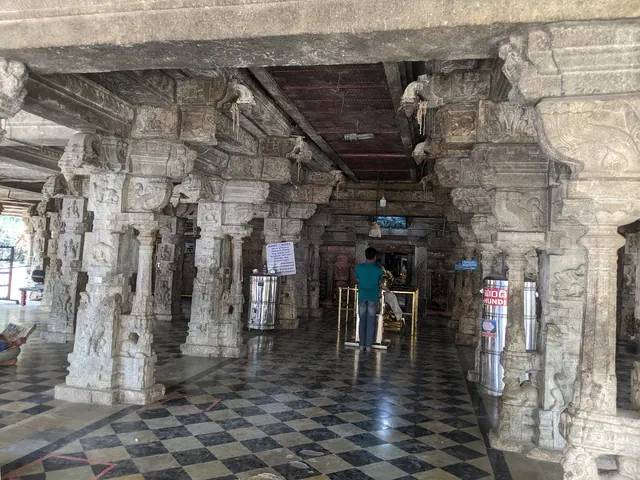
South Bengaluru's Basavanagudi is the easiest place to see several temples in one morning. The Bull Temple and Dodda Ganapathi are a minute apart, so nobody visits them separately; outside the Bull Temple, vendors open fresh coconuts. Gavi Gangadhareshwara, a Shiva shrine cut into the rock of Gavipuram, is in the same district: dim and cool inside, entered through a forecourt of monolithic stone discs for the sun and the moon. Next to the Bull Temple is Gandhi Bazaar, the flower street where jasmine and marigold garlands are heaped by the armful, with Bugle Rock next door.
Come early. Both the Bull Temple and Dodda Ganapathi open at 6:00 and close for the afternoon (Dodda Ganapathi at 12:00, the Bull Temple at 13:00), reopening towards evening.
Gavi Gangadhareshwara on Makar Sankranti
The cave was laid out with one evening in mind. On Makar Sankranti in mid-January (15 January 2027), the setting sun passes between the horns of the Nandi outside and reaches the lingam in the inner chamber. The light lasts only minutes, and the courtyard fills long before; expect an enormous crowd. On any other day the temple is quiet and worth the visit anyway.
Before you go in
- Shoes off — Nageshvara, Halasuru Someshwara, Dodda Ganapathi, Shrungagiri and Gavi Gangadhareshwara (at the steps) all ask you to take shoes off before going in. Shoes that slip on and off easily save time on a temple morning.
- Entry is free — Nageshvara, Halasuru Someshwara, Gavi Gangadhareshwara, Dodda Ganapathi and Shrungagiri charge nothing to enter.
- Mind the midday break — The Bull Temple and Dodda Ganapathi close for several hours in the middle of the day, and so does ISKCON on weekdays; at weekends and on public holidays ISKCON stays open from 7:15 to 20:20. Halasuru Someshwara is best in the morning or evening.
- Prasad — Prasad (blessed food) is part of the visit: ISKCON gives out vegetarian prasad daily, and at Dodda Ganapathi the butter from the benne alankara (butter decoration) is shared out among those who come.
Beyond the temples
St. Mary's Basilica in Shivajinagar is Karnataka's first minor basilica, a 17th-century chapel that grew into the Gothic church completed in 1882. Its feast around 8 September, after a nine-day novena, draws people from every community. On the outskirts of the city, the Art of Living Ashram is where many Indian families spend a quiet weekend of meditation and yoga.
FAQ
Which are the famous temples in Bangalore?
The Bull Temple and Dodda Ganapathi in Basavanagudi, the Gavi Gangadhareshwara cave temple, Halasuru Someshwara, ISKCON Bangalore and the Shrungagiri Shanmukha temple are the best known.
Which is the oldest temple in Bangalore?
The Nageshvara compound in Begur dates from the 9th–10th centuries. Among the oldest are the Nageshvara Temple in Begur, a 9th–10th-century Western Ganga compound, and Halasuru Someshwara, with Chola-period origins.
What are the temple timings in Bangalore?
They differ by temple, and most close around midday. Bull Temple: 6:00–13:00 and 16:00–20:00. Dodda Ganapathi: 6:00–12:00 and 17:30–21:00. ISKCON on weekdays: 4:30–5:20, 7:15–13:15 and 16:15–20:20; at weekends and on public holidays 4:30–5:20 and 7:15–20:20.
Do I have to pay to enter temples in Bangalore?
No for the old temples in the list: Nageshvara, Halasuru Someshwara, Gavi Gangadhareshwara, Dodda Ganapathi and Shrungagiri are free. ISKCON is also free to enter, with small charges for parking and the shoe stand.
When does the sun light the lingam at Gavi Gangadhareshwara?
On Makar Sankranti in mid-January (15 January 2027), in the late afternoon, for a few minutes. Arrive very early: the courtyard fills long before.
Sources (5)
Facts checked: 8 October 2026. Prices and hours are approximate; check locally.
The full catalogue, hidden spots and districts on the map, plus “nearby” mode.
Open in India GO