 India GO
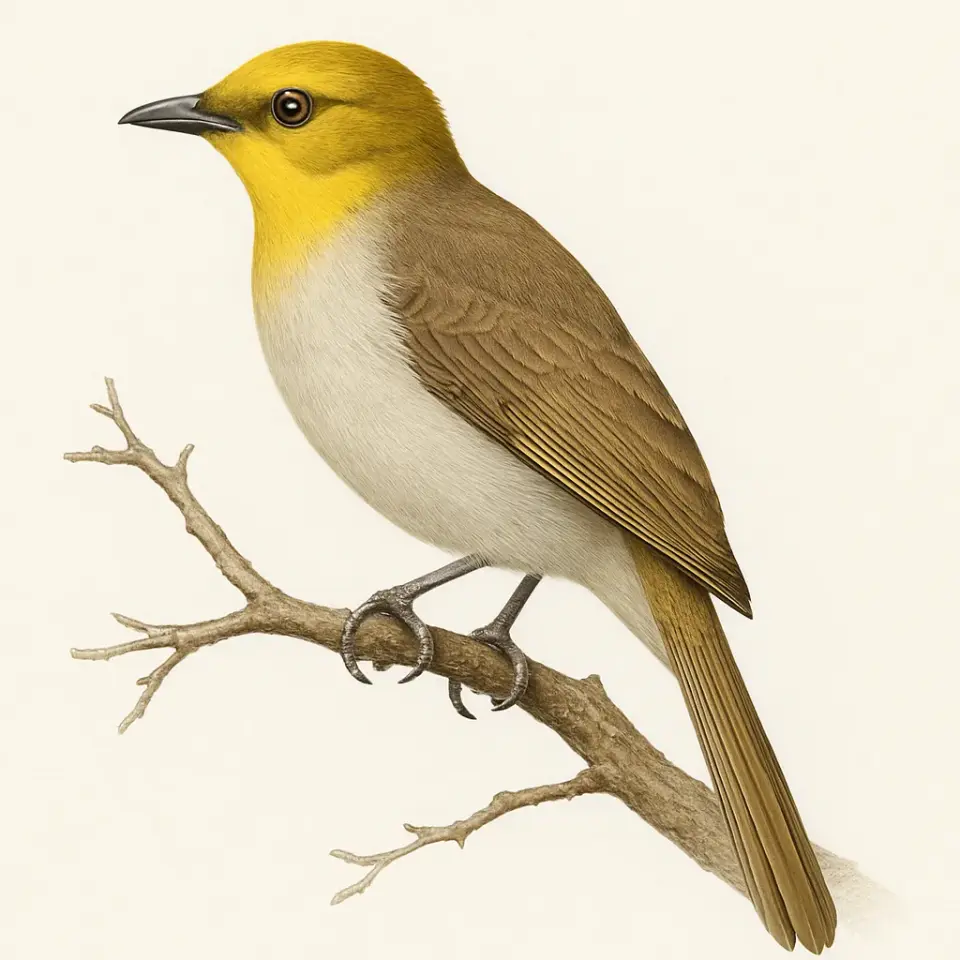
Yellow-throated bulbul: the bird of South India's boulder hills
The yellow-throated bulbul (Pycnonotus xantholaemus) is found nowhere in the world except southern peninsular India, and there only on steep, rocky hills with thin scrub. Its home is the kind of granite country that gives Hampi and the hills around Bengaluru their shape. Granite quarrying, together with fires and grazing, has removed it from many hills where it once lived. Near Bengaluru, Hampi and Tirupati it can still be found on early-morning walks among the boulders.
A bulbul found nowhere outside peninsular India, and only on rocky, boulder-strewn hills with thin scrub. Grey above, with a clean lemon-yellow throat and undertail.
How to recognise it
Work the boulder slopes in the first two hours after sunrise. Pairs move along fixed circuits, perching openly on rock tops; the song is a sweet, rolling warble unlike the harsh red-whiskered bulbul.
Where to see it
Bengaluru
Its habitat is exactly the granite the region quarries, so the bird has become a shorthand in Karnataka for what boulder hills lose when they are blasted.
 Savandurga (often) · Nandi Hills (in season)
Hampi
The same granite that makes Hampi a World Heritage Site is what the bird needs; outside the protected zone these boulder hills are quarried, which is why the species is threatened.
Hemakuta Hill (in season) · Matanga Hill (in season) · Daroji Sloth Bear Sanctuary (often)
Tirumala
Its range runs through Karnataka, Andhra Pradesh, Tamil Nadu and Telangana in isolated pockets of boulder scrub, and quarrying of exactly that rock is the main pressure on it.
Silathoranam · Kalyani Dam (in season)
How to tell it from other bulbuls
It is a bulbul without a crest: olive-grey above, with a clean yellow throat, yellow under the tail and yellow tips to the tail feathers. The head is plain, the breast and belly washed grey; males and females look alike.
The only bird it is easily confused with is the white-browed bulbul, which shares its range and its scrub. The white-browed has a pale stripe over the eye and no yellow throat. Their calls are also very alike, so a sudden burst of cackling notes from a thicket is a reason to wait for the bird to show itself.
A bird of scattered rocky hills
The species lives on rocky, scrub-covered hills, mostly in the Eastern Ghats and central peninsular India, with a few sites in the Western Ghats such as the Anamalais. Its range runs through Karnataka, Andhra Pradesh, Tamil Nadu and Telangana; the Nallamala hills are believed to be the northern limit, though it may reach the Eastern Ghats of Odisha. Known sites include Nandi Hills, Horsley Hills, Gingee, Yercaud and the Biligirirangan hills.
Because each hill is an island of habitat, populations are small and isolated. Granite quarrying, forest fires and grazing have wiped the bird out from many sites where it was once recorded. The IUCN rates it Least Concern, but its local populations are fragile. In India it is protected under Schedule II of the Wild Life (Protection) Act as amended in 2022.
Where and when to look
The bird is resident, but it is easiest to find from November to March, in the first two hours after sunrise, before the rock heats up. Around Bengaluru try the scrub and boulder slopes of Savandurga on the Basavanagudi temple side, or the rocky edges of Nandi Hills away from the crowded viewpoints. At Hampi the scrub-and-boulder country of the Daroji Sloth Bear Sanctuary is the most reliable ground; Hemakuta Hill at first light and the climb up Matanga Hill before the sun is high are good bets inside the ruins. Near Tirupati it has been found in the rocky scrub around the Silathoranam rock arch and on the hill slopes by Kalyani Dam.
In the dry season and on hot afternoons the birds come down to pools among the rocks to drink and bathe, so a patch of water in a boulder field is worth watching.
Food and nesting
It eats insects and the berries of scrub plants: lantana, ziziphus, wild figs and even sandalwood. The breeding season runs from June to August. The nest sits in the fork of a small tree, holds two eggs, and the chicks hatch after about 20 days and fly about 13 days later.
FAQ
Where can I see the yellow-throated bulbul near Bengaluru?
On the scrub and boulder slopes of Savandurga and the rocky edges of Nandi Hills, early in the morning, most easily from November to March.
Is the yellow-throated bulbul endemic to India?
Yes. It lives only in southern peninsular India, on rocky scrub hills in Karnataka, Andhra Pradesh, Tamil Nadu and Telangana.
Is the yellow-throated bulbul endangered?
The IUCN rates it Least Concern, but its habitat is patchy and quarrying has wiped it out from many hills. In India it is protected under Schedule II of the Wild Life (Protection) Act.
How is it different from the white-browed bulbul?
The yellow-throated bulbul has a bright yellow throat and a plain head; the white-browed bulbul has a pale stripe over the eye and no yellow throat. Their calls are very similar.
Sources (2)
Facts checked: 8 October 2026. Prices and hours are approximate; check locally.