 India GO
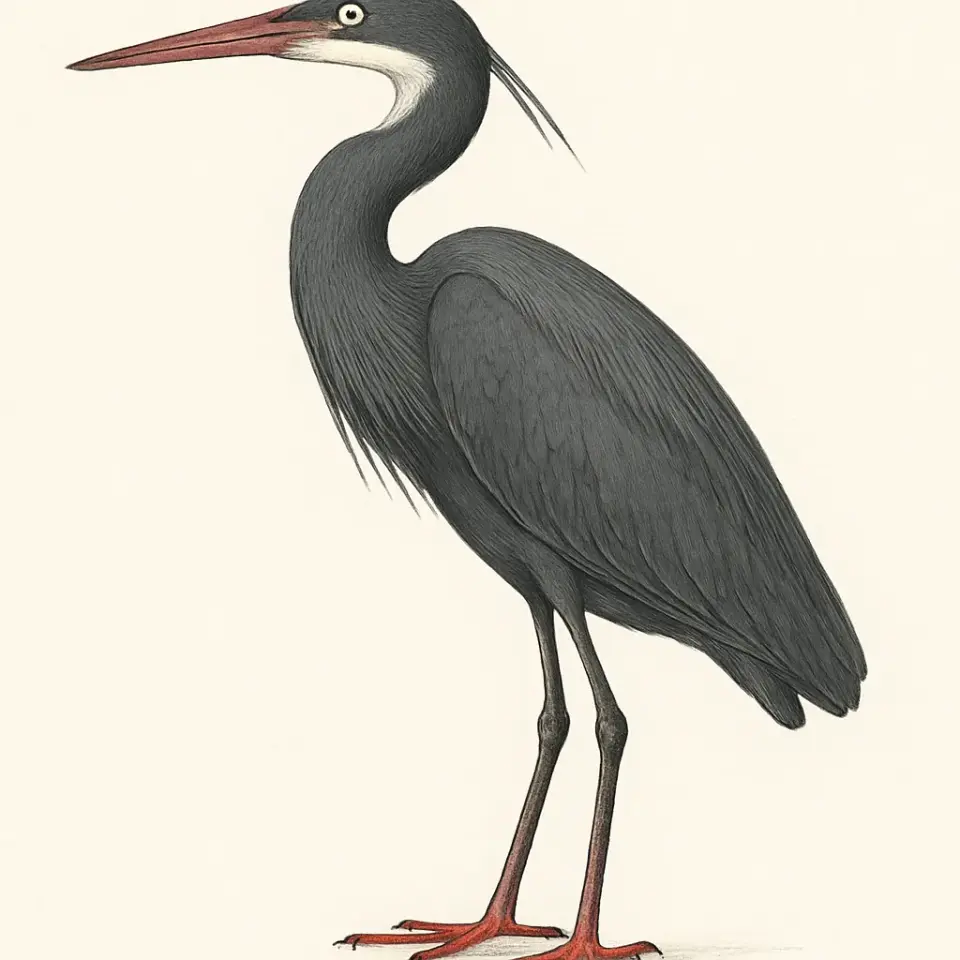
Western reef heron, the egret of rocks and mudflats
The western reef heron is a coastal egret of Indian shores, and it comes in two colours: slate-grey with a white throat, or all white. Both have a heavy bill with a yellowish base and yellow feet. Find it at low tide on rocks, mudflats and mangrove edges, dashing after fish in the shallows; it is there all year, in larger numbers from October to April.
A slate-grey or white heron of tidal mudflats and rocky shores, running in short dashes after fish in the shallows.
How to recognise it
Comes in two colour forms, dark and white; both have a heavy yellow-based bill and yellow feet. The dark form has a white throat stripe.
Where to see it
Goa
The Dr Salim Ali Bird Sanctuary on Chorao island covers 178 hectares of mangrove at the Mandovi mouth and was declared a protected area in 1988; the reef heron is one of its regular residents.
 Dr. Salim Ali Bird Sanctuary (Chorao) · Morjim · Campal Gardens & the Riverfront (often)
Mumbai
The heron that works the same rocks as the fishermen at low tide, and one of the easiest coastal birds to watch from a beach at any hour.
Thane Creek Flamingo Sanctuary · Juhu Beach (often)
Udupi
Tidal rock platforms of the kind exposed at Kaup and St Mary's are its exact habitat: the birds follow the tide out and work the pools left behind.
Kaup Beach & Lighthouse (often) · St Mary's Island (often) · Delta Beach, Kodi Bengre (often)
Dark form, white form, or little egret?
The dark form is the easy one: a slaty-grey heron with a white throat (the Latin name gularis refers to it) is almost certainly a reef heron, because dark little egrets are extremely rare. Birds of intermediate grey, or patchy grey and white, also occur.
The white form is the real test, as it looks very like the common little egret. Compare the bill and legs: the reef heron's bill is larger, heavier and yellower, the yellow extends further up its thicker legs, and it forages far more actively, running, stirring the water with its feet and flicking or raising its wings to shade the surface. In the breeding season the legs and facial skin turn reddish and two long plumes grow from the back of the head. It eats fish, crustaceans and molluscs, and on the coast often takes mudskippers.
The two species are close relatives, and some ornithologists have treated the reef heron as a form of the little egret; others keep them as separate species.
Range
It is a bird of tropical coasts from West Africa through the Red Sea and the Persian Gulf to India, Sri Lanka and the Lakshadweep islands. The Indian birds belong to the subspecies schistacea, which breeds from the Persian Gulf along the Indian coast; breeding colonies are known on the east coast around Pulicat Lake. Now and then a bird turns up inland. The same subspecies lives along the Red Sea, so a grey, white-throated heron on a Red Sea reef is the same bird.
Where to see it
Time your visit to low tide, when the birds follow the water out and work the pools and mud it leaves behind. In Goa the Dr Salim Ali Bird Sanctuary on Chorao island, 178 hectares of mangrove at the mouth of the Mandovi protected since 1988, has it as a regular resident. It is also common at Morjim and along the Mandovi riverfront at Campal in Panaji. More of Goa's coastal birds are on the Goa birds page.
In Mumbai it works the same rocks as the fishermen at low tide and is one of the easiest coastal birds to watch from a beach: Juhu, the mud and jetty edges, and the Thane Creek Flamingo Sanctuary. On the Karnataka coast near Udupi the tidal rock platforms at Kaup lighthouse and St Mary's Island are exactly its habitat.
Status
The IUCN lists the western reef heron as Least Concern. In India it is protected under Schedule II of the Wild Life (Protection) Act as amended in 2022, where it appears as the western reef egret.
FAQ
How do I tell a white western reef heron from a little egret?
Look at the bill and legs: the reef heron's bill is heavier and yellower and the yellow runs further up its thicker legs. It also forages more actively, running and flicking its wings.
Why are some western reef herons grey and others white?
The species has two colour forms, dark and white, with intermediates. The dark form has a white throat.
Where can I see western reef herons in Goa?
At the Dr Salim Ali Bird Sanctuary on Chorao, on Morjim beach and along the Mandovi riverfront at Campal, best at low tide.
When is the best season?
It is resident all year, with more birds on the west coast from October to April. Low tide matters more than the month.
Sources (3)
Facts checked: 8 October 2026. Prices and hours are approximate; check locally.